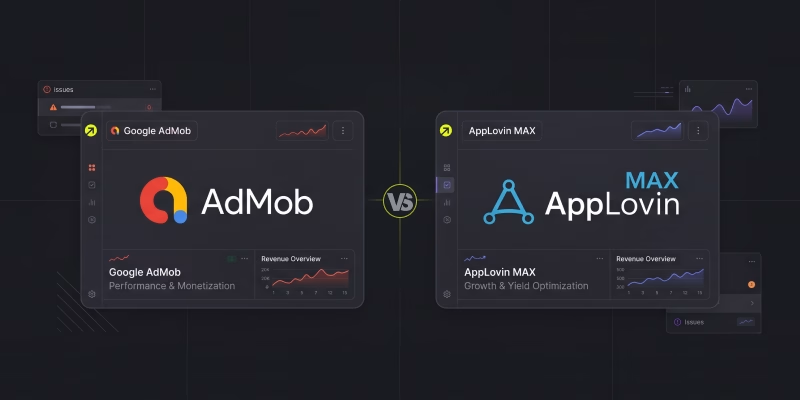
AdMob vs AppLovin MAX: Which Earns More in 2026?
Last Updated July 2026
It’s not a binary choice. The real money comes when you force both networks to fight for every impression. Here’s how they compare, and why competition drives revenue up.
AdMob and AppLovin MAX dominate mobile ad monetization for a reason. AdMob is Google’s own network, fast to set up, backed by the world’s largest advertiser pool, and the default starting point for most apps. AppLovin MAX is the leading independent mediation platform, built for teams who want first-price auctions, granular floor controls, and maximum eCPM on full-screen formats.
Both networks have muscle. Both have gaps. If you want max revenue, don’t pick sides; make them compete for every impression.
Here’s where each network wins, where they fall short, and what real data shows when you run them head-to-head.
Master Comparison Table
AdMob wins on simplicity, fast setup, and Google demand. AppLovin MAX wins on live bidding and full-screen eCPM. But if you want the highest revenue, let both fight it out in a single mediation layer. Picking just one leaves money on the table.
| Criterion |  AdMob AdMob |
 AppLovin MAX AppLovin MAX |
|---|---|---|
| Type | Ad network + basic mediation | Independent mediation |
| Auction | Bidding + waterfall | First-price RTB (bidding-only) |
| Stronger in formats | Banner, App Open, Native | Fullscreen (interstitial, rewarded) |
| eCPM | Stable, Google demand | Often higher on fullscreen |
| Networks / DSPs | 25+ (Google demand) | 25+ networks / broad DSP access |
| Commission / fees | 30-40%* | Mediation fee (varies) |
| Setup complexity | Simple – fast to start | More complex, more powerful |
| Payout | Net 21 | Net 15 |
| Better for | Launch, utilities, simplicity | Experienced, games, RTB control |
| *Fee figures based on published third-party reviews (metacto, Teqblaze). | ||
A breakdown of key differences between Google AdMob and AppLovin MAX mediation architectures.
If CAS.AI earns less, we pay the difference.
One-on-One Comparisons
Go deeper on any matchup. Each page includes a full data table, honest pros and cons, and a verdict by use case.
AdMob: Overview, Pros & Cons
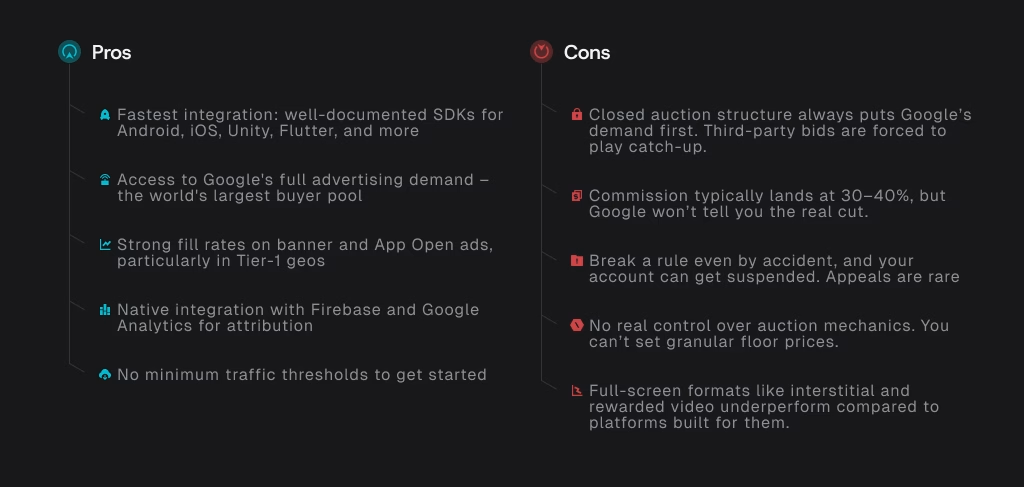
Most apps start with AdMob for a reason. You get Google demand on tap, and setup is done in minutes. If you’re launching your first app, utility, productivity, or casual game, AdMob gets you paid the fastest.
AppLovin MAX: Overview
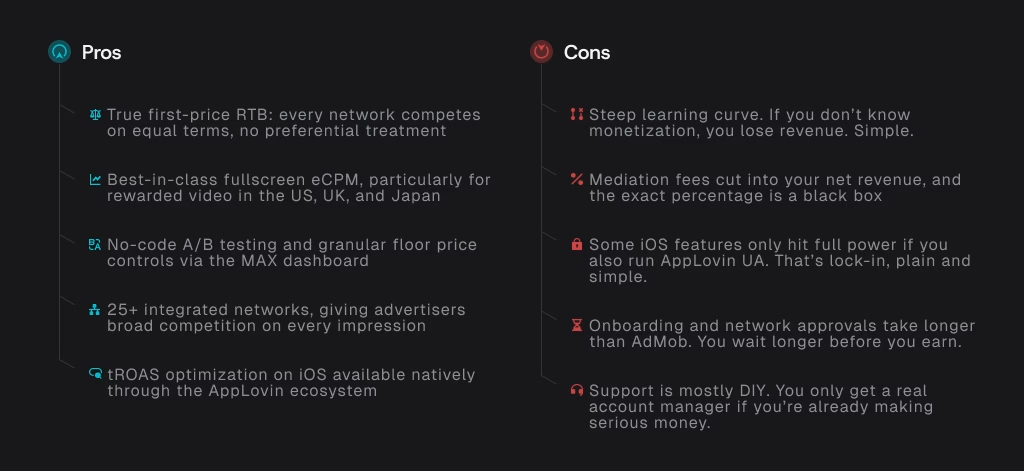
AppLovin MAX is for teams who treat monetization as a sport, not a checkbox. Every network fights in a first-price auction, and you get real A/B testing without touching code. The payoff: MAX crushes it on full-screen eCPM, rewarded video, and interstitials in Tier-1 markets often beat AdMob, especially if you have the traffic to optimize.
How to Choose a Mobile Ad.
No single network fits every app. Before you integrate, run these four filters. integration, run through these four filters.
- App type and dominant format.
Banner-heavy utilities and productivity apps get the best results with AdMob. Games built on rewarded video and interstitials pull higher eCPMs on AppLovin MAX and other fullscreen-first networks.
- Audience geography.
Tier-1 markets like the US, UK, Japan, and Australia pull premium bids from every major network. If your users are mostly Tier-2 or Tier-3, fill rates and eCPMs swing hard. Picking the right network matters even more.
- Mediation or single network.
One network means one buyer pool. Mediation connects you to 20+ networks and DSPs, so every impression goes to the top bidder. For any app past launch, mediation is the clear path to higher revenue.
- Payout terms.
Net 15, Net 21, Net 30, these payout terms make a real cash-flow difference. Don’t just chase headline eCPM. Minimum payout thresholds and payment methods matter too.
Where CAS.AI Fits
CAS.AI isn’t just another network. It’s a growth operator that provides an independent mediation layer between your app and every network.
One SDK hooks you into 20+ ad networks and 150+ DSPs. CAS.AI owns no ad network, so no demand source gets special treatment. Every impression goes to the highest bidder, whether that’s AdMob, AppLovin or a DSP you’ve never heard of.
Apps that switch to CAS.AI for independent mediation usually see ARPU 1.5 to 2 times higher than when running a single network or a biased mediation platform. With the no-loss guarantee, if your revenue drops during testing, CAS.AI pays the difference; you risk nothing by finding out your real number.
Key Takeaways
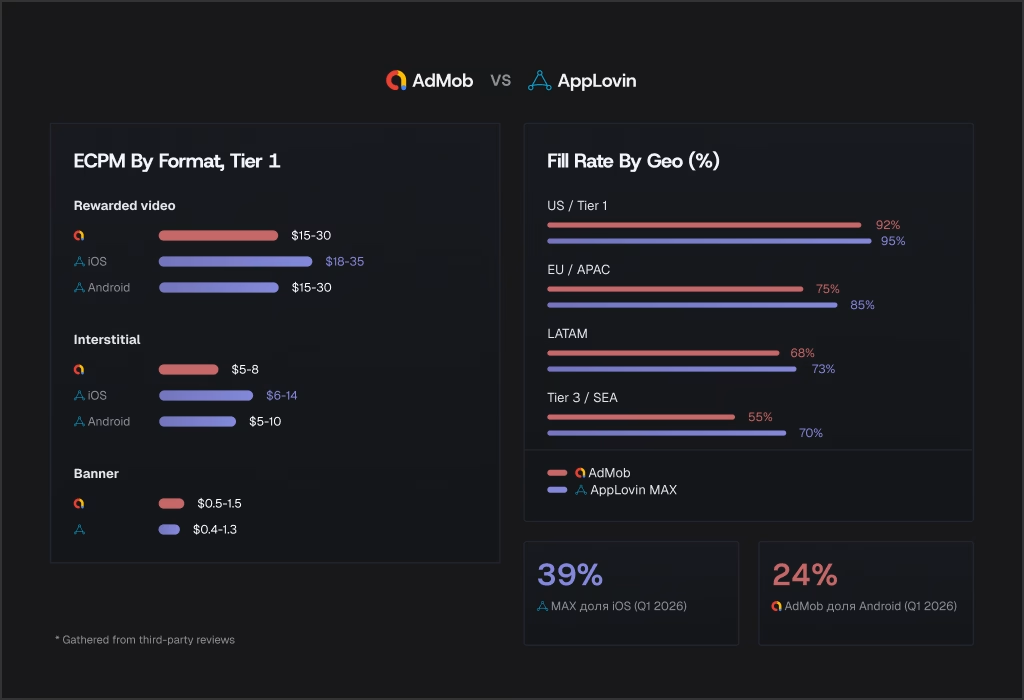
- There is no clear winner here. AdMob is faster to set up and tends to do better with banners and App Open ads, especially when you want to tap into Google’s demand. On the other hand, AppLovin MAX pulls ahead when it comes to first-price auctions and gets higher rates for fullscreen ads like interstitials and rewarded videos, at least in top markets.
- The type of app you have makes a big difference. If your app relies on banners, especially utility apps, AdMob usually comes out ahead. But if you are making games that depend on rewarded videos or interstitial ads, AppLovin MAX tends to deliver better rates.
- Where your users are matters too. In places like the US, UK, Japan, and Australia, both networks compete hard and you get top bids. But if most of your traffic comes from other countries, you will notice bigger ups and downs in how often ads show up and how much you earn per impression.
- Payout terms differ — AdMob pays Net 21, AppLovin MAX pays Net 15, a meaningful cash-flow factor beyond headline eCPM.
- Mediation beats single-network setups — running both networks in one mediation layer forces real-time competition for each impression.
- CAS.AI stands out because it does not own an ad network. is a growth operator, letting more than 2 platform networks and over 150 demand partners bid for your inventory. They even promise you will not lose out if you switch.
Ad Network Comparison FAQ
Neither network wins everywhere. AppLovin MAX leads on RTB depth and fullscreen eCPM, especially for mobile games in Tier-1 markets. AdMob leads on simplicity, banner fill, and Google demand. For most apps, you get the highest revenue by running both in a neutral mediation layer. Don’t pick — make them compete.
Yes. With mediation, both networks bid on the same impression at the same time, and the highest bid wins. CAS.AI’s single SDK lets AdMob, AppLovin, and 18+ other networks compete in real time. No manual waterfall. No wasted impressions.
For interstitial and rewarded video, AppLovin MAX often delivers higher eCPMs, especially in the US, UK, and Japan. For banners and App Open ads, AdMob usually wins. Your results depend on app category, geography, and traffic quality.
AdMob uses a hybrid bidding and waterfall auction that gives Google demand a built-in edge. AppLovin MAX runs a true first-price RTB auction in which every network gets a fair shot. In practice, MAX can drive up per-impression pricing, but setup is more complex.
Learn about CAS.AI Mediation
Check out 2026 Alternatives to AdMob
More head-to-head comparisons: