AdMob vs Unity Ads: Which Is Better for Mobile Games?
Last updated July 2026
Here’s the real story. If your game is built in Unity and you rely on rewarded video or playables, Unity Ads usually come out on top. AdMob wins when it comes to variety, worldwide reach, and non-gaming apps. But if you want to squeeze out every dollar, do not choose just one. Let both networks fight for every impression by running them through independent mediation.
After you start making money from your app, you face a clear choice. Do you stick with Google’s default setup, or do you go all in on the network designed for your engine?
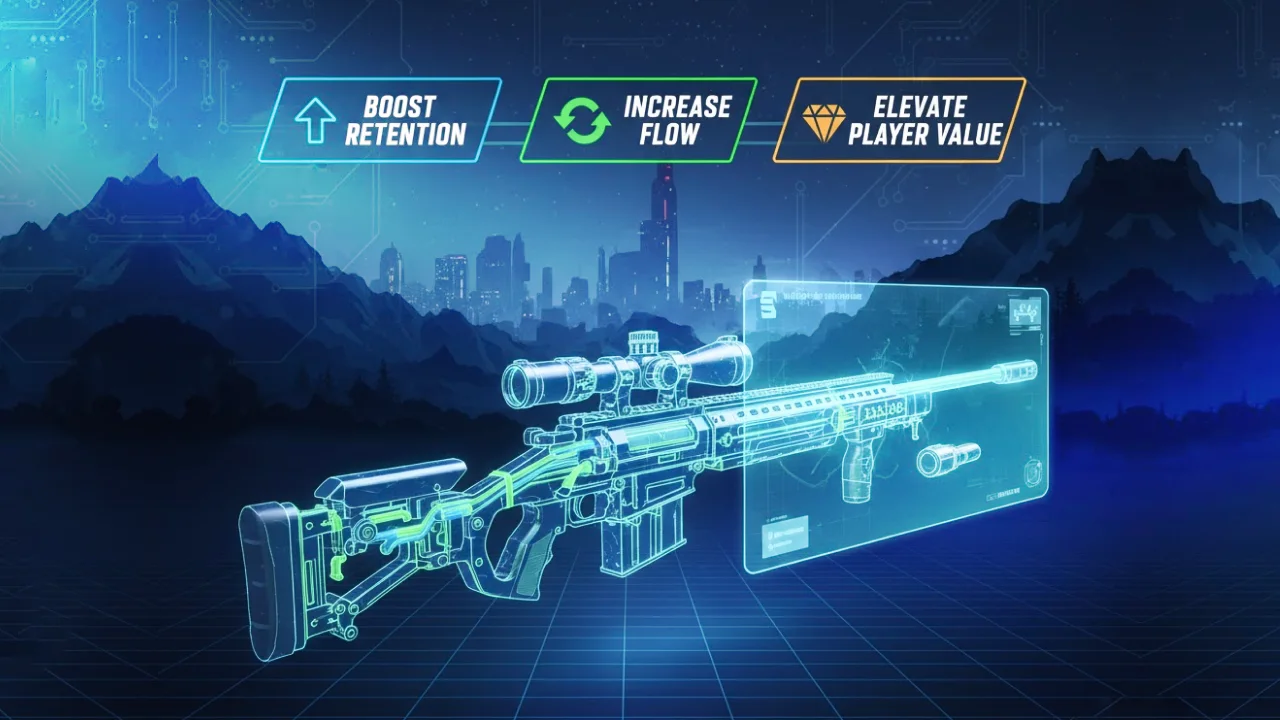
Unity Ads was made for Unity games. If you are already using Unity, you can add rewarded video and playables in just a few minutes. AdMob is Google’s own network and where most people start. It offers lots of ad formats, fills inventory almost anywhere, and you only need one SDK.
You do not have to pick just one. Each network shines at different points in your user’s session and pulls from its own pool of advertisers. The real comparison comes down to eCPM, fill rate, ad formats, fees, payout speed, and how easy it is to set up. I will walk you through when to use one, both, or neither, all based on what actually grows your revenue.
Master Comparison Table
| Criterion |  AdMob AdMob |
 Unity Ads Unity Ads |
|---|---|---|
| Type | Unity Ads | Ad network (Unity Technologies) |
| Auction | Bidding + waterfall hybrid | Bidding + waterfall hybrid |
| Stronger in formats | Banner, App Open, Interstitial, Native | Rewarded video, Playable, Interstitial |
| eCPM | Stable; strongest on banners/app-open in Tier-1 | High on rewarded video, especially gaming Tier-1 |
| Networks / DSPs | 25+ demand sources (Google-prioritized) | Unity demand primarily; limited 3rd-party |
| Commission / fees | ~30–40% rev-share (per third-party reviews) | Rev-share; exact rate varies by agreement |
| Setup complexity | Low, fast SDK, familiar for most devs | Very low for Unity engine; moderate for others |
| Payout | Net 21 | Net 30-45 (varies by region) |
| Better for | Utilities, casual games, multi-format apps | Unity-built games, rewarded + playable formats |
| *Fee figures based on published third-party reviews (metacto, Teqblaze). | ||
A breakdown of key structural and monetization differences between Google AdMob and Unity Ads.
No single row determines the winner. Unity Ads vs AdMob comes down to your app category and session structure. Unity Ads consistently outperforms on rewarded video eCPM inside gaming titles , particularly in Tier-1 markets where gaming CPMs run highest. AdMob offers broader format coverage (banners, App Open, native) to fill revenue gaps between rewarded events. Running both through independent mediation is how top-grossing studios capture the ceiling of both demand pools without locking into either platform’s ecosystem.
If CAS.AI earns less, we pay the difference.
One-on-one comparison
You can dig into any matchup you want. Each page gives you a full data table, real pros and cons, and a clear verdict for each use case.
AdMob Overview
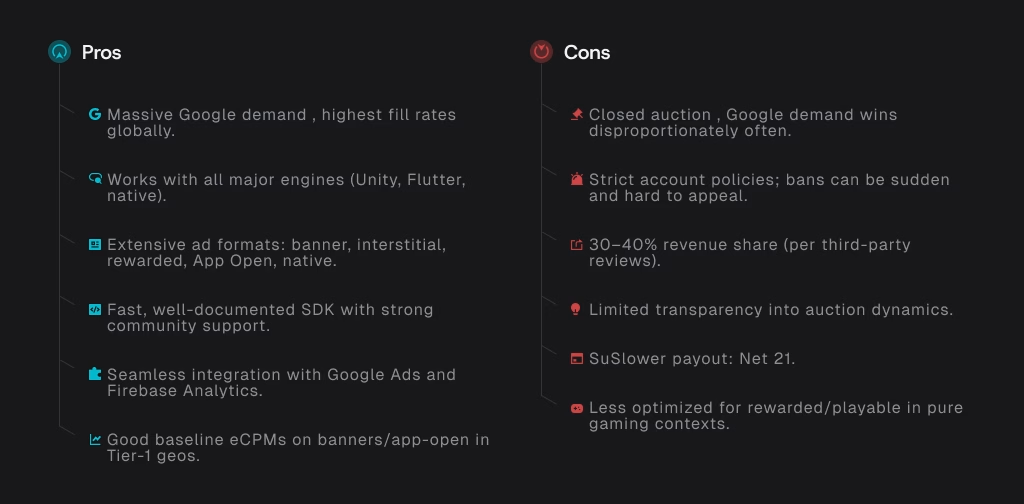
AdMob is Google’s answer for mobile monetization. You get top fill rates in Tier-1 countries and every format you’d expect: banners, interstitials, rewarded, App Open, and native. Integration is simple with Unity, Flutter, or native SDKs, and you get unified analytics through Google Ads and Firebase. The catch: you’re locked into a closed auction and lose 30 to 40 percent to Google. That’s why AdMob works best as one demand source in a mediation stack, not as your only option.
Unity Ads Overview
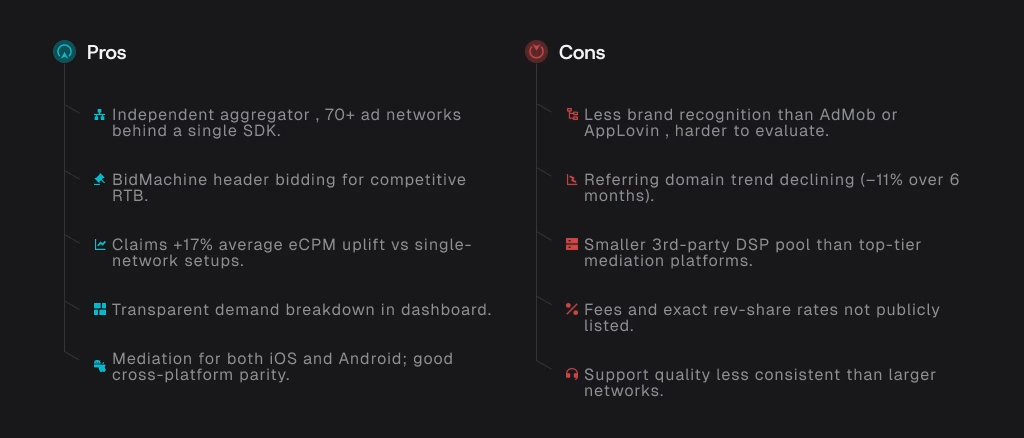
Unity Ads is built into the Unity engine, so for any Unity game, it’s the obvious starting point. The focus is on rewarded video and playables, which actually fit how players interact with games. If you’re already using Unity, you get instant setup, no extra SDK bloat, and ad formats that don’t break gameplay flow.
More head-to-head comparisons: AdMob vs InMobi
Compare AdMob vs AppLovin in detail
How to choose a mobile ad network
No single network works for every app. Before you add anything, check these four filters.
1. App type and dominant format
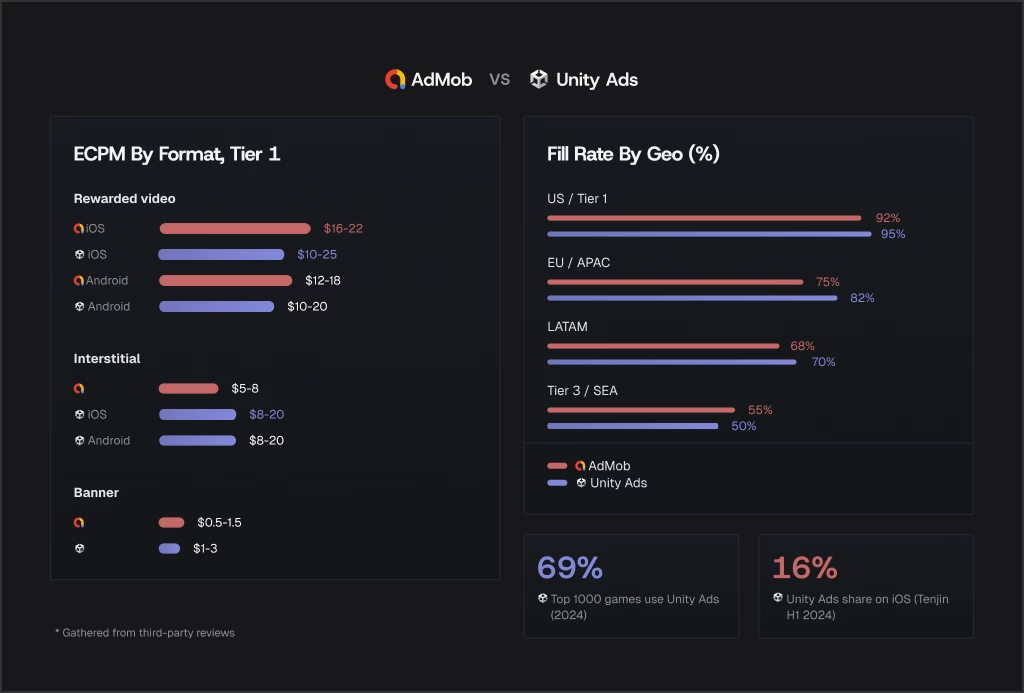
Rewarded video and playables bring in the highest eCPMs for mobile games, and Unity Ads is the leader here. If your app is a utility, a productivity tool, or a content app where banners and App Open ads matter most, AdMob’s range and global fill are tough to beat. If your sessions mix rewarded events with quieter display moments, you will want both networks in play.
2. Audience geography
Both AdMob and Unity Ads pay well in top markets like the US, UK, Canada, Australia, and Japan. AdMob’s bigger pool of advertisers gives it an edge in Tier-2 and Tier-3 countries, where Google’s reach is stronger than Unity’s focus on gaming. If you get a lot of users from Southeast Asia, Latin America, or MENA, make sure you are running AdMob at least, and add Unity Ads for rewarded spots.
3. Mediation or single network
If you only use one network, you let a single buyer set the price with no competition. Independent mediation lets AdMob, Unity Ads, and more than 18 other networks fight for every impression in real time. The highest bidder wins the spot. Apps that move from a single network to independent mediation often see ARPU jump by 1.5 to 2 times, because every impression now has a real floor and a ceiling set by competition. If you care about revenue, mediation is a must.
4. Payout terms
AdMob pays out in 21 days. Unity Ads takes 30 to 45 days, depending on where you are. If you need cash quickly, like many indie studios or new apps, AdMob’s faster payments can make a difference. CAS.AI starts payouts as soon as Day 5 and even supports crypto if you need speed or flexibility.
Where CAS.AI fits?
CAS.AI is not an ad network. It is an independent Growth Operator that fits between your app and every network listed here.
With one SDK, you connect to more than 20 ad networks and over 150 DSPs. CAS.AI does not own any ad network, so no one gets special treatment. Every impression goes to whoever bids the most, whether that is AdMob, Unity Ads, or a DSP you have never heard of.
If you build games in Unity, CAS.AI is the next step once you have outgrown a single-network setup. The CAS.AI SDK plugs right into Unity, so your team can keep working in the same environment. At the same time, you add AppLovin, ironSource, InMobi, and the rest of the ad world to compete for every rewarded video and playable event that Unity Ads would otherwise win by default.
Apps that switch to CAS.AI for independent mediation often see ARPU jump by 1.5 to 2 times compared to using just one network or a biased mediation tool. With the no-loss guarantee, if your revenue drops during testing, CAS.AI pays you the difference. You have nothing to lose by finding out your real number.
Independent ad mediation for Unity developers
Key Takeaways
- Unity Ads is the top choice for rewarded video and playable ads, especially if your game is built with Unity. AdMob, though, covers more ad formats and works well for non-gaming or cross-platform apps.
- For top gaming titles, Unity Ads can pay out big on rewarded video ads, sometimes hitting thirty dollars per thousand views. In less competitive markets, those numbers drop. AdMob can keep up in some cases, but usually falls behind in the core gaming space.
- AdMob gets your money to you faster, usually in three weeks. Unity Ads can take up to a month and a half. That speed can make a real difference if you are putting your ad earnings right back into user acquisition.
- Both networks perform well in top markets, but AdMob’s wider range of advertisers helps it stay strong in less competitive regions where Unity’s focus on gaming does not go as far.
- If your game mixes rewarded events with quieter display ads, you will get the best results by running both networks through an independent mediation platform. As CAS.AI is a growth operator, it can plug directly into Unity and also bring in additional networks like AppLovin and InMobi to compete for your ad space.
See CAS.AI Mediation For rewarded video and playable ads in Unity-built games, Unity Ads consistently delivers higher eCPMs than AdMob for these formats. The full AdMob vs Unity Ads answer depends on your format mix: AdMob is stronger on banners, App Open, and native. Most successful game studios use mediation, so each format automatically goes to the best-performing network. Yes. Through a mediation platform, both networks bid on each eligible impression in real time. The highest bid wins the placement. Running them together eliminates the single-network ceiling and typically produces higher blended eCPM than either network alone. Rewarded video eCPMs vary by geo, game genre, and session depth. In Tier-1 markets (US, UK, Japan), rewarded video eCPMs from Unity Ads commonly range from $15 to $30 for top-performing gaming titles. Lower-tier markets see $2–8. AdMob rewarded video eCPMs are competitive but typically slightly lower in core gaming segments where Unity’s demand is strongest. Yes. AdMob has an official Unity plugin and is one of the most commonly integrated networks in Unity games. It is not Unity-native in the way Unity Ads is, but the setup is well-documented, and the SDK is stable across Unity LTS versions. AdMob has a Net 21 payment cycle. Unity Ads pays Net 30–45 depending on region and contract terms. CAS.AI starts payouts from Day 5 for mediated apps, with crypto payment support available.
Ad Network Comparison FAQ
Get Started in 5 Minutes
Learn about CAS.AI Mediation
Check out 2026 Alternatives to AdMob
More head-to-head comparisons: