The Mobile Game Publishing Reality: Why Most Indies Fail and What Actually Works
Most mobile games released in 2025-2026 fail. The problem is not that the games are low quality. The real issue is that user acquisition, monetization, and retention now require specialized skills that most teams simply do not have. This is not a question of right or wrong. It is a structural problem.
The Indie Reality: Understanding the Statistical Dead End
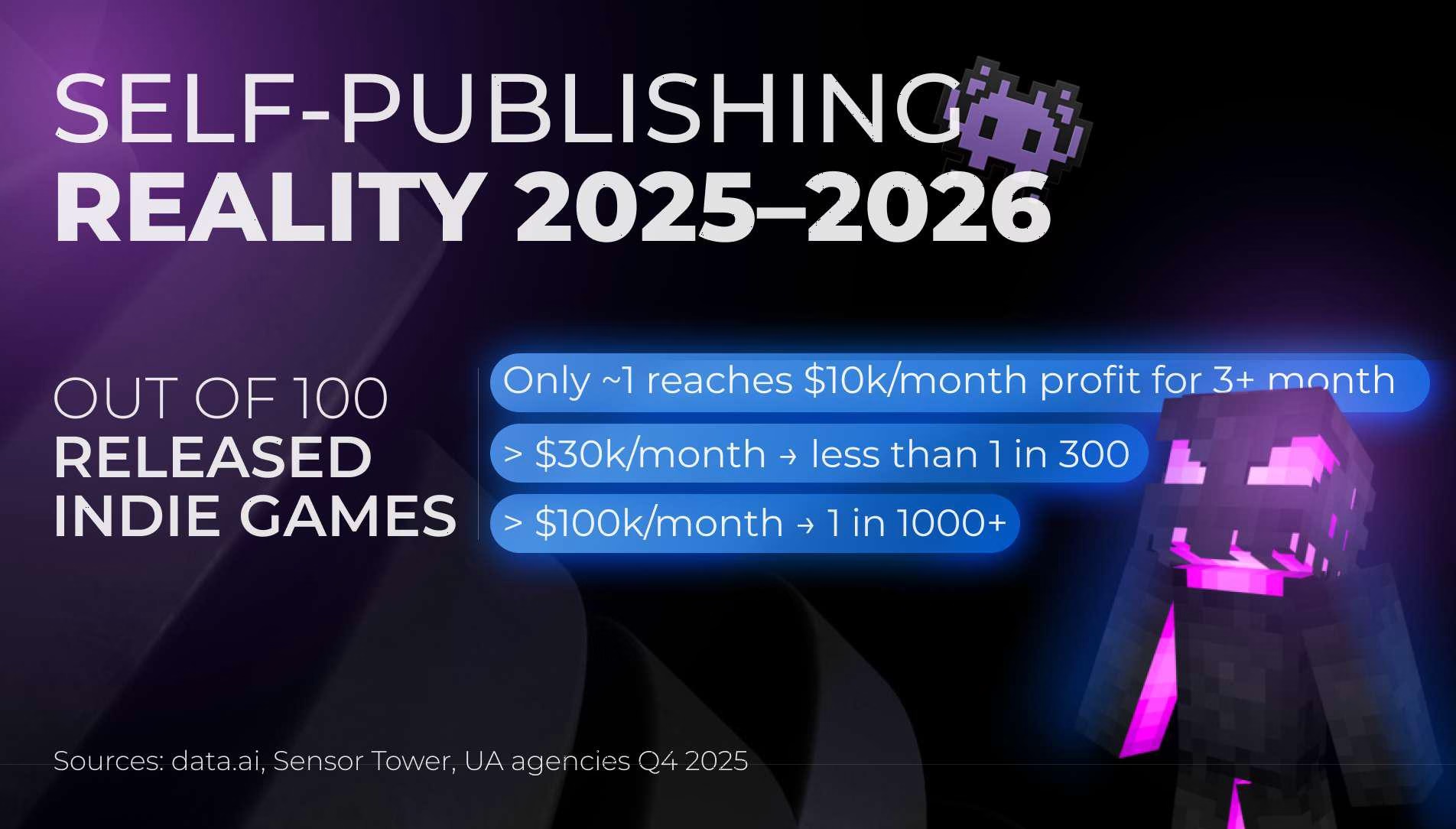
Let’s start with the baseline numbers. Out of every 100 indie mobile games released:
Only 1 out of 100 makes $10,000 per month in total revenue, counting both in-app purchases and ads. Only 1 in 300 games gets to $30,000 per month, which is just enough to support a small studio and turn a profit. For a real hit, games making over $100,000 per month, the odds for indie developers are 1 in 1,000 or lower.
These numbers are not guesses. They come from aggregated data across app store analytics, UA agencies, and publisher portfolios for Q4 2025. Now, contrast this with the publisher-backed success rate:
If your game passes initial publisher testing, the chance of reaching $30,000/month shifts to approximately 1 in 10. The probability of a hit improves. This is not about luck. Publishers have built systems that give them an edge in user acquisition, monetization, and product updates. The real question is whether these benefits are worth giving up a share of revenue and some creative control.
Why Self-Publishing Fails: The Three Structural Gaps
In short, self-publishing fails not because of talent or effort, but because most indie teams lack the resources, analytics, and scale needed to compete in today’s mobile game market.
Gap 1: The Marketing Budget Trap
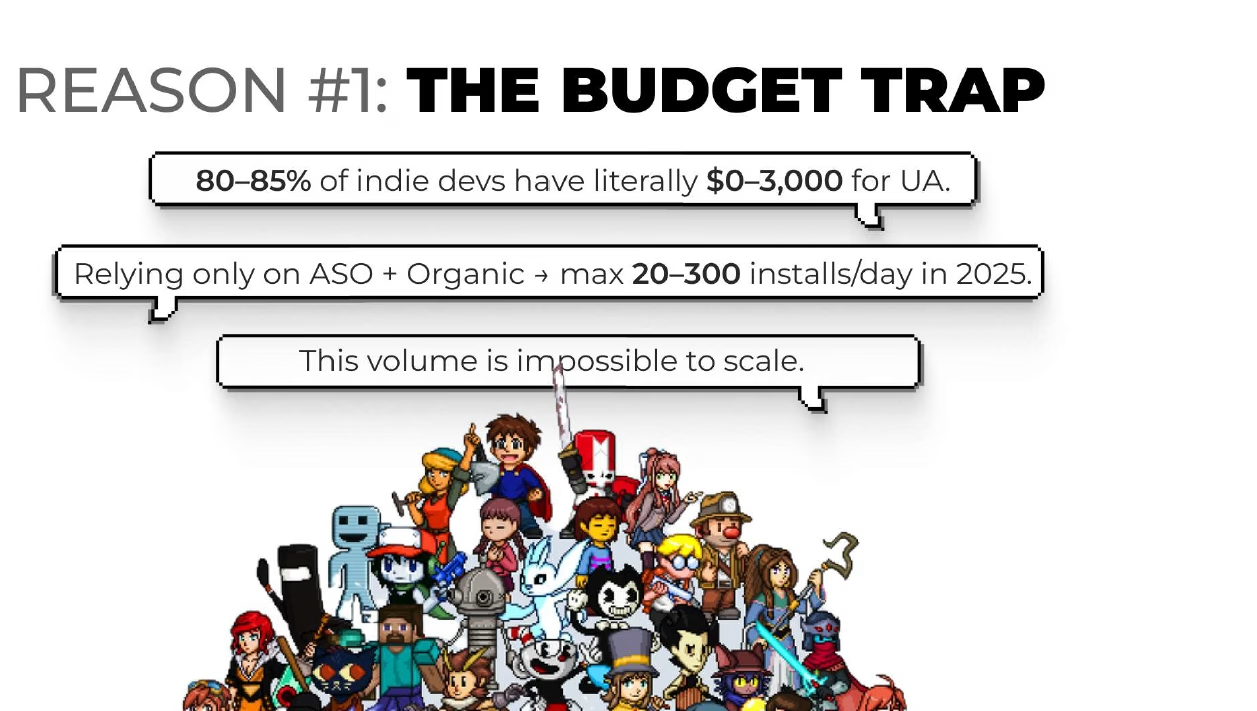
For most indie teams, 80-90% have less than $3,000 per month to spend on marketing.
If you cannot pay for user acquisition, you are left with ASO and organic discovery. In 2025, even well-optimized games rarely get more than 200-500 organic installs per day. This is not enough to:
Run statistically valid A/B tests.
Achieve economies of scale in ad monetization.
Generate enough revenue to fund further development.
This creates a loop. The game does not grow because you cannot afford user acquisition, and you cannot afford user acquisition because the game does not make enough money.
Gap 2: The Analytics Blind Spot
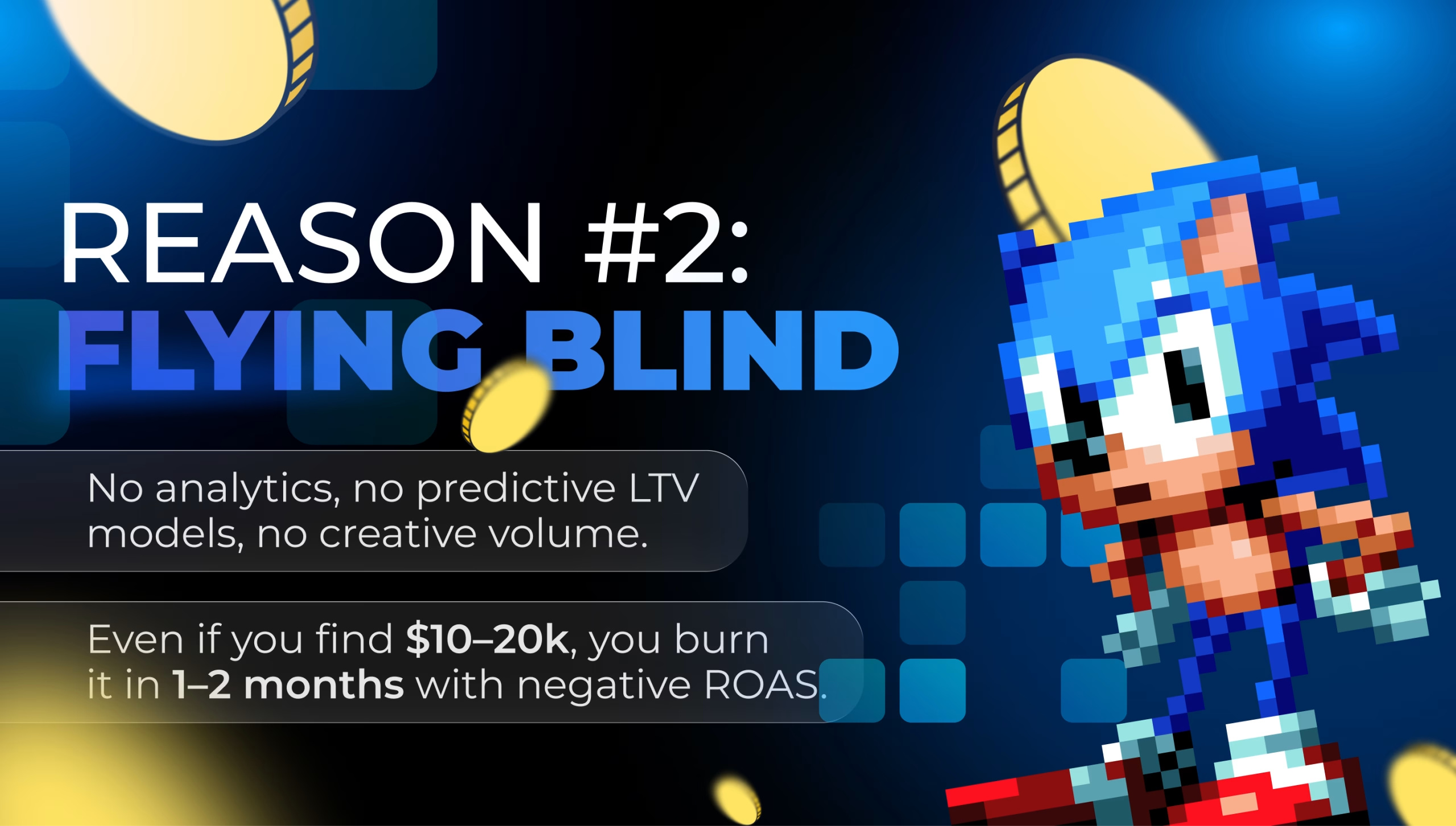
Professional publishers do not just track revenue. They use predictive LTV models to estimate what a user will bring in by Day 200, based on their behavior in the first 7-14 days.4 days. This allows them to answer the critical question: “If I spend $1.50 to acquire this user, will I get back $2.25 by Day 200?”
Without these models, indie developers have to make UA decisions with incomplete data. You might see a campaign with a CPI of $1.20 and an ARPDAU of $0.15, but you will not know if that group of users will stick around long enough to be profitable until months later. By then, the budget is already gone.
Most developers spend $10,000 to $20,000 testing campaigns, see negative early ROAS, and stop before the results are clear. Often, these campaigns would have been profitable, but the developer could not afford to wait.
Gap 3: Death by a Thousand Small Cuts
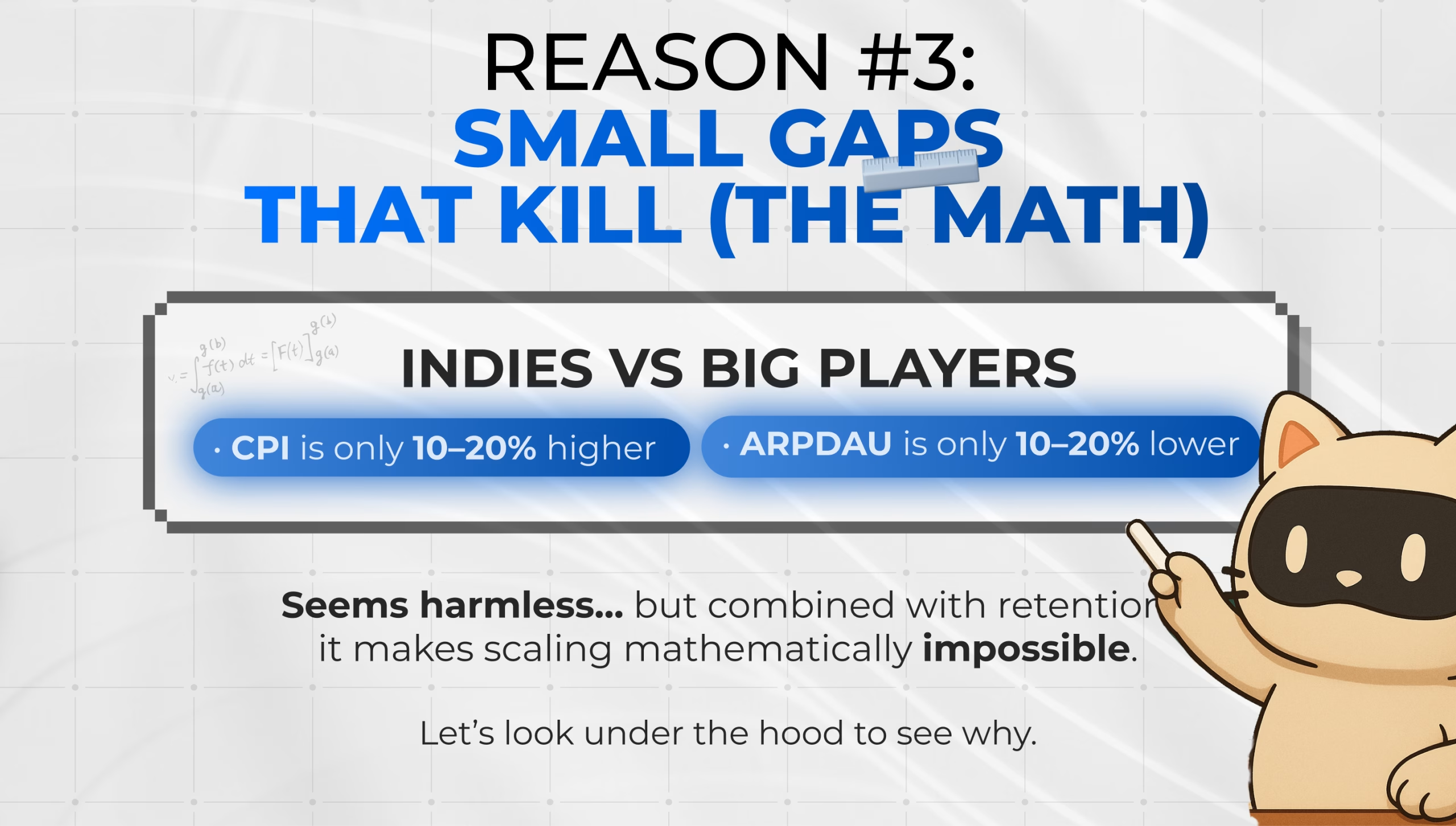
This is where small disadvantages start to add up.
Due to the lack of specialized creative and ASO teams, indie games typically face:
- 10-20% higher CPI (because their video ads have lower CTR and their store pages have lower conversion rates)
- 10-20% lower ARPDAU (because they don’t have advanced mediation stacks or direct ad network deals)
At first, these gaps seem small. But when you run the numbers, they make it almost impossible for an indie game to break even on user acquisition compared to publisher-backed titles.
Let’s break down what it takes to achieve that:
A successful product update typically yields a 4-6% improvement in key metrics (monetization or retention). The success rate for updates is roughly 1 in 6-8 attempts (approximately 12.5%). To achieve a 20-30% cumulative improvement, you need 4-5 successful updates. This translates to 25-40 total attempts.
If you release an update every two weeks, it takes 11 to 18 months to reach this level of improvement. Most indie teams cannot survive 18 months of updates without real revenue growth.
How Publishers Bridge the Gap: The Growth Infrastructure Stack
Publishers win because they have built specialized infrastructure at a scale most developers cannot match. It is not about better ideas or smarter people.
1. Creative Volume & Iteration
Large publishers maintain creative teams of 30-40+ motion designers whose sole job is to produce and test video ads.
The workflow:
- Produce 50-100 video ad variants per month per game.
- Run them across multiple ad networks (Facebook, Google, Unity, ironSource)
- Identify the 2-3 “winners” with CTRs above 20%
Allocate the majority of the spend to those high-performing creatives. This approach lowers CPI. With a creative team, a game can achieve CPIs 10-20% lower than an indie game with the same gameplay, simply because the ads are more effective.
2. Monetization Technology
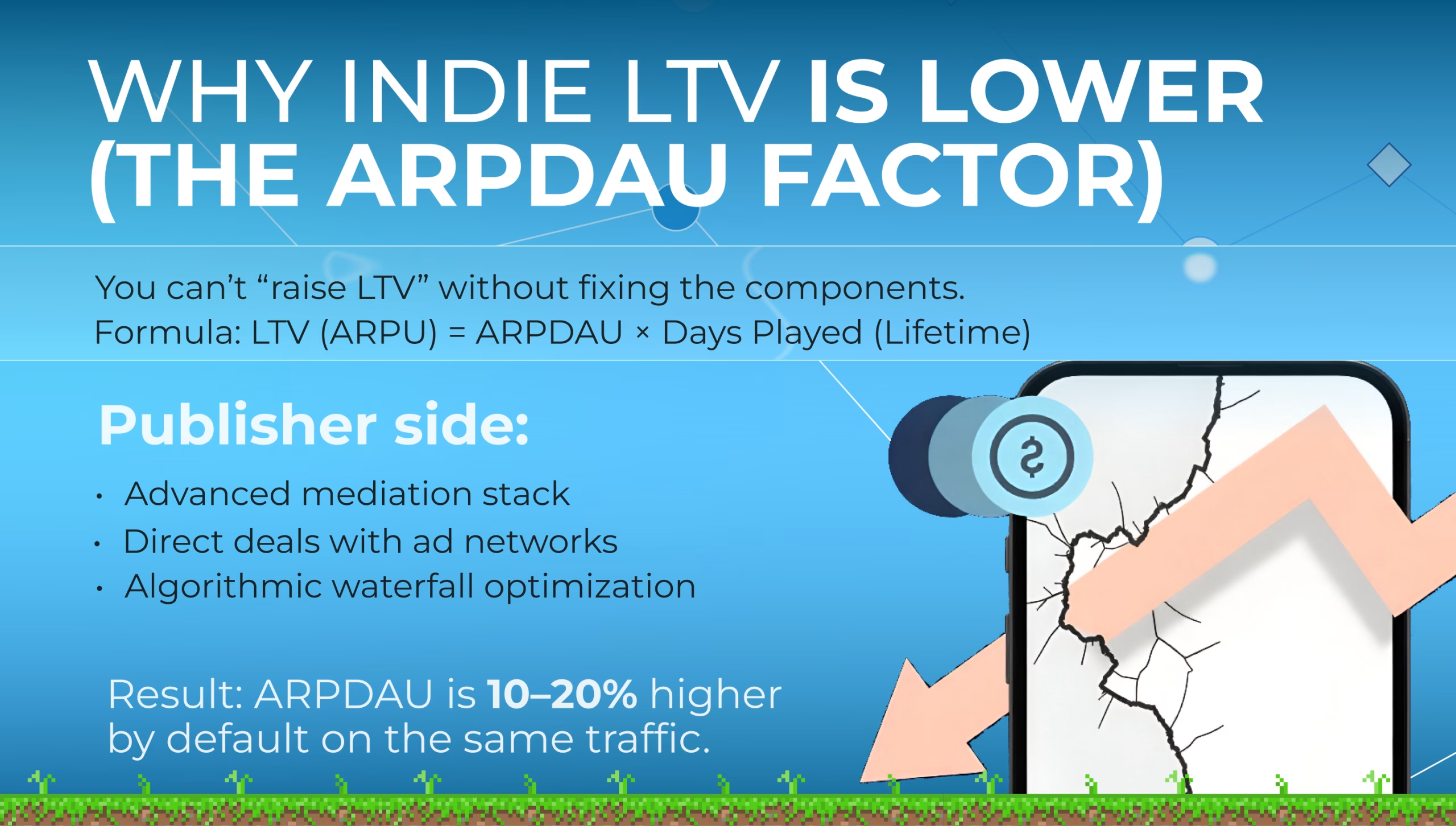
The difference between an indie mediation setup and a publisher-grade stack often amounts to 5-20% higher ARPDAU on identical traffic. Publishers achieve this through:
- Advanced mediation platforms using algorithmic waterfall optimization
- Direct deals with ad networks that provide better eCPMs than standard integrations
- Real-time bid floor adjustments founded on user segments, session depth, and geographic location
For indie developers, building this kind of setup is too complex. It requires dedicated engineers, direct ad network relationships, and data science resources.
3. Rapid, Cheap A/B Testing
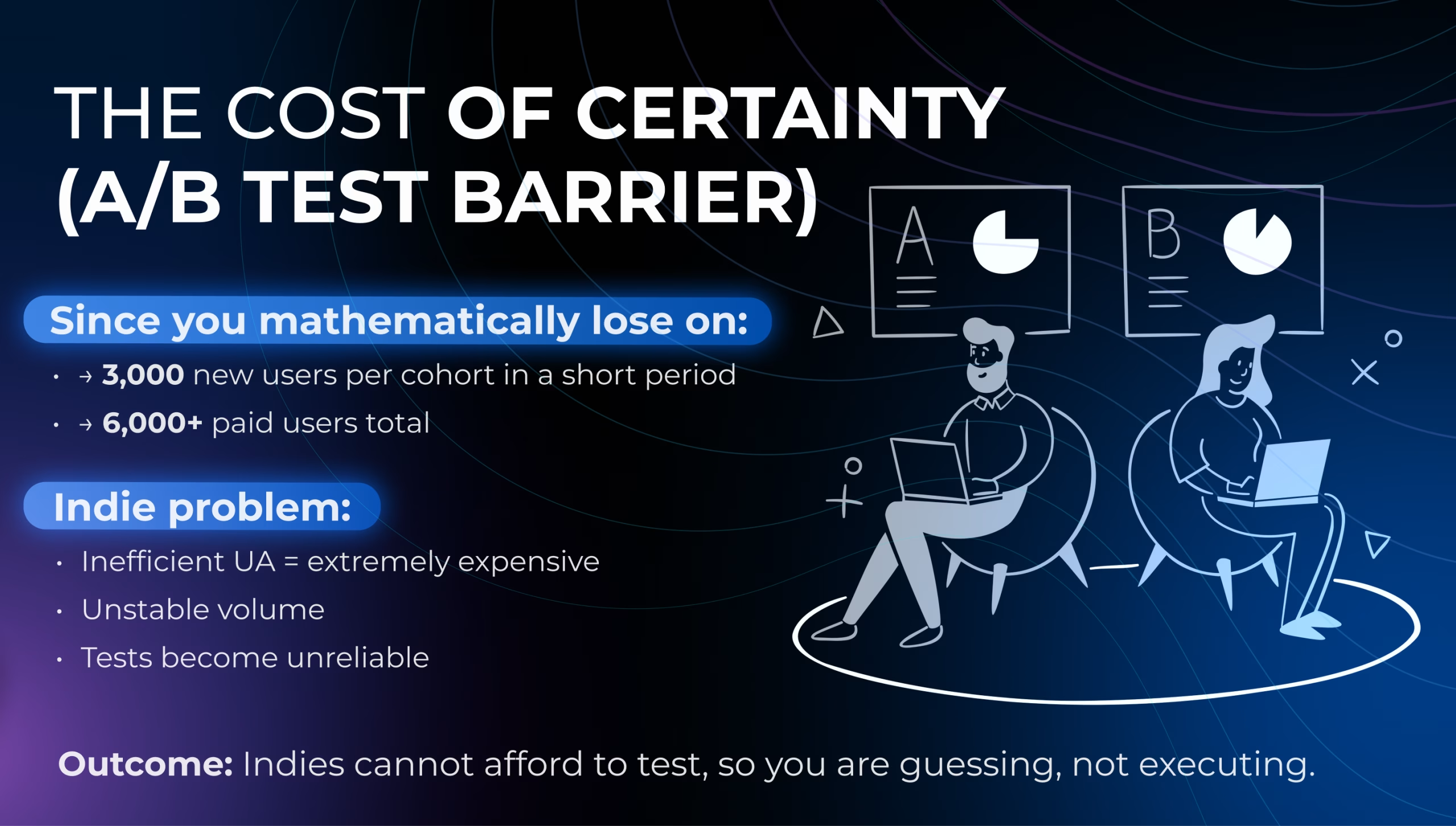
To run a statistically valid A/B test, you typically need 3,000-6,000 users per variant within a short time window (to control for seasonality and external factors). For indie teams, getting 6,000 users can cost more than $2,000 and take weeks. This makes testing slow and expensive.
Publishers, operating at scale, can acquire users at 5-8 cents per install through high-volume campaigns and cross-promotion networks. This means they can run the same test in 2-4 days for $300-500.
As a result, publishers can test and improve 5 to 10 times faster, and at much lower cost per test. After 6 to 12 months on a game, most developers stop questioning their own design choices. Publishers bring in outside product managers and designers who review 10 to 20 similar games, spot features that drive retention or monetization, and build a distinct roadmap.
In practice, this external audit typically identifies. 3-5 critical bugs that harm retention but were overlooked. Up to 10 high-priority features that could each lift key metrics by a few percentage points. This process can raise the chance of a successful update from 12.5% to 20-25%. It makes it much faster to reach competitive metrics.
Pre-Testing New Mechanics
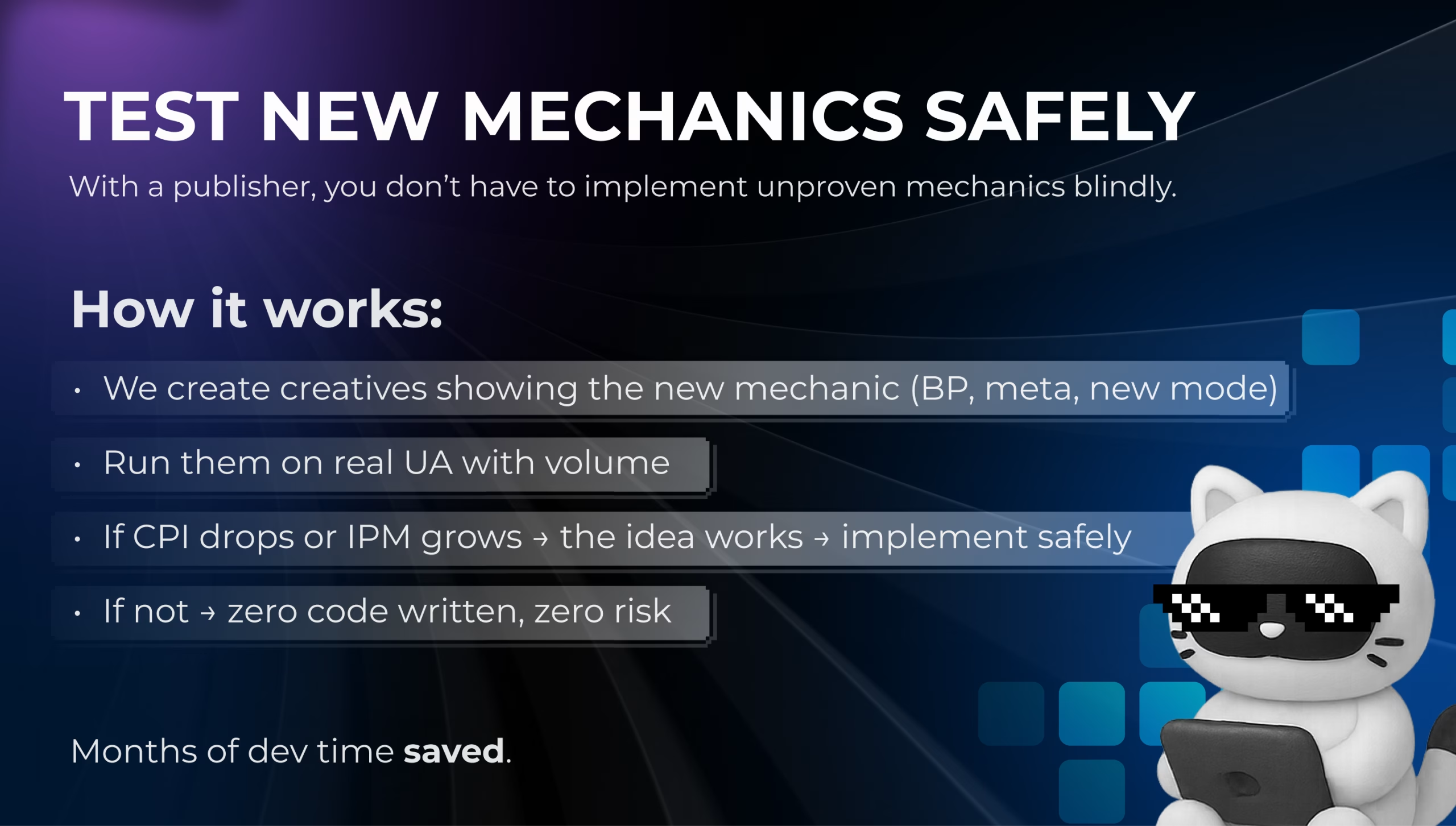
Most indie developers do not have access to this technique: testing game mechanics before building them.
The process:
- Create video ads showing a new hero, game mode, or meta feature.
- Run those videos as user acquisition creatives.
- Measure CPI and IPM (Installs Per Thousand Impressions)
If the creative gets lower CPI and higher IPM, it shows user interest, and you can invest in development. If not, you have only spent $500 on creative production instead of $20,000 on engineering. This method lowers risk and speeds up decisions.
Why Developers Fear Publishers: The Real Concerns
There are good reasons to hesitate before working with publishers. The traditional publishing model has real drawbacks:
- KPI Requirements That Feel Impossible: Many publishers have hard cutoffs (e.g., Day 1 Retention must be 40%+) that eliminate viable games from consideration.
- Unfavorable Revenue Splits: Standard deals often range from 70/30 to 90/10 in favor of the publisher. For developers, this feels like losing ownership of their work.
- Creative Interference: Publishers may push changes that improve monetization metrics yet dilute the game’s original vision.
- IP Ownership Risks: Some contracts transfer IP rights to the publisher, making future independence impossible.
These concerns are why most partnerships never happen.
The Alternative Model: Uplift Share at CAS.ai
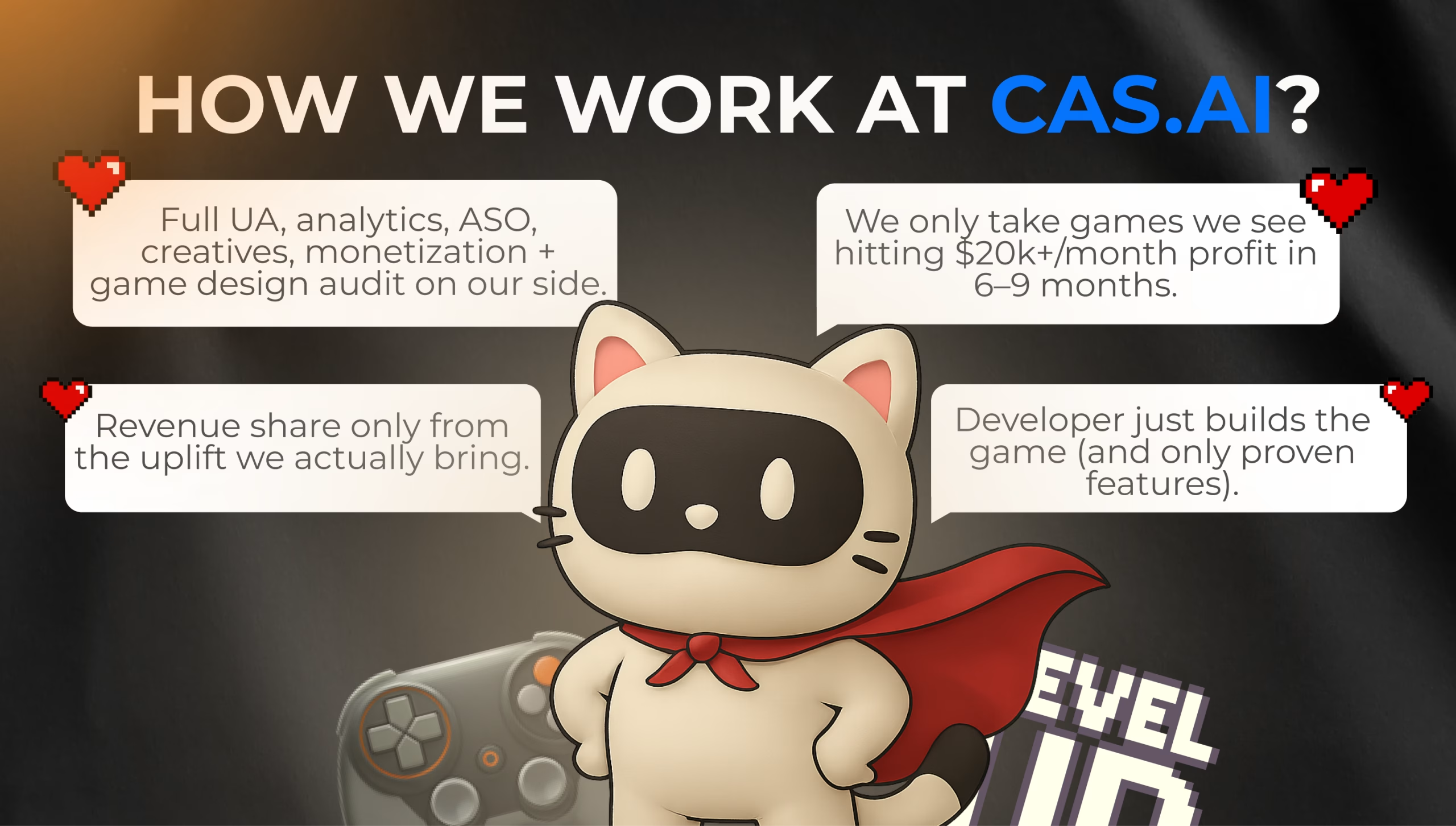
This is where Oleg Shlemovich’s approach is different from the standard industry model.
How Uplift Share Works
Instead of a traditional revenue split, CAS.ai proposes the following structure:
- The developer retains 100% of their current revenue (e.g., if the game is making $10,000/month, that’s entirely theirs).
- CAS.ai takes 50% of the extra profit they help generate.
So if CAS.ai scales the game from $10,000/month to $40,000/month, the revenue split would be:
- Developer: $10,000 (baseline) + $15,000 (50% of the $30k uplift) = $25,000/month
- CAS.ai: $15,000/month (50% of the uplift)
This structure aligns incentives. CAS.ai only makes money if the game grows.
Acceptance Criteria
CAS.ai does not require strict Day 1 Retention or other rigid KPIs. Instead, they look at one question – “Can this game realistically hit $15,000-$20,000/month in profit within 6-12 months?” If the answer is yes, they take the game.
The Buyout Option
For developers who want a clean exit, CAS.ai will buy games for 12-18 months of average monthly profit, based on the last quarter’s results. This gives developers a choice. They can keep earning from the uplift share, or sell the game and start something new.
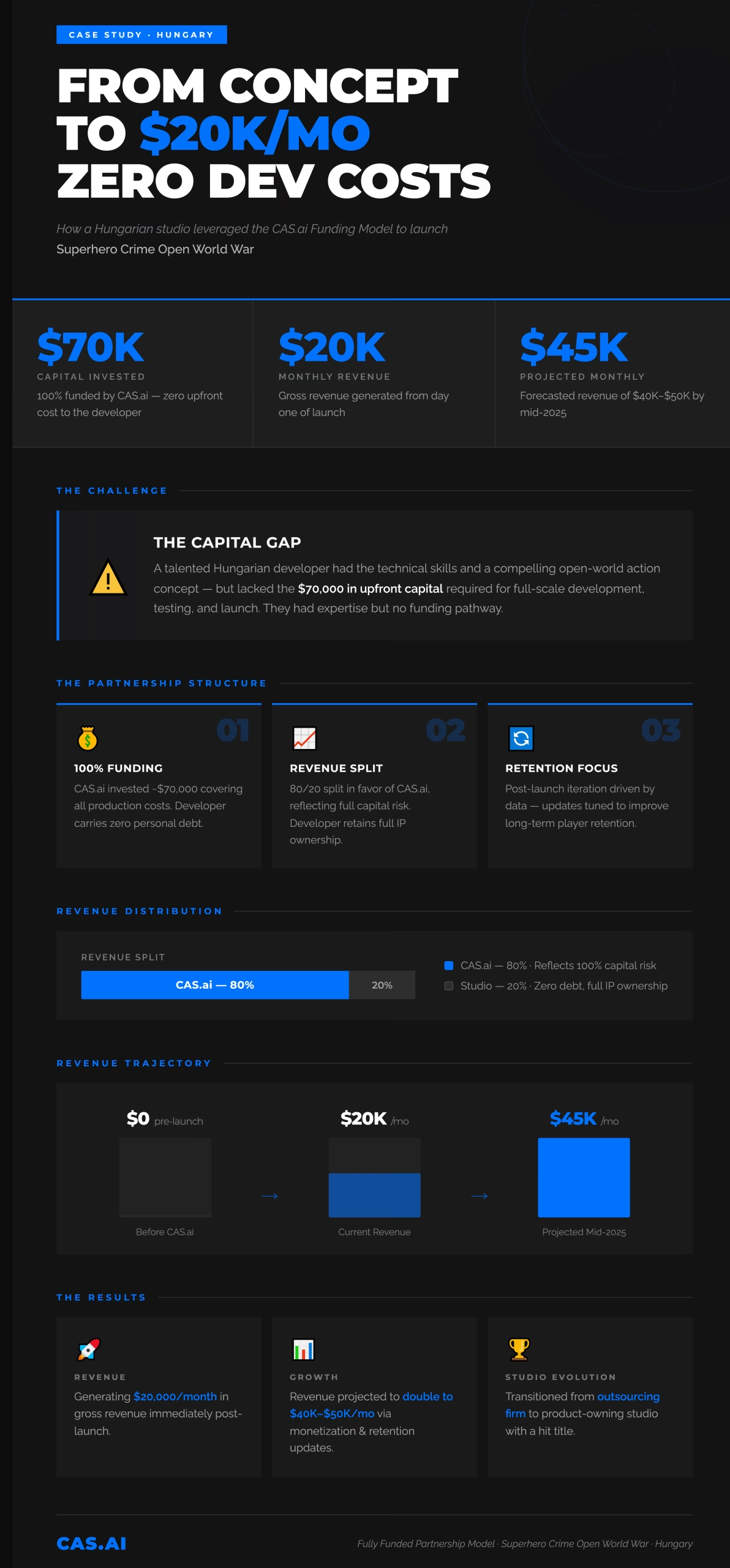
Case Study: From Concept to $20K/Month with Zero Dev Costs
The Strategic Decision: When Should You Work With a Publisher?
The decision to partner with a publisher comes down to a simple question:
- Do you have the infrastructure, budget, and time to close the three gaps? If you do not have the budget, analytics, or speed to improve quickly, self-publishing will probably not work. The odds are too low.
- If you have enough capital, can build or hire a UA team, and have time to iterate for 12 to 18 months, then self-publishing is possible.
For most indie teams, the answer is no. In that case, working with the right publisher is not a compromise. It is the only practical way to build a game that lasts and makes money.
The key is to find a partner whose incentives match yours, who shares risk, lets you keep your upside, and does not force you to give up creative control or IP ownership to get the infrastructure you need.