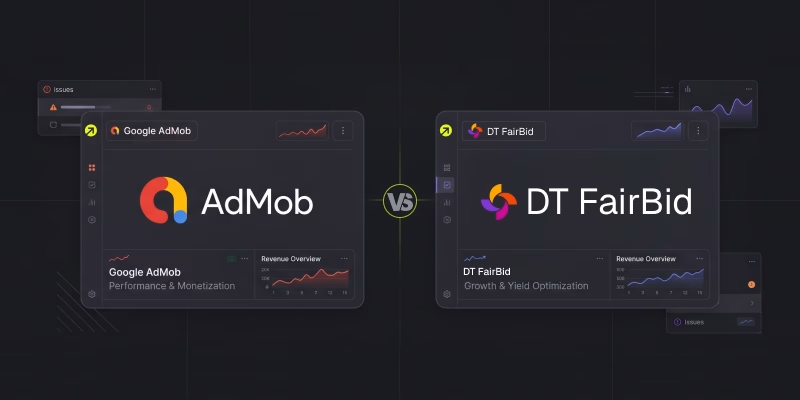
AdMob vs. DT FairBid: Which Earns More in 2026?
Quick Comparison: AdMob vs. DT FairBid
Two platforms, one big decision. The monetization engine you pick sets the pace for how fast your app can scale. AdMob and DT FairBid are built on totally different blueprints for making money from mobile apps.
AdMob is Google’s ad juggernaut, a walled garden with its own private bidding arena. DT FairBid turns the tables, giving game publishers a mobile-first mediation platform built for a fair fight and a wide-open auction.
If you’re chasing every last dollar from your app in 2026, ignore the brand names. What counts is how these engines flex in the real world: eCPM power, auction fairness, format freedom, setup headaches, and how quickly the cash hits your account.
If CAS.AI earns less, we pay the difference.
One-on-One Comparisons
Pick any matchup and jump in. Each page lays out the unfiltered data, the true upsides and drawbacks, and a verdict that actually fits your app’s situation.
DT FairBid
Digital Turbine’s programmatic mediation platform is engineered for a fair, simultaneous auction environment, primarily tailored for mobile game publishers seeking transparent yield.
AdMob
Google’s ad network and mediation platform, the default monetization engine for millions of mobile apps worldwide due to its vast, plug-and-play global demand.
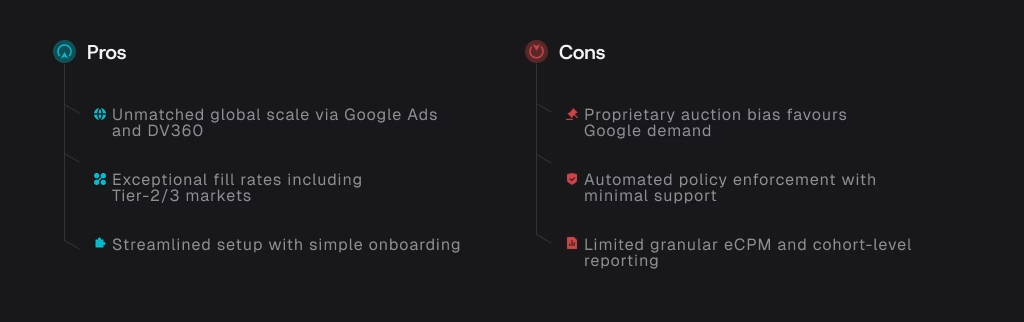
How to Choose a Mobile Ad Network
There’s no magic formula here. Before you connect anything, run your app through these four filters.
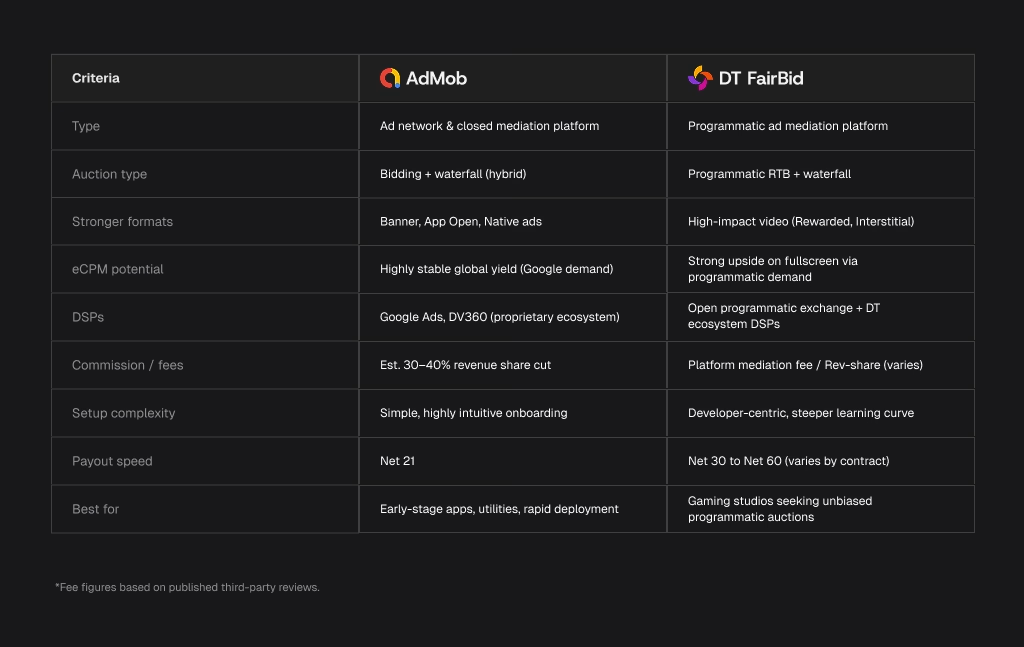
- App type and ad format: If your app lives on banners, think utilities or content, AdMob is your best bet. But if you’re building games that rely heavily on rewarded video or interstitials, DT FairBid’s programmatic setup tends to deliver higher eCPMs.
- Audience geography: AdMob shines in Tier-2 and Tier-3 markets, powered by Google’s global advertiser muscle. DT FairBid’s demand is laser-focused on Tier-1 geos.
- Mediation or single network: Let both networks battle it out in a neutral mediation layer instead of picking sides. That kills bias and cranks your eCPM higher with real competition on every impression.
- Payout terms: AdMob’s Net 21 cycle is built for fast reinvestment. DT FairBid’s Net 30 to 60 means you’ll need to plan your cash flow, especially if you’re just getting started.
Where CAS.AI Fits.
CAS.AI isn’t just another ad network. It’s your Growth Operator, running point between your app and every network in the game. Network on the list.
One SDK hooks you up to 20+ ad networks and 150+ DSPs. CAS.AI doesn’t play favorites because it owns no ad networks; every demand source gets a fair shot. Each impression goes to the top bidder, whether that’s AdMob, AppLovin, or some DSP you’ve never even heard of.
Apps that switch to CAS.AI for independent mediation usually sees ARPU jump by 1.5× to 2× compared to running a single network or a biased mediation setup. With the no-loss guarantee, if your revenue dips during testing, CAS.AI covers the difference. You risk nothing by finding out your real number.
Key Takeaways
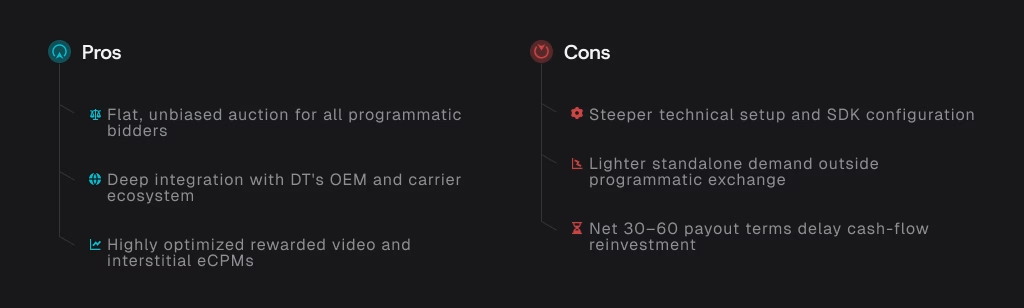
- AdMob’s strength is filling top-tier ad spots and tapping into Google’s massive advertiser pool. DT FairBid, meanwhile, is known for its simple, unbiased auctions, which gaming studios tend to prefer.
- DT FairBid usually brings in higher earnings for rewarded video and interstitial ads, while AdMob does better with banners and App Open formats.
- There is a big difference in how quickly you get paid. AdMob pays in about three weeks, but with DT FairBid, you might wait up to two months. That is something to keep in mind for your cash flow.
- DT FairBid tends to attract more top-tier advertisers, while AdMob’s Google connections help it perform better in less competitive regions.
- If you want to maximize your revenue, the answer is not to pick just AdMob or DT FairBid. The real gains come from letting both compete inside a neutral mediation layer like a growth operator CAS.AI, which brings in even more networks and demand sources.
Neither platform wins everywhere; it all comes down to your app category and what you want to achieve. AdMob is unbeatable for simplicity, global reach, and banners. DT FairBid is a powerhouse for gaming studios that want a transparent, real-time programmatic auction environment. Yes. AdMob standardizes payments on a reliable Net 21 cycle. DT FairBid payment terms generally range from Net 30 to Net 60, depending on contract specifications, which may require longer waiting periods to access monetization revenue. Absolutely. In fact, making both networks compete in real time through a neutral, independent mediation layer like CAS.AI can help reduce ad-stack bias and maximize your daily ad revenue.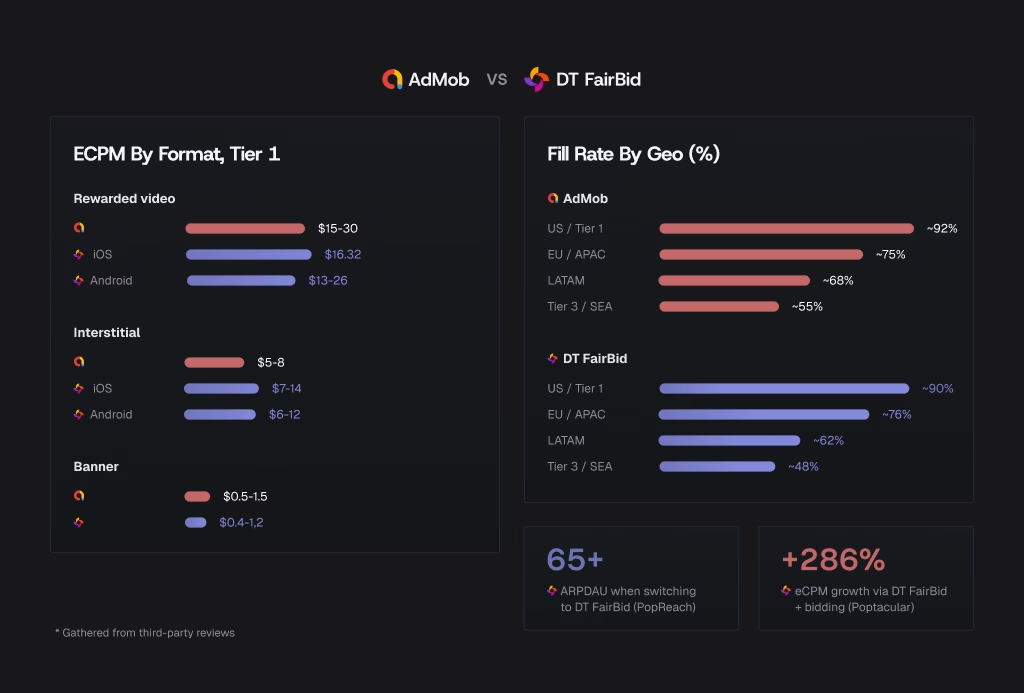
Ad Network Comparison FAQ
Learn about CAS.AI Mediation
Check out 2026 Alternatives to AdMob