

Marketing in the Privacy Era: Measuring UA Performance Without IDFA
Granular tracking is gone on iOS and Android. If you want results, focus on SKAN, MMM, incrementality testing, and privacy-first AI optimization. Everything else is noise.
Introduction: The Ground Has Shifted Under Mobile Marketing
IDFA (Identifier for Advertisers) and GAID (Google Advertising ID) made mobile UA easy. Marketers tracked every step from impression to purchase without friction. Deterministic precision was standard.
With these IDs, teams attributed spend, optimized bids instantly, built laser-focused lookalikes, and calculated user-level LTV (Life Time Value). It was plug-and-play.
Apple nuked the ecosystem overnight. No warning.
iOS 14.5 and ATT killed IDFA tracking. Opt-in rates collapsed. Gaming took the biggest hit. Most marketers lost 75-80% of their trackable iOS users overnight.
Google followed with Privacy Sandbox for Android, rolling out PAAPI (Protected Audience API) and SDK Runtime to lock down tracking across the board.
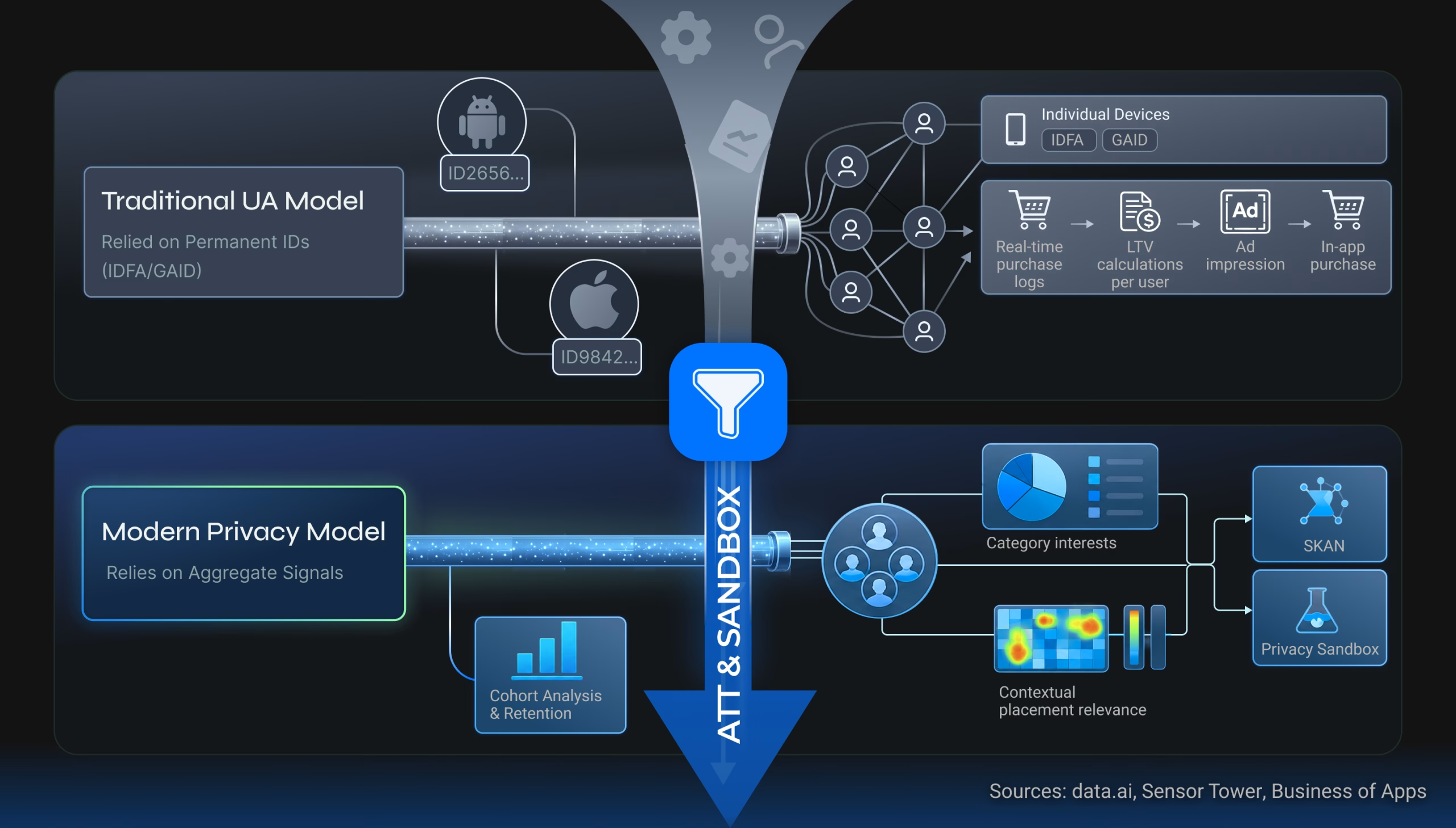
Every UA and performance marketer had to rebuild measurement, attribution, and monetization from scratch. No exceptions. No shortcuts. Everyone started over.
This change is permanent. GDPR, CCPA, and global privacy laws rewrote the rules on consent. Users now reject invasive tracking outright.
User-level tracking is gone for good. Now you need new tools, new thinking, and the guts to make big budget calls with less certainty.
Here’s what actually works in privacy-first UA measurement and monetization right now. These are the methods, tools, and logic that keep you growing profitably.
IDFA Loss Changed Everything (And What Marketers Got Wrong)
When Apple first announced the ATT framework, a collective wave of denial rushed through the mobile advertising industry. Most UA teams paused and waited, hoping Apple would face antitrust pressure or backtrack on its enforcement timelines. Others assumed a magic technological workaround would emerge to preserve the status quo.
It never happened. Instead, ad networks moved quickly to patch the leaks using fingerprinting and random hacks disguised as “advanced modeling.” Mobile Measurement Partners (MMPs) frantically pushed proprietary, siloed measurement frameworks, dividing the mobile ecosystem into a dozen incompatible, non-standardized measurement methods.
This transition hurt because the old model was built on a structural flaw:
Mobile attribution was built on the myth that individual-level tracking was sustainable or even necessary to scale.
Most of what mobile marketers celebrated as “hyper-precise targeting” was merely a correlation engine running on a last-click attribution model. Historically, last-click models measured credit appropriation rather than the true incremental marketing impact. They rewarded platforms that could drop a cookie or match an ID to an inevitable conversion event, completely ignoring whether the ad actually changed buyer behavior.
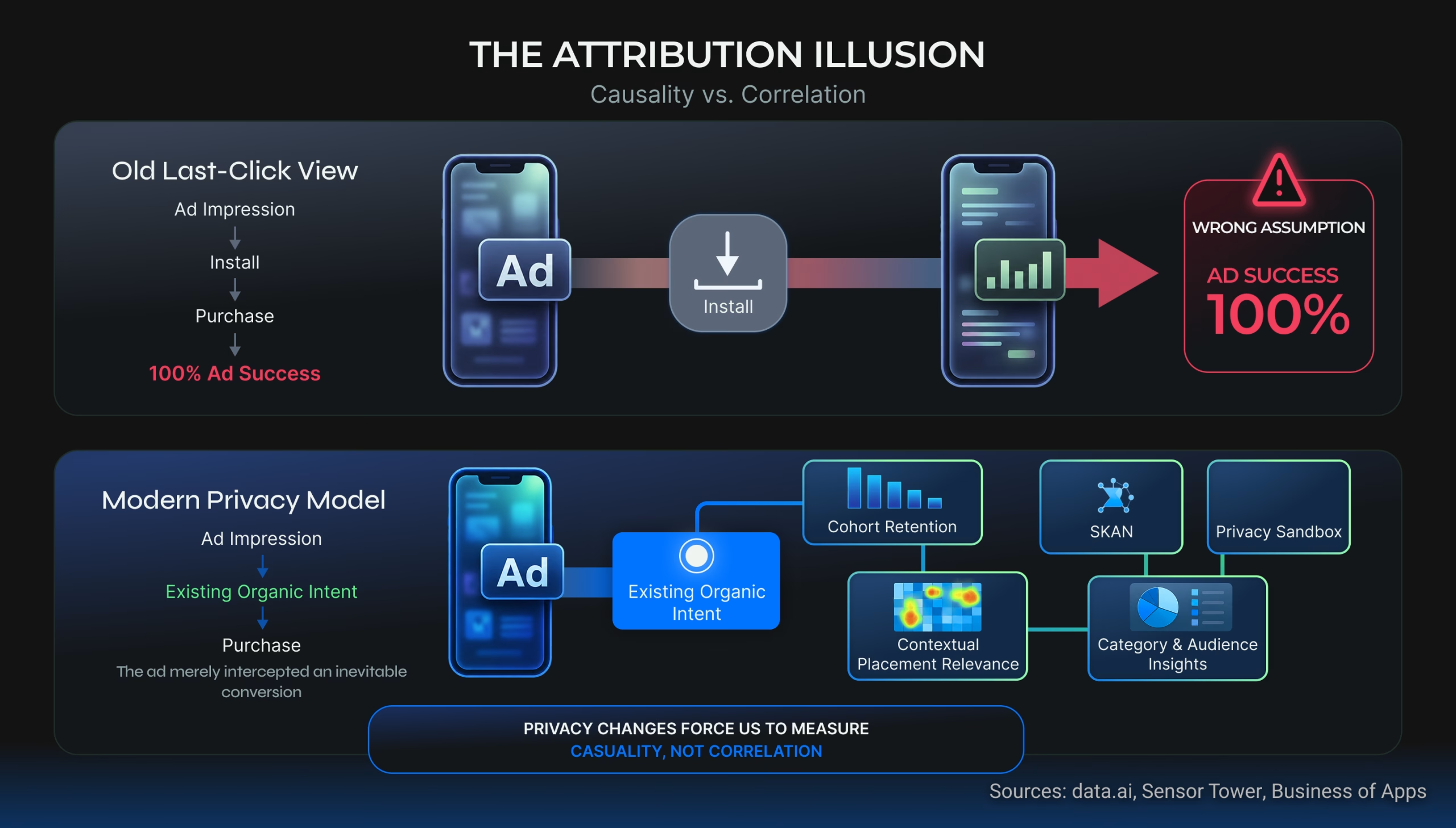
Privacy changes forced marketers to focus on what actually drives business, not vanity metrics. Moving from rule-based data to probabilistic modeling and from individual profiles to aggregate cohorts isn’t just about compliance. It’s a more honest, resilient, and rigorous way to measure marketing efficiency.
The Four Pillars of Modern UA Measurement
To win now, you need an integrated, multi-layered measurement system built on four pillars. Each one covers a different time horizon and data set.
SKAdNetwork: Apple’s Native Attribution Framework
Apple’s SKAdNetwork (SKAN) has matured into the mandatory, structural attribution layer for all iOS inventory. Rather than allowing an external platform to track a user’s path, Apple performs attribution directly on the device’s hardware. It completely severs the link between user identity and conversion data.
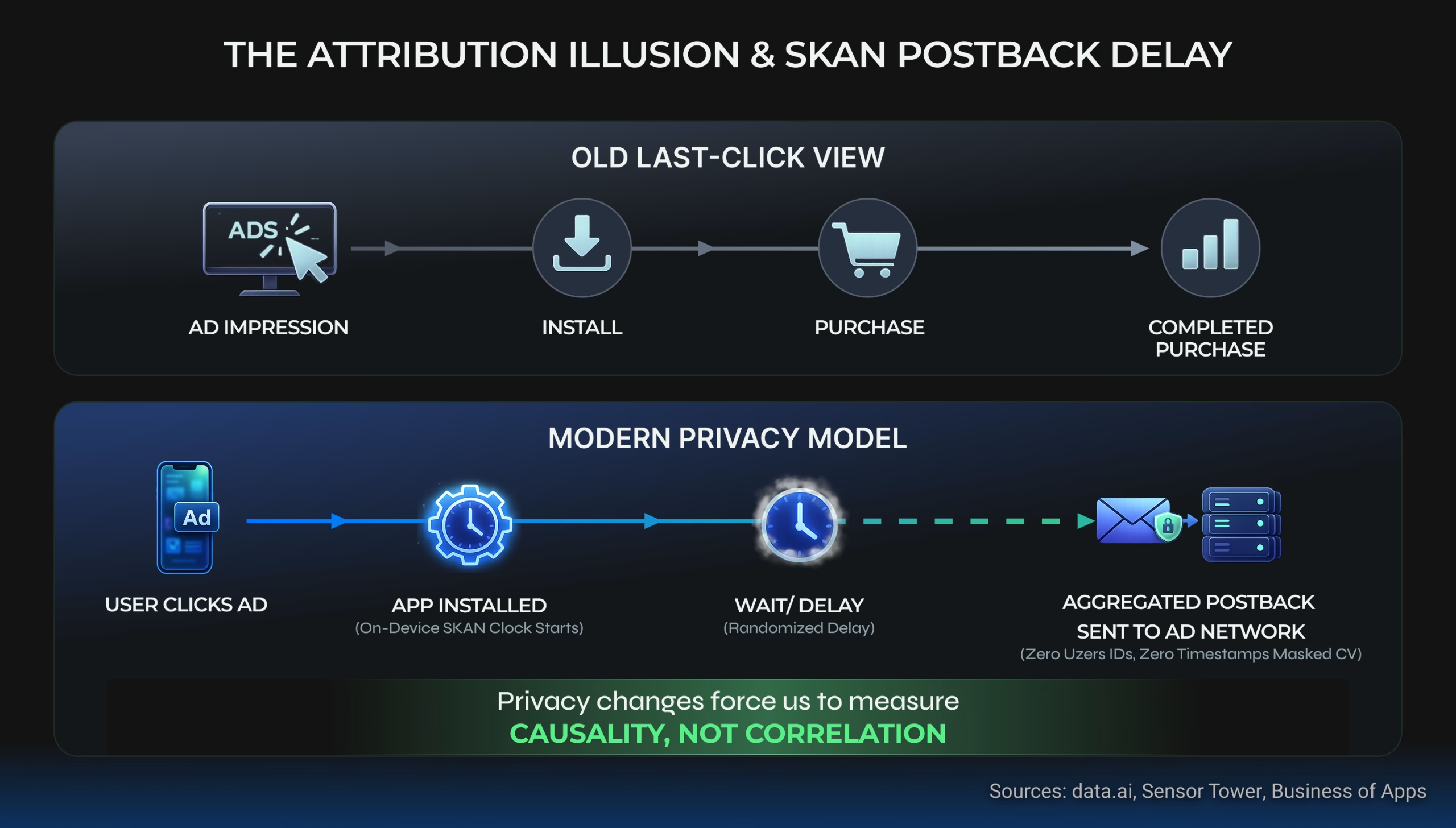
Instead of real-time, user-specific data strings, ad networks and app publishers receive highly aggregated, purposefully delayed postbacks.
While SKAN guarantees end-user privacy, it introduces two major friction points for performance improvement:
Severely Constrained Conversion Schemas
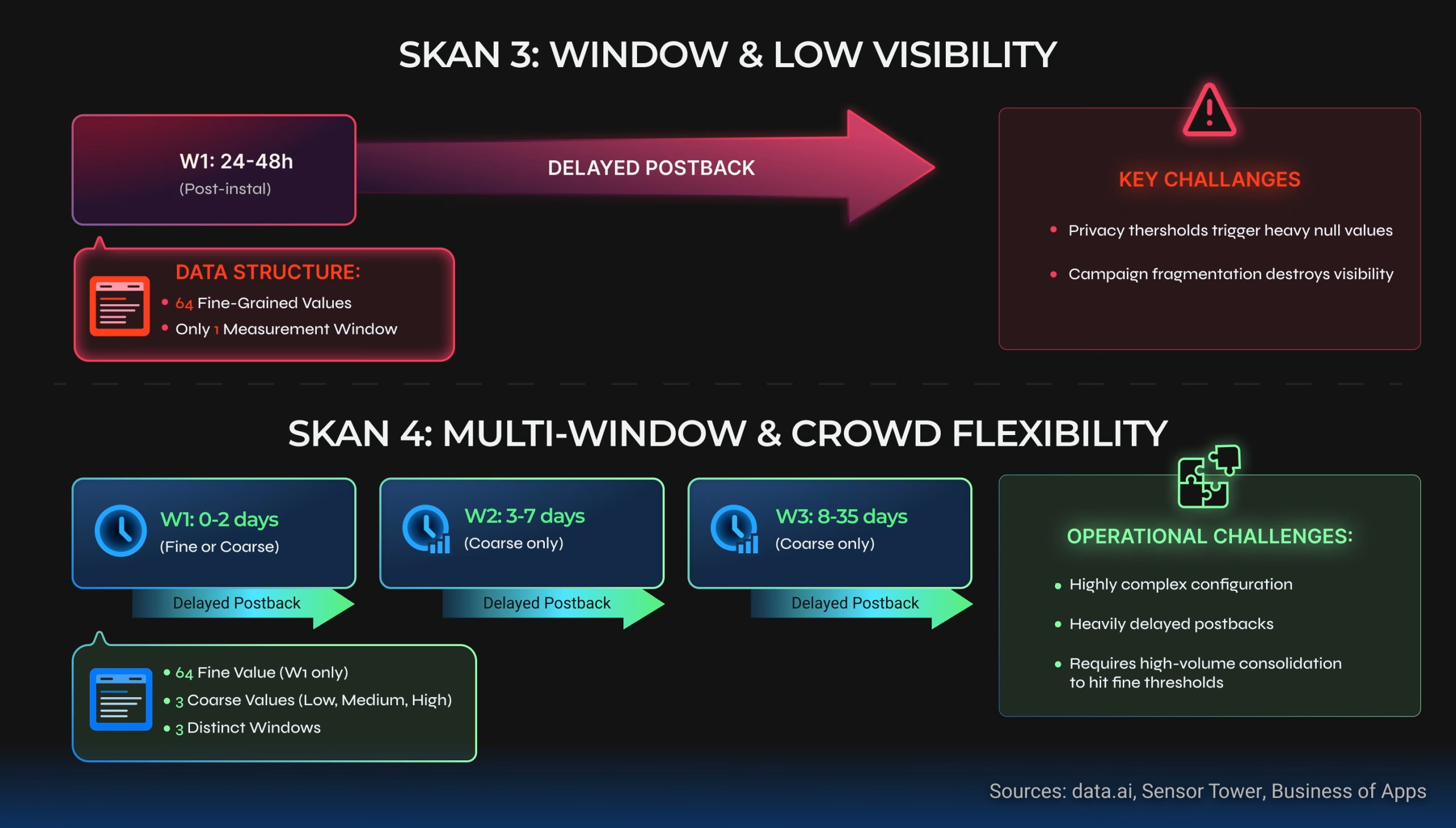
In older SKAN iterations, marketers had to compress their entire down-funnel event architecture into a single 6-bit value (0 to 64 potential values). While SKAN 4 expanded this slightly by introducing three distinct postback windows and “coarse-grained” values (low, medium, high), the data is still highly restricted compared to historical standards.
Intentionally Engineered Postback Delays
Postbacks are delayed by randomized timers ranging from 24 to 72 hours (or up to multiple days in later SKAN)
This delay kills your ability to make real-time bid adjustments or optimize creatives on the fly.
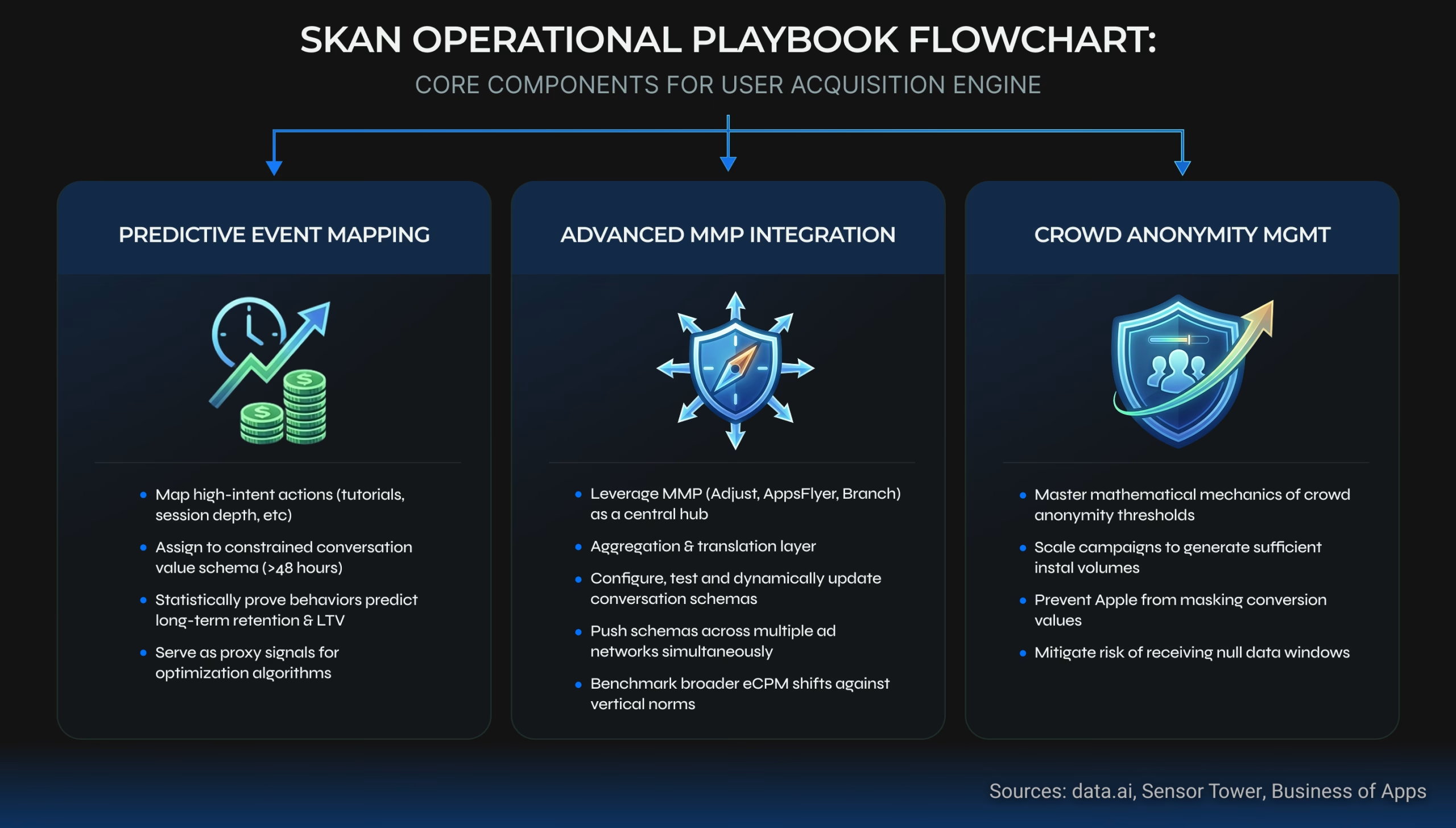
To make SKAN function effectively as a core component of your user acquisition engine, you must implement a rigorous operational playbook:
Predictive Event Mapping
Waiting for a 30-day LTV signal is dead. You need to map your highest-intent in-app actions, like finishing a tutorial, reaching a session depth in 48 hours, or setting up a profile, and assign them to your limited conversion schema.
These early actions must actually predict long-term retention and LTV. They become your proxy signals for optimization.
Advanced MMP Integration
Use your MMP (Adjust, AppsFlyer, Branch) as your aggregation and translation layer. Set up, test, and update your conversion schemas across networks, and benchmark eCPM shifts against the market.
Crowd Anonymity Management
You need to understand Apple’s crowd anonymity thresholds. If your campaign doesn’t hit enough installs in a window, Apple hides your conversion data.
Consolidate your campaigns. Ditch dozens of micro-segments and run fewer, high-volume campaigns to clear anonymity tiers and unlock better data.
SKAN Version Max Conversion
Ultimately, SKAN is table stakes, not the full picture. It tells you what happened inside Apple’s walls, but not why or how channels interact. Running a big budget on SKAN alone is a strategic mistake.
Mix Modeling (MMM): The Statistical Return
Marketing Mix Modeling (MMM) is far from a new invention. It originated decades ago within corporate Consumer Packaged Goods (CPG) companies that sought to quantify how macroeconomic television campaigns, print billboards, and in-store promotions collectively drove retail sales.
During the early mobile boom, growth marketers dismissed MMM as too slow, excessively academic, and far too macro for the hyper-fast pace of digital performance marketing. However, the depreciation of the IDFA has triggered a massive industry renaissance for MMM, this time powered by modern cloud computing, automated data engineering pipelines, and highly granular input variables.
MMM uses complex statistical techniques, primarily multivariate regression analysis and Bayesian inference, to measure the historical relationship between aggregate advertising spend across multiple channels and macro business outcomes (such as daily active users, total app installs, subscription revenue, or overall ARPU) over time.
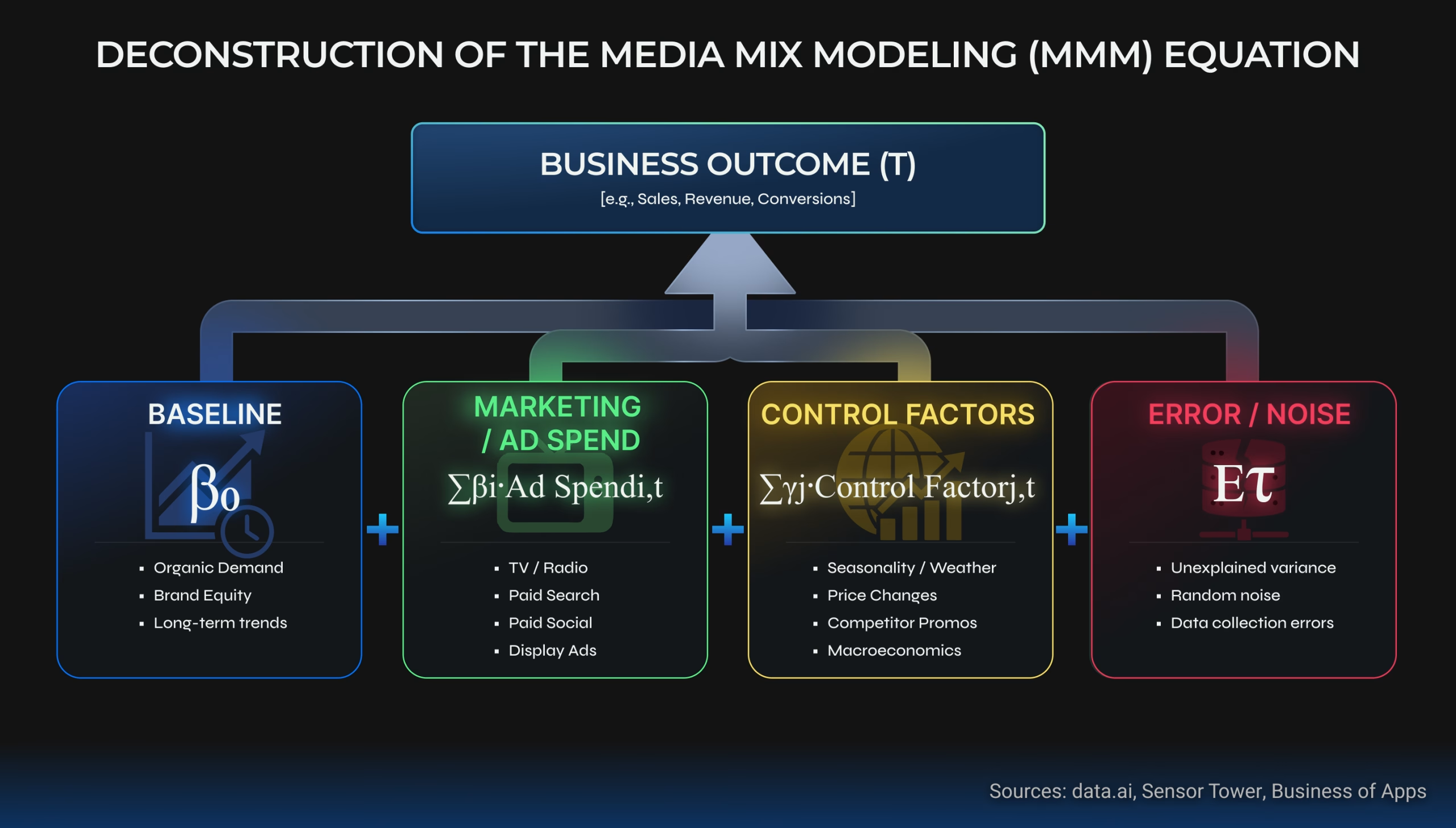
MMM runs on aggregate time-series data. No tracking tokens, device IDs, or privacy-invasive signals needed. It’s immune to changes in privacy regulations.
Instead of asking: “Which exact ad creative did user X click on before executing an in-app purchase?”
MMM asks: “When we systematically scaled our ad spend by 35% on Facebook and TikTok last month, what was the corresponding statistical lift on our baseline organic acquisition and total revenue?”
Aggregate Ad Spend Data
Functional Data Pipeline Table
This table maps out the data transformations as inputs move through the machine learning or statistical layer to become actionable business metrics.
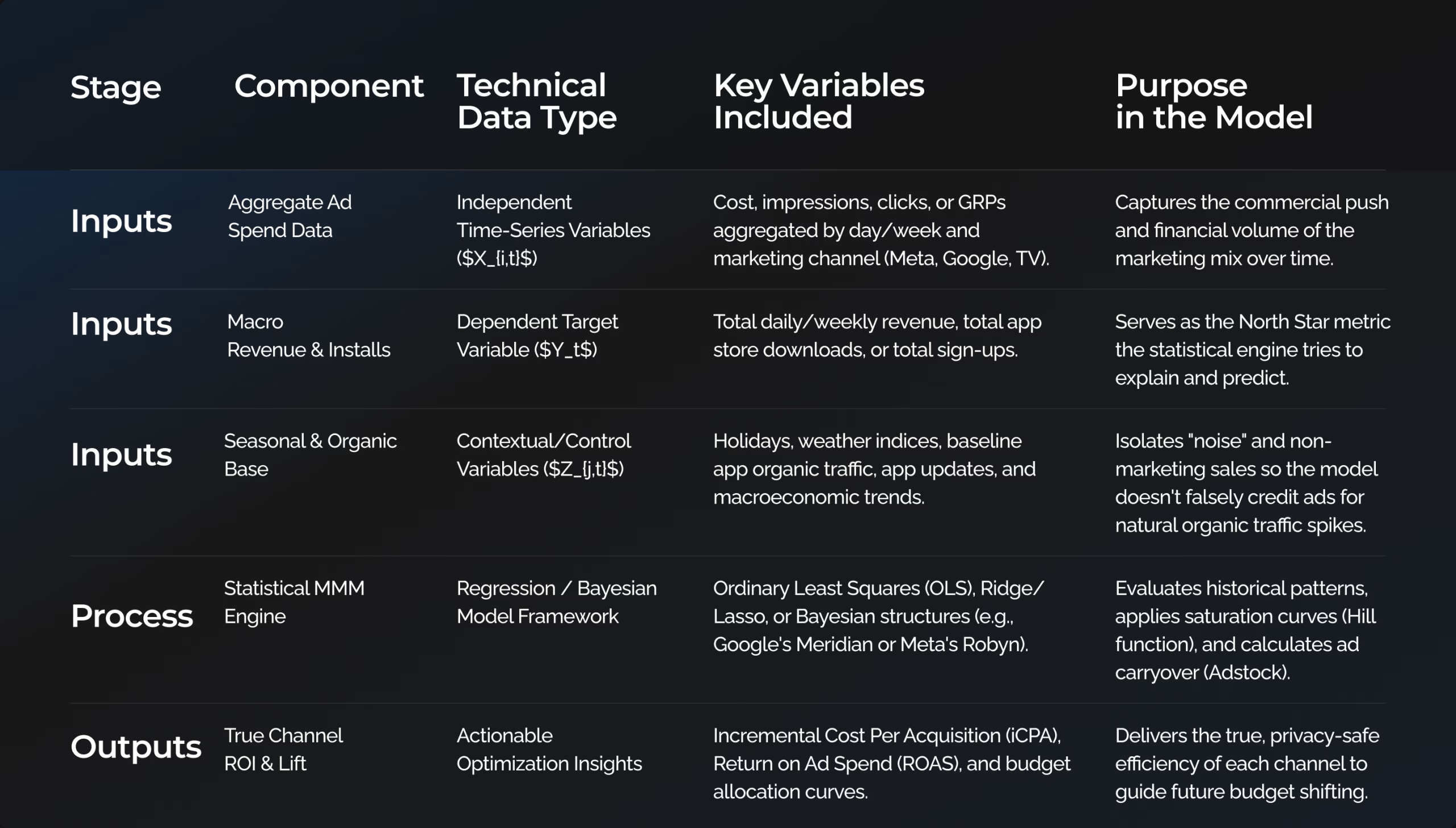
Delivers the true, privacy-safe efficiency of each channel to guide future budget shifting.
Architectural Block Scheme
This structural representation groups the components by their roles as Data Ingestion layers, Processing cores, or Downstream Insights
Infographic explaining incrementality testing for app growth, illustrating treatment and control groups to measure true conversion lift.Deep Dive: What Happens Inside the Engine?
When the three streams of input data reach the Statistical MMM Engine, the system performs three distinct operations to yield the True Channel ROI:
- De-biasing through Controls: The engine first examines historical periods where ad spend was low or zero during holidays or peak seasons. By doing this, it separates the Seasonal & Organic Base from the Macro Revenue.
- Applying Consumer Psychology Curves: Raw spend isn’t linear. The engine transforms the Aggregate Ad Spend Data using two mathematical operations:
- Adstock Transformation: Calculates how long an ad stays in a consumer’s memory (e.g., a TV ad seen on Monday, driving a mobile install on Thursday).
- Saturation Transformation: Finds the plateau point where spending more money on a channel stops bringing in proportional installs.
- Calculating Incremental Lift: By stripping away the baseline and accounting for saturation, the engine reveals the exact revenue volume that would have been completely lost if a specific ad channel had been turned off. This is the True Channel Lift.
When building or implementing modern MMM implementations, performance marketing teams generally look toward two primary open-source architectures:
- Google’s Meridian: An open-source, Bayesian-based Marketing Mix Modeling framework developed explicitly to help teams reconcile fragmented signal environments. Meridian allows growth teams to incorporate prior business knowledge, handle highly sparse media channels, and accurately model multi-channel ROI with a high degree of statistical confidence.
- Meta’s Robyn: Another powerful, automated open-source MMM framework applying evolutionary algorithms (via the Nevergrad library) to build and select optimal regression models. Robyn features an incredibly active practitioner community and excels at helping teams accurately calculate the ad-stocking effects (the delayed decay of an ad’s impact over time) and saturation curves of high-volume social media networks.
The core advantage of these modern programmatic frameworks is found in their native ability to isolate and control critical external variables. They factor out organic baselines, economic seasonality, holiday surges, regional competitive spending spikes, and macroeconomic trends, confounding factors that traditional click-based last-interaction attribution ignores completely.
However, implementing an internal MMM practice requires a serious devotion to data quality:
An enterprise-grade MMM requires at least 12 to 24 months of highly accurate, uncorrupted media spend and business outcome data to establish a reliable baseline.
If you haven’t started aggregating and cleaning your historical data, start now. The best time to build your MMM stack was two years ago. The second-best is right now.
Incrementality and Lift Testing
Incrementality testing answers the fundamental causal question that traditional attribution frameworks might never fully answer: Would this specific cohort of users have downloaded our app or purchased our subscription anyway, even if they had never seen our advertising?
By utilizing strict experimental designs, incrementality directly isolates the causal impact of your paid marketing spend. It consistently removes the severe selection bias that inherently plagues last-click, multi-touch, and probabilistic attribution systems. Marketers generally deploy two primary testing methodologies within their growth loops:
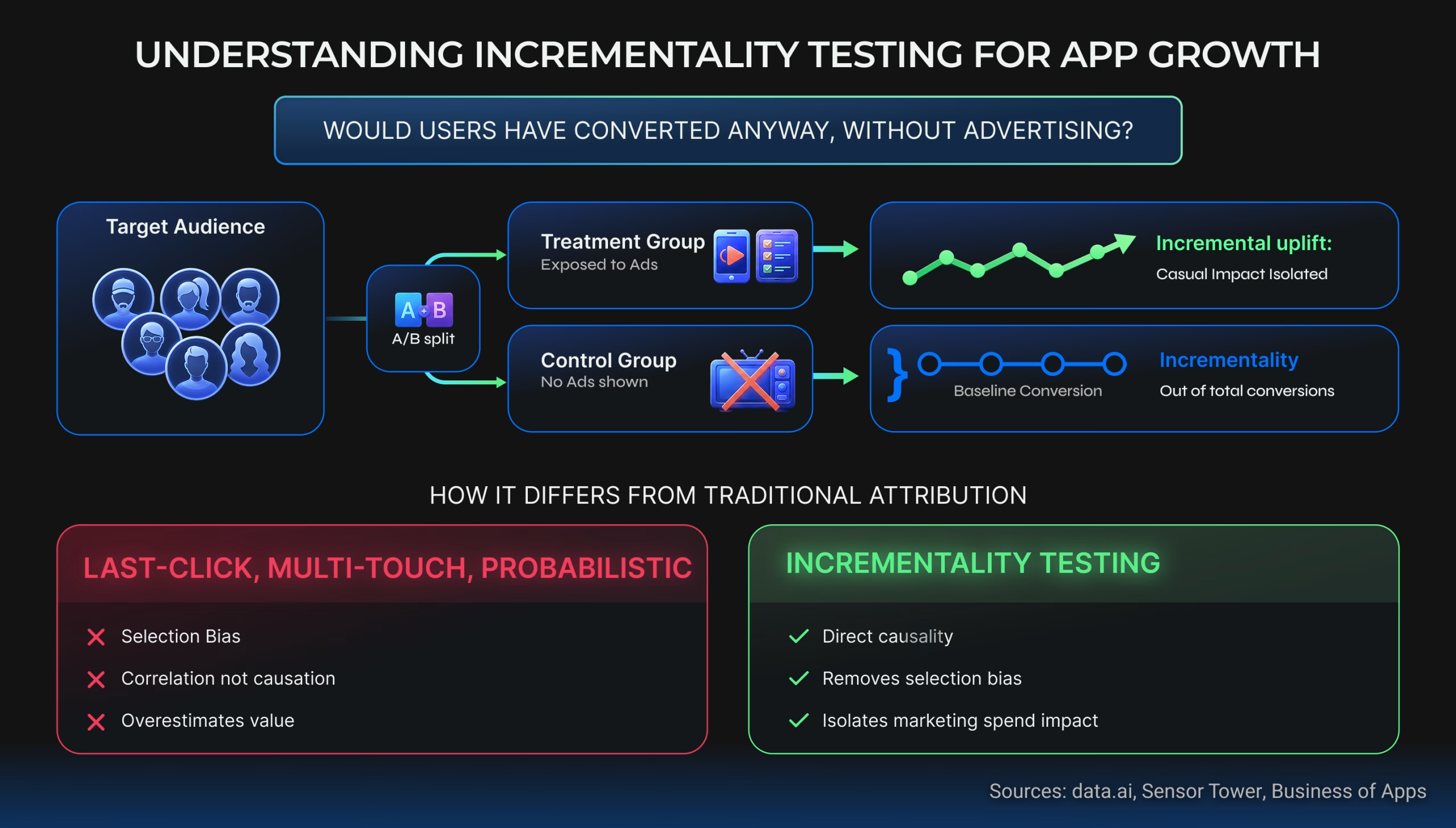
Subtract Control from Treatment to find TRUE Incremental Lift Geo-Experiments
This procedure consists of segmenting your primary target markets into distinct, statistically matched geographic regions (for example, pairing similar metropolitan areas or states). You then establish a treatment group in which your paid advertising runs normally, and a control group in which all paid ad activity for that specific channel is withheld.
The baseline difference in down-funnel conversion rates between these matched regions during the testing window represents the true incremental lift generated by your media spend. This approach is highly effective for measuring non-clickable or heavily aggregated channels, such as Connected TV (CTV), programmatic digital out-of-home (DOOH), or high-scale influencer campaigns, that do not pass down-funnel conversion signals. Marketers frequently leverage open-source packages such as GeoLift (built by Meta’s marketing science team) to design these regional tests with statistical soundness.
Holdout Tests
With this setup, a small, randomly selected percentage of your eligible target audience is systematically excluded from seeing your ads, while the rest of the audience is exposed to them as usual. Post-ATT, building clean user-level holdout groups on iOS has become significantly more difficult due to the lack of persistent device IDs. Marketers often must rely on platform-native holdout tools within walled gardens or on wider, probabilistic audience definitions.
Run incrementality tests often. They cut through media reporting noise. High-volume, low-CPI channels usually just intercept organic users who were already headed to your app.
Retargeting campaigns that show high ROAS on dashboards often deliver zero or even negative incremental lift in real tests. Move budget away from low-incrementality channels and into those that drive real incremental ROAS. Your blended UA efficiency will jump.
Contextual and Cohort Targeting
You can’t build granular behavioral profiles or track users across the ecosystem anymore. Now, campaign performance depends on deep contextual relevance and smart cohort pattern recognition. This isn’t a step backward, it’s a durable way to find engaged audiences at scale.
- Contextual Targeting: This strategy matches your ad placement directly to the user’s specific content, category, and state of mind at the exact moment of exposure. For example, a specialized nutrition and fitness app running an ad directly adjacent to high-quality health articles, workout-tracking utilities, or wellness podcasts engages an audience with an immediate, active predisposition toward that category. It achieves this without needing any access to the user’s historical cross-app browsing profiles or personal data.
- Cohort-Level Optimization: Rather than optimizing bidding based on individual user actions, this system examines aggregate behavioral signals. Growth teams analyze how users originating from a specific ad placement, creative angle, or broader acquisition channel perform as a unified group over time. This macro perspective serves as the core, native architecture for both Apple’s SKAN and Google’s
Privacy Sandbox APIs.
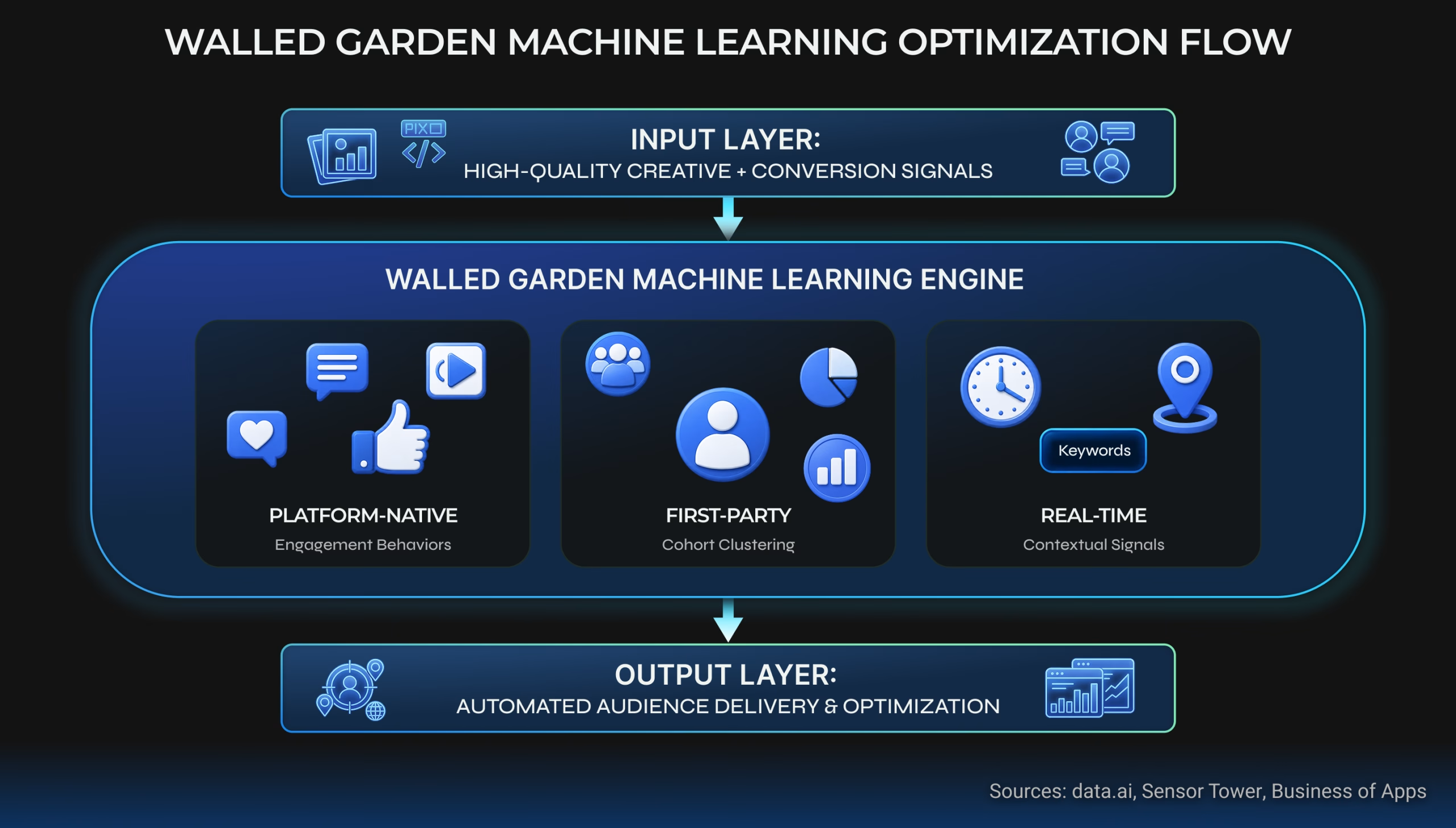
Concurrently, major media networks have rapidly advanced their algorithmic capabilities. Meta’s Advantage+ App Campaigns and Google’s App Campaigns have shifted heavily toward machine-learning-driven audience discovery. These automation engines do not rely on tracing individual IDFAs across external properties. Instead, they leverage powerful deep learning models operating within their massive walled gardens.
These engines analyze native engagement behaviors, build complex lookalike cohorts from first-party customer lists, and assess real-time contextual signals to predict which user segments are most likely to convert.
For growth teams, the job has changed. Forget building hyper-niche segments or tweaking demographics. Now, you win by feeding machine-learning engines with varied, high-quality creatives and accurate down-funnel conversion signals.
Where Programmatic Ad Mediation Fits: Machine Learning Without Tracking
User acquisition is only half the battle. Monetization has changed just as much. The real question: How do you maximize eCPM and forecast cohort LTV when you can’t track users across apps and sessions?
This is where advanced ad mediation platforms matter. Old mediation relied on behavioral data. Now, the best systems use predictive machine learning on contextual signals, no user-level tracking needed.
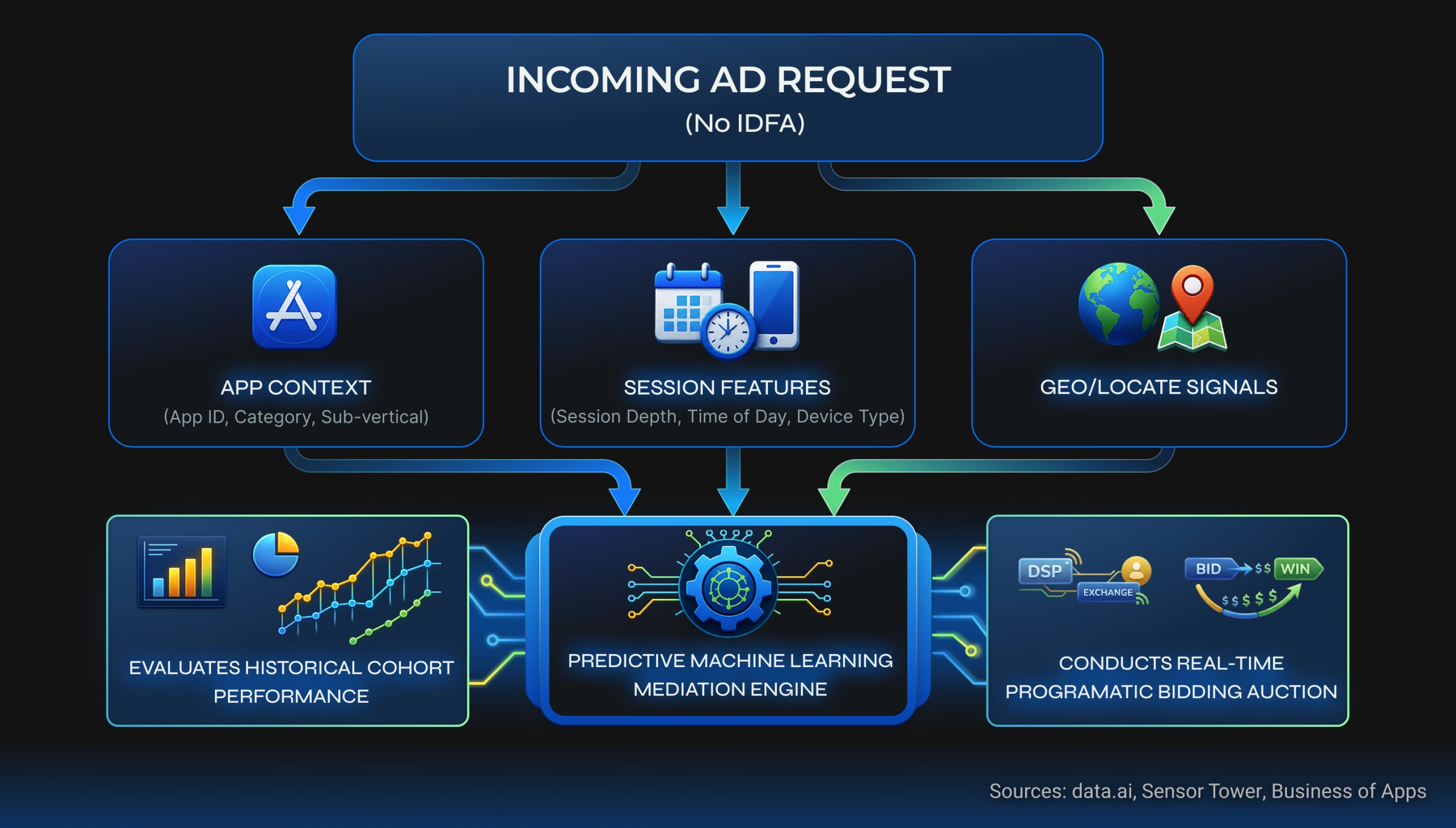
Optimized Placement to Top Demand Source (Maximized eCPM)
Predictive platforms are trained on massive, anonymized datasets to detect complex organizational patterns. The mediation engine evaluates structural inputs, such as specific in-app event sequences within a single active session (never across separate app identities), session depth, geographic location, device capabilities, time of day, and the precise contextual placement of the ad unit.
You don’t need to follow users across the web to run a profitable monetization engine. Optimized cohort models can match or beat old IDFA-dependent waterfall setups.
If you’re picking an ad mediation platform, prioritize real-time, unified programmatic bidding over manual waterfalls. In a privacy-first world, static waterfalls break down from latency and fragmented pricing.
The top ad mediation platforms host dynamic, in-app auctions in which multiple programmatic demand partners, including global networks like AdMob, bid simultaneously for each ad impression based on aggregate cohort value.
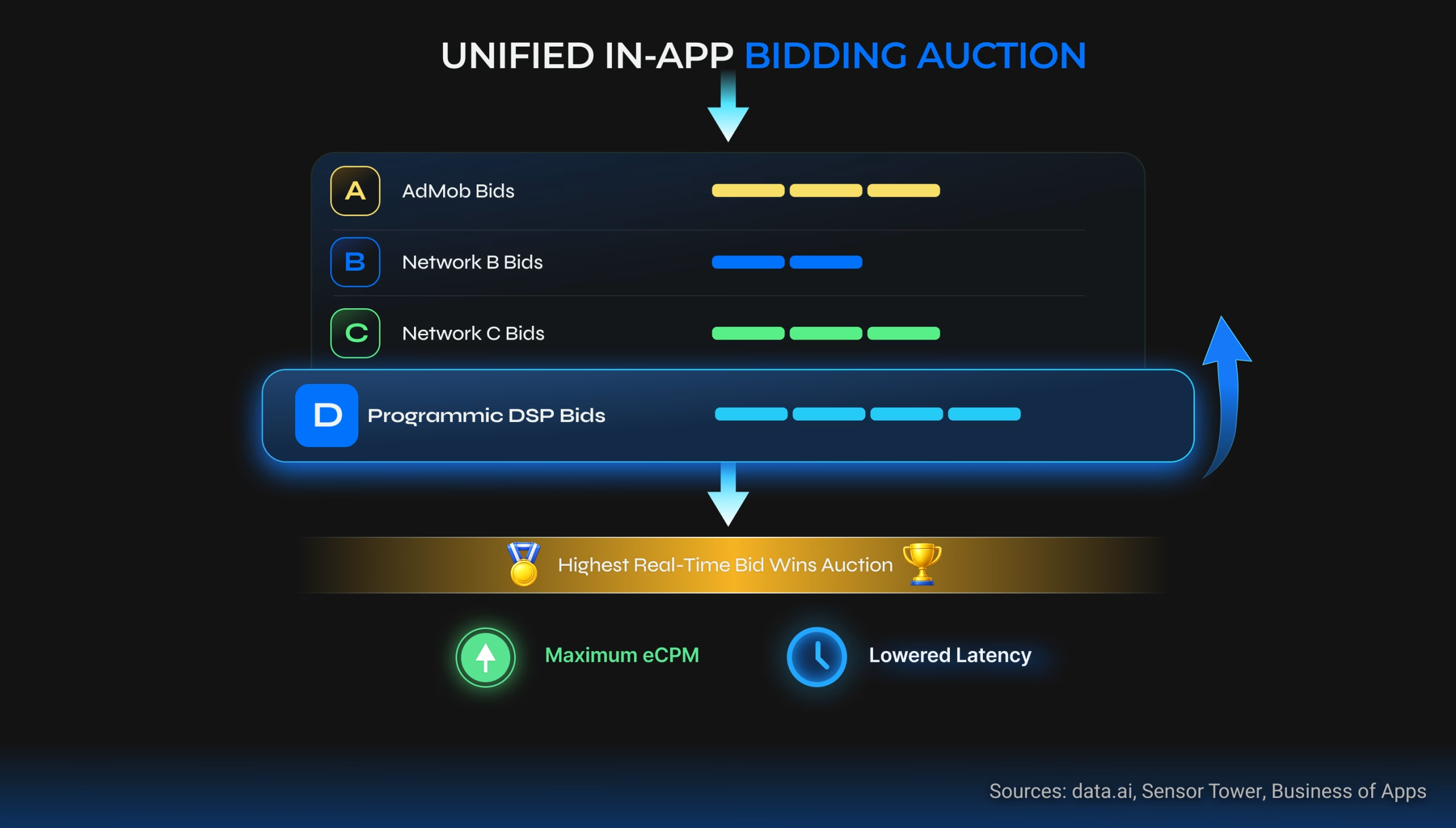
Premium mediation software uses real-time predictive algorithms to automatically optimize floor prices. It forecasts yield based on session-level variables, no user tracking required. Switching to privacy-first, machine-learning mediation lets you keep eCPM high, maximize ad revenue, and give UA teams clean, reliable performance signals.
Building a Measurement Architecture That Works Now
A high-performing measurement stack designed for 2026 and beyond never relies on just one method. Combine multiple data inputs and match each to a specific decision cycle and planning window.
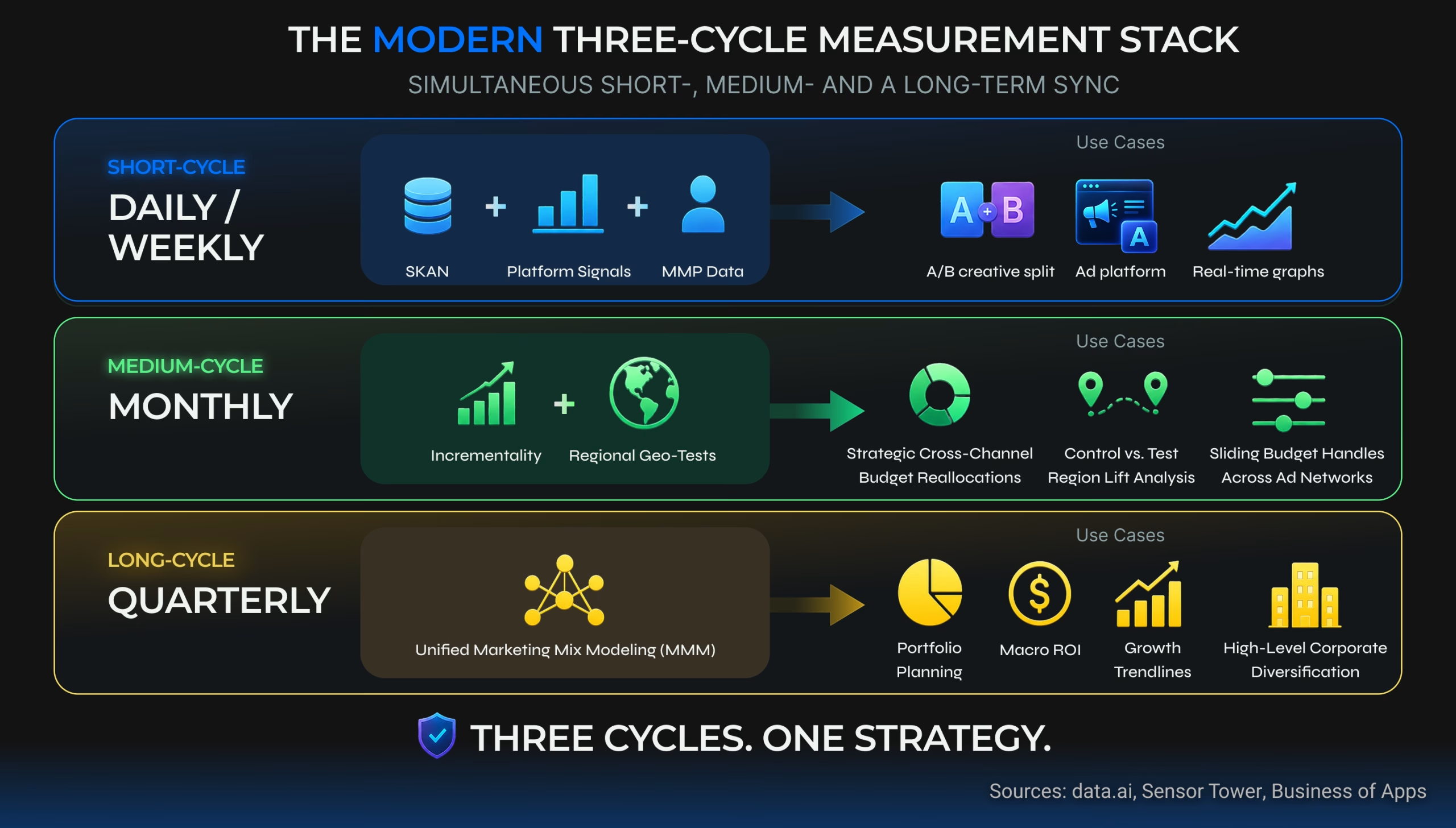
Losing deterministic tracking didn’t kill performance analytics. It forced an evolution. Now, you need to recalibrate your core KPIs for a privacy-first world.
The Metrics That Still Matter (And How to Think About Them)
The loss of deterministic tracking did not kill performance marketing analytics; it simply forced an evolution. Several core Key Performance Indicators (KPIs) require complete recalibration to remain accurate in a privacy-first operational environment.
eCPM (Effective Cost Per Mille)
eCPM still matters, but you need to track it at the cohort level, not the user level. For UA teams, watch eCPM by ad format, region, and creative to spot cost shifts and competition. For publishers, eCPM trends are your main tool for judging auction efficiency and tuning monetization.
ARPU and LTV Modeling
ARPU and LTV aren’t fixed user-level numbers anymore. Model them as cohort-level probability distributions.
Early postback signals are limited. Your data team needs to build models that map early cohort actions to long-term value. Payback periods need wider error margins, and early ARPU should be checked against incrementality data to make sure you’re measuring real impact.
Reported Install Volume vs. Incremental Installs
Relying blindly on self-attributed install volumes from isolated ad network dashboards is a recipe for wasted capital. Networks frequently duplicate attributions. If you trust self-attributed install numbers from ad networks, you’re wasting money. Networks double-count and claim organic traffic all the time. Work-attributed installs against measured incremental lift reveal the true volume of net-new users driven by your paid acquisition efforts.
Blended CPI and CPA
User journeys are fragmented across SKAN, platform signals, and random chance. Source-level metrics are often wrong. Blended efficiency, total spend divided by total net acquisitions, is now the gold standard for measuring business health.
What Comes Next: Privacy Sandbox, PAAPI, and the Android Question
While iOS adjustments took center stage following Apple’s rapid ATT rollout, the Android ecosystem has been executing a more deliberate transition. Google’s Privacy Sandbox for Android has been in active development for several years, taking a joint approach with the wider industry to avoid abrupt disruption.
A central component of this architecture is the Protected Audience API (PAAPI). PAAPI moves the traditional ad auction and remarketing process directly onto the user’s physical device.
By conducting the ad selection process locally, the system prevents ad networks from tracking a user’s unique identity or browsing history across separate mobile applications. Concurrently, Google is implementing Attentional Reporting APIs to deliver highly aggregated, delayed campaign metrics that mirror the structural core of Apple’s framework.
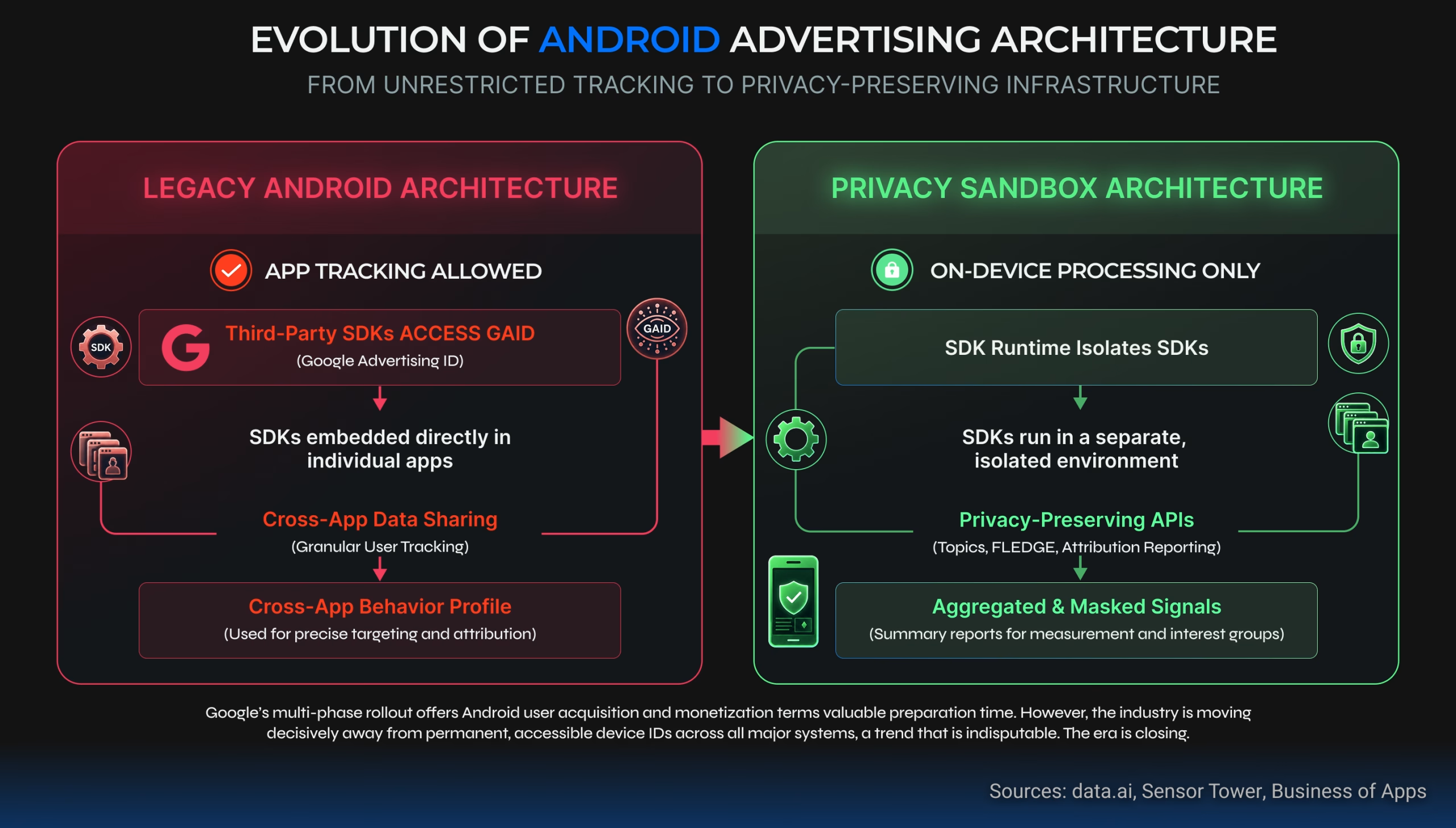
Marketers who proactively build measurement, attribution, and targeting mechanisms that operate independently of individual identities are not simply complying with current guidelines; they are future-proofing their business against subsequent rounds of platform limitations.
Teams that invested early in SKAN, MMM, and incrementality testing are running efficient, profitable UA programs right now. The ones who waited are struggling to measure even basic campaign returns.
The question isn’t whether privacy-first measurement can match the old IDFA era. In practice, it already does. The so-called precision of deterministic tracking was mostly an illusion caused by correlation errors and last-click bias.
Modern methods, when done right, give you a more accurate and causally valid way to measure real growth.
Conclusion: Precision Was Always a Story We Told Ourselves
The deterministic IDFA era sold mobile marketers a convincing narrative: we can see every step of the consumer journey at the individual level in real time. It was an attractive, confidence-inspiring story. It was also fundamentally incomplete, frequently overstating the true causal impact of digital advertising.
- Privacy-first measurement forces a more honest look at marketing performance.
- You can still measure everything that matters to business growth:
- Is your paid media budget driving true, incremental business scale?
- Which specific marketing channels deliver the highest marginal return on investment?
- Which creative angles and contextual placements convert best at the aggregate cohort level?
To answer these questions, you need a probabilistic mindset. Rely on aggregate data, run real experiments, and get comfortable with more uncertainty than before.
This is how high-level measurement has always worked in TV, radio, print, and out-of-home. Mobile marketing isn’t collapsing, it’s maturing.
For growth teams willing to master SKAN, build automated MMM pipelines, run constant incrementality tests, and deploy privacy-first ad mediation, this isn’t a crisis. It’s a huge, lasting advantage over teams still waiting for user tracking to come back.
About CAS.AI
CAS.AI builds cutting-edge, machine-learning-driven programmatic ad monetization and user acquisition optimization tools, engineered from the ground up for modern, privacy-first information environments. By maximizing eCPM via predictive, session-level analytics and unified mediation solutions, CAS.AI empowers publishers and growth marketers to scale their businesses with confidence without relying on user-level tracking.