App Monetization Guide: Strategies, Models & How to Maximize Revenue
Last Updated July 2026
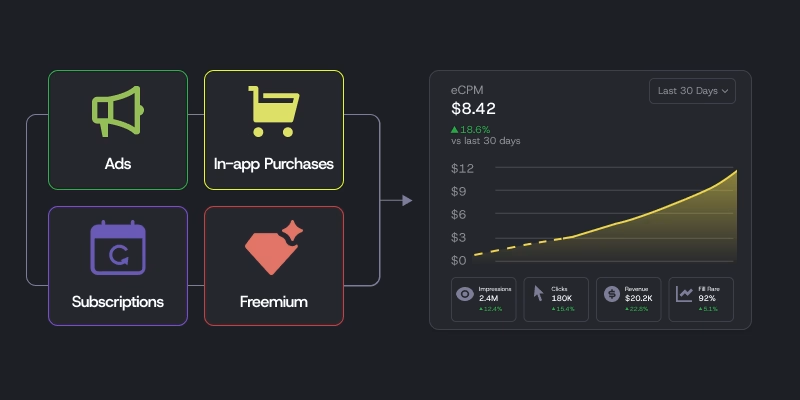
App monetization is not some magic trick or a quick hack. Picture it as a toolbox, loaded with different tools. Ads, in-app purchases, subscriptions, and hybrids each bring their own flavor. The best choice for your app comes down to what you have built and who is actually using it.
This guide looks at app monetization for all kinds of apps: utilities, content apps, productivity tools, subscription products, and non-gaming apps in general. If you are building a game, check out our mobile game monetization guide. That one dives deep into game mechanics, IAP economies, rewarded video loops, and retention curves, more than we will cover here.
Here is what you will get: what app monetization really means, every model that is actually worth your time, how in-app ads and mediation work in the real world, the nuts and bolts of IAP and subscriptions, why hybrid is running the show in 2026, how to pick a strategy that fits your app, platform, and region, the only metrics that actually matter, the mistakes everyone trips over, and real numbers from CAS.AI publishers.
What Is App Monetization?
App monetization is about turning your users into real revenue. You have options: in-app ads, purchases, subscriptions, paid downloads, or a mix of these. The right move depends on your app’s vibe, your audience, and where your users spend their time.
App Monetization Models
Every app monetization model is chasing the same goal: turning your users into real money. But each one takes its own route, and every path comes with its own quirks and trade-offs for your users.
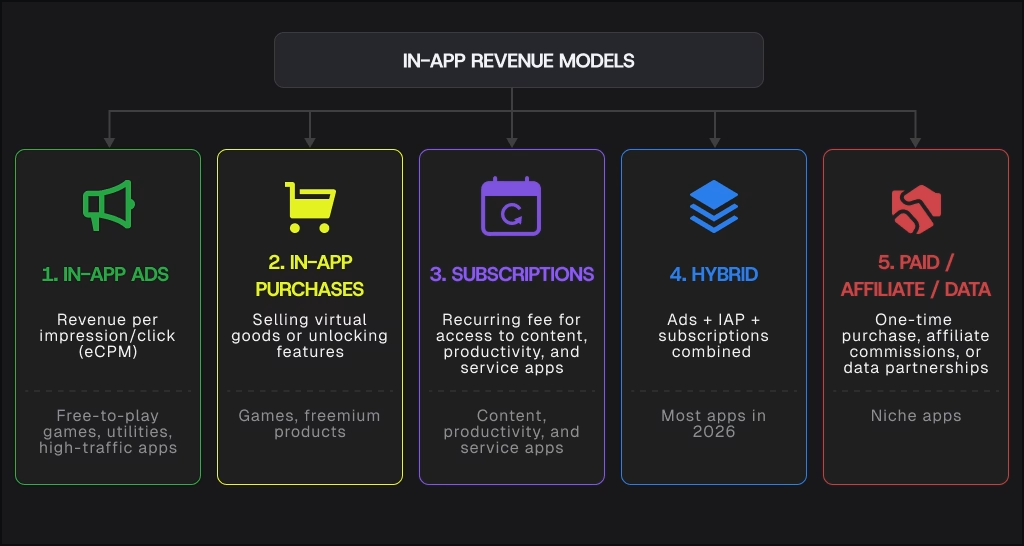
Every model on its own runs into a wall pretty quickly. Go all-in on ads, and you are limited by traffic and fill. Go pure subscription, and you will be lucky to convert more than five percent. That is why hybrid monetization is the real power move. The top apps in 2026 do not pick sides. They mix and match, letting each model cover the other’s blind spots.
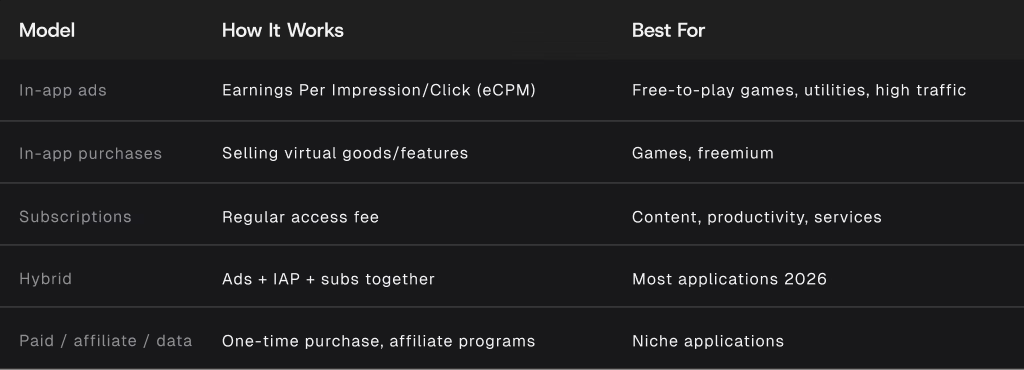
If your app is free to download, ads are the quickest way to start seeing cash. Ads pay out even if your users never spend a dime. Subscriptions and IAPs require more setup, including pricing, paywalls, and determining who gets what. But when someone does pay, the payoff is much bigger. Most teams end up running both, layering them in as the app grows.
In-App Advertising Deep-Dive
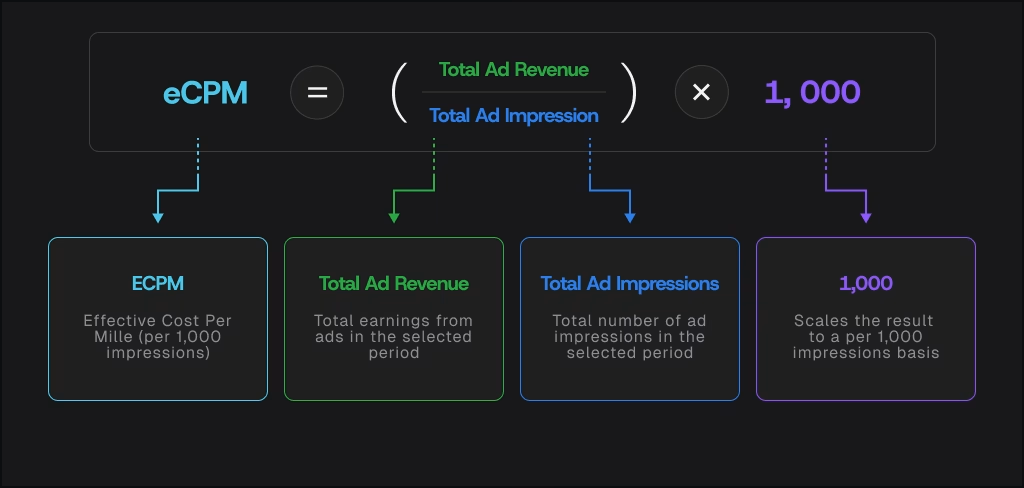
To figure out how much money your ads are really making, you need to look at something called the Effective Cost Per Mille (eCPM). This number tells you how much revenue you pull in for every thousand times your ad shows up.
In the past, publishers would stack their ad networks in a strict order, relying on old performance data to decide who got first dibs. By 2026, sticking to this old-school method means you are missing out on a lot of potential revenue..
If you want to get started fast, in-app ads are your ticket. You do not have to mess with purchase flows or stress about pricing. All you need is ad inventory and demand. Your revenue depends on eCPM, the effective cost per 1,000 impressions, and that number can swing a lot depending on your ad format.
- Banners and MRECs, the baseline. Low eCPM, low friction. Best for apps with long or repeat sessions: weather, news, utilities.
- Interstitials, full-screen, higher eCPM (roughly $10–14 Tier-1 US), but only at genuine breaks: end of an article, end of a level, end of a task. Force one mid-session, and it hurts both UX and performance.
- Rewarded video, opt-in, the highest eCPM range ($16–20+ Tier-1), and the format users respond to best because they chose to watch it.
- Native ads blend into content feeds. Strong for publishers and content-heavy apps.
- The app opens and fills the launch screen. Monetizes every app open without touching the core session.
- Offerwalls, a curated list of ad-driven actions, are common in utility and rewards apps.
No single ad network can fill every format at a good rate for every user, every time. That is where mediation steps in. Mediation lets you run several ad networks at once, so every impression goes to the highest bidder, not just the first one in line. If you skip mediation, your revenue is stuck at whatever your first network can offer, not what the market would actually pay.
Set up mediation right, and everything changes. Plug in one SDK, and suddenly you have ten or more ad networks fighting for every impression. Now your ad monetization tracks real demand, not just a static list. Want to see it in action? Check out our guide to the best mobile ad networks or dive into our full ad formats breakdown.
Maximize ad revenue with independent mediation
Maximize ad revenue with independent mediation
In-App Purchases & Subscriptions
In-app purchases and subscriptions are the two app monetization methods for users who are ready to pay up, not just get monetized through ads.
IAP sells something once: a virtual item, an unlock, a one-time feature. Subscriptions sell ongoing access. Both run through the app stores by default, which means giving up 15–30% of every transaction to Apple or Google (commissions typically drop after a subscriber’s first year, or for smaller developer accounts). A lot of teams treat IAP and subscriptions like a necessary evil, something you just tack on and hope users put up with. But the numbers tell a different story. Apps that mix ad monetization with subscriptions or IAP almost always see higher lifetime value than those that stick to just one. That is because free users and paying users are not fighting for the same spot. You can have both in the same app, as long as you design your paywall and ad timing to work together, not just pile them on top of each other. The paywall and the ad cadence are designed around each other rather than stacked independently.
Free trials can spike your subscription numbers, but if you botch the handoff from trial to paid, expect a wave of drop-offs. Here’s the rule: only push subscriptions once you know your app delivers value on repeat—think weekly visits, regular use of the good stuff, not just a killer first session. Until then, stick with IAP or an ad-first hybrid. They usually win out early.
Hybrid Monetization: Why It Wins in 2026
In 2026, hybrid is the clear champ of app monetization strategies. Hybrid means you are running ads and IAP or subscriptions side by side, but you set it up so they do not overlap.
The math is easy. Go subscription-only, and maybe 2 to 5 percent of users pay up. Go ad-only, and you’re capped by how many impressions you can serve. But combine them, and you’re cashing in on the 95 percent who’ll never pay by showing them ads, while still getting the most from your paying crowd.
Most mobile app monetization strategies now start with a hybrid approach by default. The real question is not whether to combine models, but how to set them up so they do not trip over each other. Show ads too aggressively and subscription conversion drops. Put too much behind a paywall and your ad inventory shrinks. The fix is segmentation. Free users get the full ad stack, subscribers get an ad-light or ad-free experience, and IAP sits on top for one-time purchases that neither group makes through the subscription.
This move to blended, segmented models is one of the hottest app monetization trends for 2026. Across everything we track at CAS.AI, hybrid setups are the ones posting steady revenue growth quarter after quarter.
One CAS.AI publisher, Fail Games, cranked up revenue by about 80x after switching to this kind of hybrid setup. Full details in the case study below.
Hybrid works the same way in games, with game-specific mechanics layered on top; our hybrid monetization in mobile games guide covers ad-gated retries, rewarded continues, and battle pass structures in greater depth.
How to Choose a Strategy
There is no magic bullet for the best app monetization strategy. The right move depends on your app type, your platform, and where your users are.
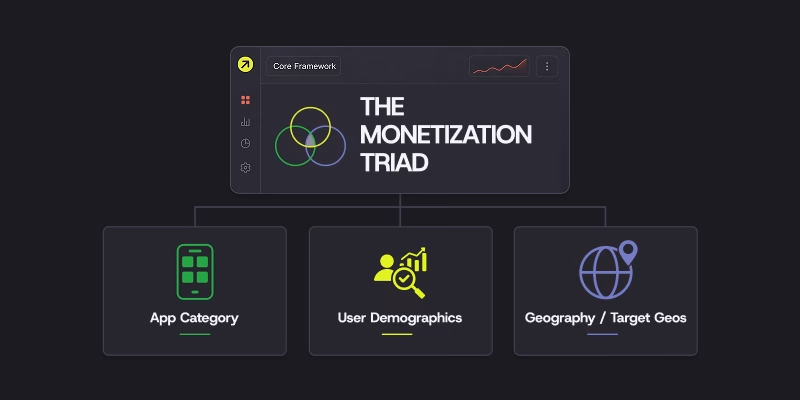
By app type:
- Free-to-play games and high-session utilities: ad-first, with IAP layered on for engaged users.
- Content and productivity apps: subscription-first, with rewarded video as an access path for non-subscribers who won’t convert.
- Entertainment, social, and finance apps: hybrid from day one, these categories show the strongest lift from combining ad monetization with a paid tier.
By platform:
Android app monetization leans into ads. There is a bigger install base, lower average spend per payer, and more ad demand fighting for inventory. iOS app monetization is all about IAP and subscriptions. You get higher-spending users, stronger subscription conversion, and store economics that make ad-only models less tempting compared to direct payments.
By geography:
Tier-1 markets (US, UK, Nordics, Australia) command the highest ad eCPMs and the strongest willingness to pay for subscriptions. Tier-2/3 markets often monetize better through volume-driven ad models, since subscription price points that work in the US rarely translate directly.
Figuring out how to monetize an app, or, more specifically, how to monetize mobile app users by session type, starts with one question: what does your average session look like? Short, frequent sessions favor ads (App Open, rewarded, interstitials at transitions). Long, infrequent, high-intent sessions favor subscriptions and IAP. Most real apps land somewhere in between, which is why the actual app monetization strategy for most products in 2026 is hybrid, weighted differently by category. The specific mobile app monetization strategy you land on should be informed by your session data, not category assumptions, and it should be revisited every 2–3 quarters as the user base matures.
Getting found is just as important as how you make money. Even the best-monetized app will not earn a dime if nobody installs it. Make sure you pair your monetization plan with a solid ASO strategy so the right users find you from the start.
Metrics That Matter
Whatever model or mix you run, the same metrics tell you whether it’s working:
- eCPM (effective cost per 1,000 impressions), the core ad revenue metric. See our full eCPM guide for the formula and 2026 benchmarks by format and geo.
- ARPDAU (average revenue per daily active user) combines ad and IAP/subscription revenue into a single daily metric. The metric that shows whether monetization is actually improving, not just whether ad fill went up.
- LTV (lifetime value), what a user is worth across their full time in the app. The number that should set your UA spend ceiling.
- Fill rate, the share of ad requests that actually return a paid impression. Low fill rate means wasted inventory even when eCPM looks healthy on the impressions that do fill.
- Retention (D1/D7/D30), monetization compounds on retention. A high-eCPM app with weak D7 retention will underperform a lower-eCPM app that keeps users around longer.
Here’s one of the best app monetization tips: track these metrics together, not in isolation. eCPM going up while fill rate drops can mean your total ad revenue is flat or even falling. ARPDAU rising while retention tanks? You might just be squeezing more from users who are about to bail. Put everything on one dashboard, and your monetization decisions stop being shots in the dark.
Common Mistakes & Case Study
Where most apps lose revenue:
- Running one ad network with no mediation, so the ceiling is set by that one network’s demand, not by actual market demand.
- Treating ads and IAP/subscriptions as separate teams’ problems rather than a single coordinated system.
- Chasing subscriptions exclusively and leaving 95%+ of non-converting users completely unmonetized.
- No A/B testing on ad placement, format mix, or paywall timing, shipping a monetization setup once and never revisiting it.
- Interrupting active sessions with interstitials instead of placing them at natural breaks.
These aren’t rare mistakes—they’re what happens by default when teams treat mobile monetization like a one-and-done checkbox instead of a system to keep tuning.
Real numbers from CAS.AI publishers:
- Fail Games restructured around a hybrid ad + IAP model, with mediation running the ad side. Revenue grew roughly 80x.
- Car Crash Royale reached top-3 grossing in its category across 16 countries after tuning its ad format mix and mediation waterfall.
- Racing in Car started at roughly $4/day in ad revenue and scaled to about €18,000/month after moving from a single ad network to a mediated, multi-network setup.
None of these wins came from a single tweak. Each one mixed up formats, added mediation, and, in Fail Games’ case, went all-in on hybrid monetization. Want more? Check out our case studies.
Start monetizing smarter; it’s free to begin
Key Takeaways
There’s no one-size-fits-all best app monetization strategy. In 2026, the winning pattern is hybrid: ad monetization plus in-app purchases or subscriptions, with mediation making sure every impression gets top dollar. Start with the model that fits your app type and platform, track eCPM, ARPDAU, LTV, fill, and retention together, and keep tweaking the mix as your user base grows.
FAQ
How to monetize an app, in short: pick a model that fits your app — ads, in-app purchases, subscriptions, or a hybrid — then optimize it with the right networks and metrics. Free apps most often start with in-app ads, since they require no upfront pricing or paywall work.
The main app monetization models are in-app advertising, in-app purchases, subscriptions, paid downloads, and hybrid combinations of the above.
For most free apps, it’s a hybrid of ads and in-app purchases or subscriptions, with ad revenue run through mediation. The exact fit still depends on your app category and audience.
The underlying models are the same on both platforms: advertising, IAP, subscriptions, and hybrid. Android apps typically rely more on ad revenue given their larger install base; iOS apps typically rely more on IAP and subscriptions given their higher average spend per paying user.
Related:
Hybrid Monetization in Mobile Games
Case Studies