Ad Mediation: What is it & How does it affect Mobile App Monetization
Managing multiple ad networks manually is a mess. You waste time on SDK updates, juggle dashboards, and bleed revenue. Ad mediation fixes this.
This article covers what matters: how ad mediation works, the real difference between waterfall and real-time bidding, and what features actually drive revenue. It applies whether you build in Unity, Flutter, React Native, Godot, or Unreal. The logic and the upside are the same.
What Is Ad Mediation?
Ad mediation lets you control and optimize all your ad networks from a single place with a single SDK. No more chasing dashboards, negotiating with every network, or updating endless SDKs. Everything is centralized.
The mediation platform sits between your app and the ad networks. When a player triggers an ad, the platform hits every network and picks the highest-paying one. You get maximum eCPM, zero manual work.
One SDK connects your app to every network. You get cleaner code, higher fill rates, and more revenue.
How Ad Mediation Works: The Workflow
Here’s what actually happens every time a player triggers an ad:
- The user opens the app, and an ad slot becomes available.
- The app sends a request to the ad mediation platform via the SDK.
- The platform identifies all eligible ad networks and initiates the selection process.
- Each network either bids in real time or is evaluated based on historical performance.
- The platform selects the highest-value network and serves the winning ad.
- The SDK displays the ad in your app.
This all happens in milliseconds. For you, it’s seamless. One SDK handles the mess, and you track everything from a single dashboard. No more bouncing between platforms to chase eCPMs or fix fill rate issues.
Waterfall vs. Real-Time Bidding: The Evolution of Ad Mediation
Not all mediation platforms are built equal. Waterfall and real-time bidding are two different generations of monetization tech. If you don’t know the difference, you’re leaving money on the table.
The Waterfall Model
With waterfall, you rank networks by old eCPM data. When an ad slot opens, the platform asks the top network first. If it can’t fill, it moves down the list until someone takes it.
This approach is pure guesswork. Static rankings don’t keep up with real demand. A network that was strong last week might flop today, but the waterfall won’t notice. You lose revenue every time a lower-ranked network could have paid more but never gets the chance.
In-App Bidding (Real-Time Bidding)
In-app bidding flips the script. Every network bids simultaneously for every impression. The highest bid wins, every time, in real time.
No more guesswork. Bids reflect real demand, every network competes, and you get higher eCPMs and better fill rates.
Hybrid Models: The Best of Both Worlds
The best mediation platforms use a hybrid: waterfall plus real-time bidding. You get access to more networks, more competition, and more revenue.If you want predictable results without capping your upside, hybrid is the standard. That’s why top platforms have moved past pure waterfall.
Why Ad Mediation Matters for App Monetization
Ad mediation isn’t a nice-to-have. It multiplies your revenue. Here’s what the right platform delivers:
- Higher eCPMs: More network competition increases bids. In-app bidding ensures top value for every impression.
- Better fill rates: Multiple networks provide reliable ad fills for every request, regardless of region or format.
- Reduced SDK bloat: One mediation SDK replaces all others, improving performance and maintenance.
- Time savings: The platform automates optimal network selection so developers can focus on their apps, not ad ops.
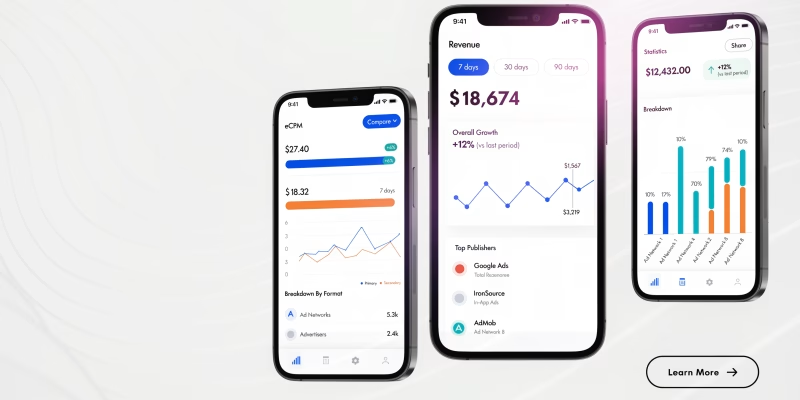
- Centralized reporting: One dashboard, all your data. You see eCPMs, fill rates, ARPDAU, ARPPU, and more in real time. No more chasing numbers across platforms.
Key Features to Look for in a Mobile Ad Mediation Platform
Not all mediation platforms move the needle. You need to know which features actually drive revenue. Here’s what matters:
Broad Ad Network Integration
The best ad mediation platforms connect you to a wide ecosystem of ad networks. Moreover, the best platforms plug you into as many networks as possible. More networks mean more competition for your inventory, leading to higher eCPMs and better fill. Make sure your platform covers both bidding and waterfall partners. format your app uses: rewarded video, interstitials, banners, native ads, and MRECs. If a platform can’t handle your full range of ad units, you’re leaving revenue opportunities uncovered. This is especially important for mobile game developers who rely heavily on rewarded video as a core in-app monetization strategy.
Smart Optimization Algorithms
Top platforms use machine learning to route every impression to the highest-paying network in real time. Manual floor price tweaks, network switching, and ranking should be automated or at least dead simple to control.
Robust Real-Time Analytics
Data is your most valuable tool for optimizing ad monetization. Look for a platform with granular data. It is your weapon for optimizing monetization. You need granular reporting: by network, ad unit, country, device, and time. Real-time tracking of eCPM, fill, ARPDAU, and other KPIs lets you spot problems before they cost you. Adjusting floor prices or adding new ad placements without affecting your entire user base is invaluable. A/B testing tools let you make data-driven decisions rather than guesses, compounding revenue improvements over time.
Cross-Platform SDK Support
If you build with Unity, Flutter, React Native, Godot, or Unreal, your mediation platform must have rock-solid SDKs and docs for your engine. Dedicated plugins, clear guides, and an active support community are non-negotiable.
Choosing the Best Ad Mediation Platform for Your App
You have options: big network-owned platforms and independent mediation providers. The right pick depends on your audience, scale, reach, and tech stack.
When evaluating platforms, consider these questions:
- Does the platform support in-app bidding, or is it purely waterfall-based?
- How many ad networks are integrated, and are they relevant to your app’s genre and audience?
- What ad formats are supported, and do they align with your monetization model?
- Is the reporting dashboard intuitive, and does it offer the granularity you need?
- Is there an SDK available for your development platform (Unity, Flutter, React Native, etc.)?
- What kind of technical support and documentation does the platform offer?
- How does the platform handle floor price management and network optimization?
Watch out: Google and Meta don’t share all their data with third-party mediation. Depending on your traffic, you might still have to manage those networks separately. Don’t ignore this when you choose a platform.
Scale matters. An indie app with low traffic needs something different than a top-grossing game with millions of DAU. The best platform for a solo dev is not the best for a big studio.
Conclusion: Ad Mediation Is the Foundation for Serious App Monetization
Monetization has leveled up. The top-grossing apps don’t manage ad networks by hand. They use mediation platforms to automate, optimize, and scale revenue.
Ad mediation gets you more demand, higher eCPMs, better fill, and a streamlined workflow, all with one SDK and dashboard. Whether you’re new to monetization or replacing an old waterfall, the right mediation platform is the highest-leverage move for your revenue. It is no longer just about putting ads in your app. It’s about building a system that works intelligently on your behalf, automatically finding the best price for every impression at scale. That’s exactly what ad mediation delivers.
Mobile gaming moves fast. If you treat ad monetization as an afterthought, you’ll always trail the studios that treat it as a core strategy. Mediation isn’t optional. It’s the foundation.