Your UA team is chasing D7 ROAS. The product team is busy rolling out new IAP bundles. Meanwhile, ad ops are tweaking interstitial floors. But when everyone is off doing their own thing, the player gets caught in the crossfire. Suddenly, you have users bombarded with ads before they even see a purchase offer, or hitting a paywall when all they wanted was to watch a rewarded video for a few extra lives.
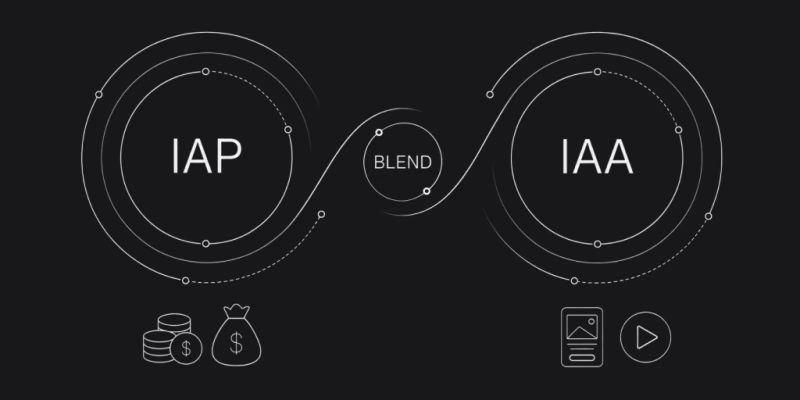
Hybrid monetization in 2026 is a different beast. Gone are the days when you could just pick ads or in-app purchases and call it a day. The winners now are the studios that mix both. If you do not pay, you see ads. If you do, you get access to special deals. This flips the old user acquisition playbook on its head.
Here is what you really get: advice you can actually use, not just theory. I will show you where studios trip up when they try to slap hybrid monetization onto a single-minded UA plan. I will walk you through setting up ad mediation so your players do not get frustrated and your revenue stays healthy. And yes, I have step-by-step tips for making mobile ad mediation work.
Why Hybrid Monetization Broke the Old UA Playbook
User acquisition used to be easy. Monetization was simple. Hyper-casual studios chased cheap installs and racked up ad views. Midcore and premium games went after fewer players, but made sure to get as much value as possible from each one.
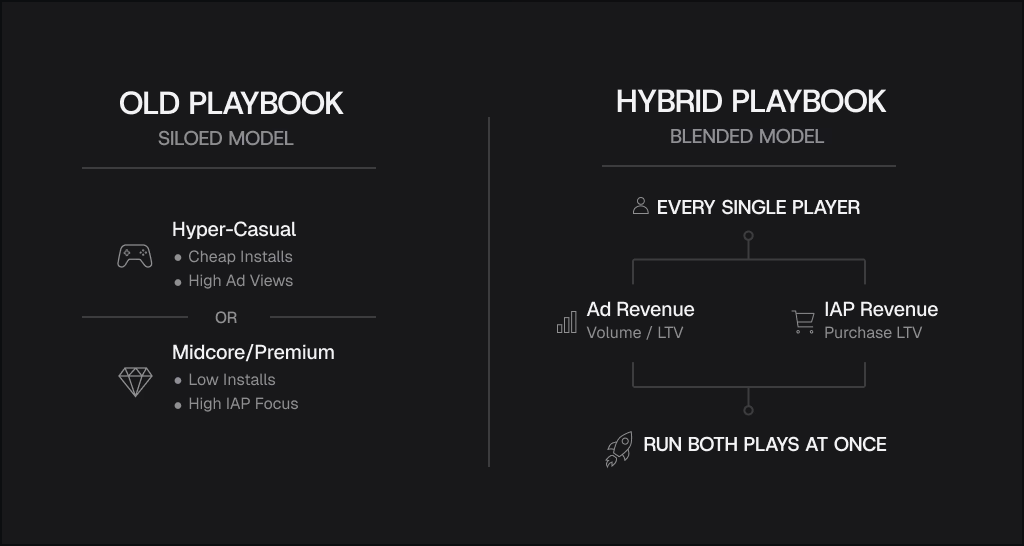
Now, with hybrid monetization, your UA team has to run both plays at once, for every single player. That shakes things up in a big way:
- Every player now has two lifetime value curves: one for ad revenue, one for purchases. And these curves do not always line up. Sometimes, a non-paying user who loves rewarded videos is actually worth more than someone who only buys once in a while.
- Ad network signals turn into a mess fast. If you only track purchases, your campaigns chase the spenders and miss out on the ad fans who could be just as valuable. That is money left sitting on the table.
- Your ads and in-game offers start to pull in different directions. If your Ads and in-game offers become misaligned. If advertisements promise endless free play while the game emphasizes premium features, players receive conflicting messages. The initial experience, whether an ad or a paywall, strongly influences player perception. It’s an acquisition problem too. If you show too many interstitials, you might make more money today, but you also drive away the very players you just paid to bring in. That means your cost per install goes up once you realize those players are not sticking around.
Swapping ad networks will not solve this. The real fix is to rethink your ad mediation setup so it supports both revenue streams, not just cranks out more ad impressions.
What Is Ad Mediation, and Why It’s the Layer That Decides This
If you are new to game monetization, let us clear up what ad mediation really means. People throw the term around, but it does not always mean the same thing.
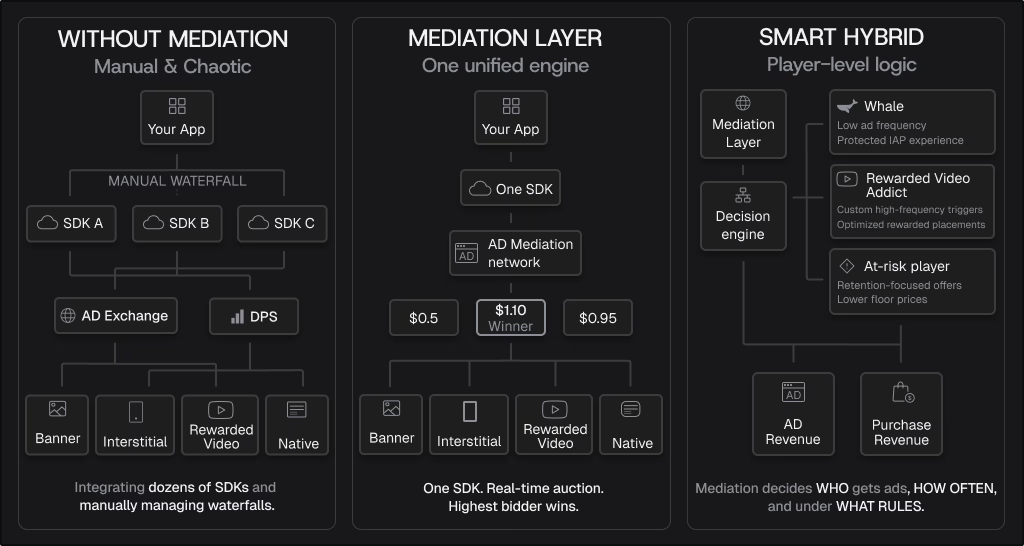
An ad mediation network sits between your app and the various ad exchanges and demand-side platforms competing to fill your inventory. Instead of integrating a dozen SDKs and manually managing waterfalls for each ad unit, you plug into one app mediation layer that runs the auction, picks the winning bid in real time, and serves the ad across banners, interstitials, rewarded video, and native formats.
That is the textbook answer. But for hybrid monetization, what really matters is that mediation decides who gets ads, how often, and under what rules. This is what makes or breaks whether your ad and purchase revenue work together or end up fighting each other. Treat every player the same and you blast everyone with the same ad frequency and floor prices, whether they are a whale, a rewarded video addict, or someone about to quit. A mediation setup built for hybrid models splits up that logic. That is the difference between treating mediation as just plumbing and using it as a real monetization tool.
The Case: A Mid-Core Casual Title Rebuilds Its Stack
Here’s how this plays out in practice. Consider a typical casual puzzle game that initially launched with IAA (In-App Advertising) and later introduced a light IAP (In-App Purchases) layer, including cosmetic packs, a progression track, and a “remove ads” option, about a year after release. It was still optimized purely on install volume and D7 ad revenue, because that’s what the mediation and MMP setup had been built to report on cleanly. IAP events existed in the data warehouse but weren’t feeding back into acquisition decisions in any meaningful way. The result:
- As a result, campaigns targeted lookalike audiences based on high-frequency ad viewers, a group that converted to IAP at only one-third the rate of a smaller, previously overlooked segment.
- Ad load was handled with one global frequency cap. Players about to buy saw just as many interstitials as those who never planned to spend a dime. Ads popped up right next to paywalls and broke up the moments when players were most likely to convert.
- “Remove ads” purchasers, an important monetization segment, continued to see ads for several sessions post-purchase because of a synchronization delay between the mediation SDK and the entitlement check.
To fix these headaches, the studio rebuilt its mediation setup around three core principles that actually work for hybrid monetization.
- Server-side entitlement checks were synchronized with the mediation SDK in real time, eliminating the issue of paid users still seeing ads. This change significantly reduced related refunds.
- Waterfall and frequency caps were split by blended LTV cohorts instead of using one global setting. Players likely to buy got lighter ad loads. Ad-revenue cohorts kept the usual ad load. Rewarded video was pushed for users who stuck around for extra lives and currency.
- Revenue events, both ad impressions and IAP, were sent back to the MMP and into UA bidding. Now, campaign optimization could finally see the full blended LTV, not just one stream. Lookalike audiences were rebuilt using combined revenue, not just ad revenue.
The result? Blended eCPM per user climbed. Ad inventory got used smarter. UA campaigns brought in a better mix of ad fans and likely buyers. Churn dropped because ad load finally matched what each user was worth.
None of these fixes needed a new ad network. The real shift was treating mediation as the bridge between monetization and acquisition, not just a technical box to check. A lot of teams miss this.
How to Set Up Mediation for a Blended Model (Without Wrecking UX)
If you are restructuring your stack, follow this practical sequence:
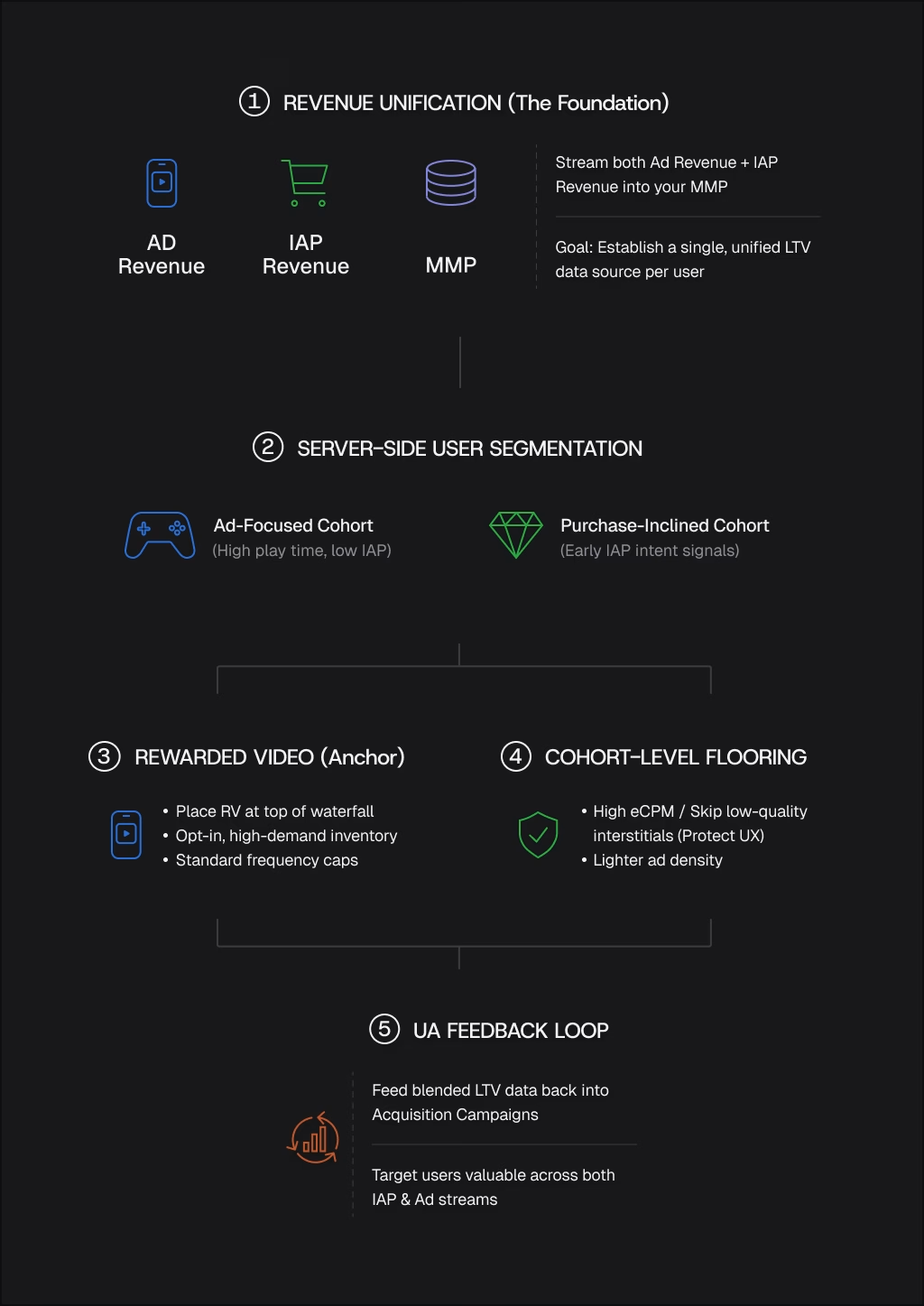
1. Get your revenue events unified before you touch waterfalls
Before you start tweaking anything, make sure your MMP pulls in both ad revenue and IAP revenue as a single event stream for each user. If UA bidding only looks at one type of revenue, fix that first. You need real, blended LTV data to segment users the right way.
2. Segment users prior to setting frequency caps
Global frequency caps often cause friction in hybrid monetization. Establish at least three baseline user cohorts:
Ad-focused users play a lot but rarely buy. These players can handle more ads, especially rewarded videos, without quitting. Purchase-inclined users show early signs they might spend and poke around IAP screens. These folks need a lighter, more careful ad experience, especially when they are close to making a purchase. Make sure you verify this server-side, not just on the device, so you do not run into sync issues.
3. Reserve rewarded video as the connective tissue
Rewarded video fits both monetization strategies. It is opt-in, non-intrusive, and tells you which users are engaged and can handle ads. Put rewarded video at the top of your mediation waterfall and send strong demand its way, and you will boost both retention and blended revenue. This lets users pick their own ad experience based on their cohort, not a one-size-fits-all setup.
If you set one eCPM floor for everyone, you lose revenue from your best users and run into fill-rate problems for the rest. Use cohort-level floor pricing. Most mediation platforms can do this now. For players likely to buy, skip low-quality interstitials, even if it means a lower fill rate. The user experience is worth more than a few extra ad dollars.
5. Feed it all back into UA
Once you have segmented entitlement-aware mediation in place, make sure blended revenue data goes into your acquisition campaigns. This way, your campaigns target users who are valuable across both revenue streams, not just the ones who are easy to measure.
What This Means for Publishing Decisions, Not Just Monetization Ones
All of this assumes you already have a live app to work on. But hybrid monetization is starting to shape decisions much earlier, like picking a publishing platform and planning your game before launch. These days, publishers do not go it alone. They team up with partners who handle UA spend, monetization setup, and mediation in exchange for a cut of the revenue. The publishers who win in 2026 are the ones who bake hybrid monetization into their onboarding from the start, not the ones who treat ads and in-app purchases as separate jobs for separate teams.
If you are assessing publishing partners or aiming to attract top publishers, consider these questions to determine whether a prospective partner truly understands blended monetization:
- Do they request access to your mediation dashboard directly, or only your ad revenue totals? (The former signals they’re going to help configure it; the latter signals they’re just tracking a number.)
- Do they ask about your IAP structure and pricing before proposing a UA budget, or after?
- Can they show you a blended eCPM and blended LTV figure for a comparable title in their portfolio, rather than an ad-revenue-only benchmark?
- Do they have a point of view on frequency capping and cohort segmentation, or is “we run mediation through [Network X]” the extent of their monetization strategy?
None of this is a criticism of any specific ad mediation network; most major platforms support segmentation and entitlement features. The key differentiator is whether the publisher or in-house team configures these features for a blended model rather than relying on default settings. See “Google Play With Hybrid Monetization in Mind.”
Studios that launch on Google Play with a hybrid IAA/IAP model from day one have a real edge over those who try to bolt it on later. They can set up entitlement and segmentation before the first user ever installs, and skip the pain of moving live users through big monetization changes.
A few things worth locking in before submission:
- Make sure your Ad SDK and IAP entitlement checks are in sync from the very first build. Do not let separate teams build the ‘remove ads’ flow and the mediation SDK on different schedules. Test entitlement checks to make sure they actually stop ads, not just confirm a store purchase.
- Set up your segment logic with placeholder cohorts. You will not have real user data at launch, but you can design your mediation to support cohort-based frequency caps and floor pricing from the start. That way, you will not have to rebuild everything later.
- Make sure your store listing and creative assets match your monetization strategy. If your Google Play page and UA ads promise ‘free forever’ but your game pushes IAP for some users, players will notice. You will see it in reviews and refund rates before you see it in analytics. Your messaging should match the real blended experience.
A Word on User Experience, Because It’s the Real Constraint
Ultimately, mediation decisions focused solely on short-term revenue often degrade the experience for valuable users. The negative impact may appear in metrics with a delay, making it difficult to identify the root cause. Well, in 2026, it isn’t the ones running the most aggressive waterfall or the highest fill rate. They’re the ones where mediation, monetization, and UA sit close enough together, organizationally and technically, that a frequency cap change gets evaluated against retention curves, not just eCPM, before it ships.
This is a coordination problem and a technical one. An independent ad mediation platform helps by pulling all your blended revenue data into one place, applying the same segment logic across ad formats, and saving you from having to piece together reports from networks that are also bidding in their own auctions.
Before you change any waterfall settings, do a quick audit of your current setup. The checklist below sums up the process from the earlier case study. If you spot one or two red flags, start there. You probably do not need a new network, just a better setup on the one you already have.
The Broader Shift: Mediation as a Product Decision, Not Just an Ad Ops Task
Here is a pattern you should know: in studios that get hybrid monetization right, the people handling mediation are not just sitting in ad ops. They are involved in pricing changes, IAP launches, and UA campaign planning. This cross-team work helps spot and fix problems before they hit players. For example, a frequency cap change might clash with a new pricing plan unless both teams talk before launch. If mediation, pricing, and acquisition are treated as one decision, you avoid the trap of setting up mediation once and then ignoring it while everything else changes. That is how you end up with a technically correct setup that is quietly wrong for your game six months later.
Key Takeaways
- Hybrid monetization means two LTV curves per user, not one. Ad-revenue LTV and purchase-revenue LTV don’t move together; a non-paying user watching five rewarded videos a session can outvalue a low-frequency payer.
- Mediation is a coordination layer, not just plumbing. It decides who sees ads, how often, and under what conditions the exact lever that determines whether IAA and IAP reinforce or cannibalize each other.
- Global frequency caps are the most common source of friction. Segment users into at least three cohorts, ad-revenue-forward, purchase-inclined, and post-purchase, and cap accordingly instead of applying one setting to everyone.
- “Remove ads” needs a server-side entitlement check, not just client-side. Sync lag between the mediation SDK and the entitlement check means paying users still see ads for several sessions, a fixable gap that directly hits refund rates.
- Rewarded video is the connective tissue between IAA and IAP. It’s opt-in, non-disruptive, and lets ad-tolerant users self-select in and prioritize it with your strongest demand pool.
- Waterfall floors should be set by cohort, not globally. Purchase-inclined users are often worth protecting from low-quality interstitial demand even at the cost of fill rate.
- UA bidding needs blended revenue signals to work. If your MMP only sees IAP or only sees ad revenue, campaigns optimize toward half the picture and quietly starve out profitable segments.
- The best hybrid setups treat mediation, monetization, and UA as one connected decision, not three teams working from three dashboards that never talk to each other.
FAQ
What’s the difference between IAA and IAP, and why does mixing them complicate mediation?
IAA (in-app advertising) monetizes attention, impressions, and engagement. IAP (in-app purchases) monetizes intent to spend. Mixing them means the same user can be valuable through two different mechanisms simultaneously, and a mediation setup built for only one of those mechanisms will systematically misjudge that user’s real value.
Do I need a different ad mediation network for hybrid monetization, or just a different configuration?
In most cases, configuration matters more than which network you’re on. The features that matter- cohort segmentation, entitlement-aware ad suppression, cohort-level floor pricing, blended revenue reporting- are available across most major platforms. The gap is usually in setup, not in the underlying network.
How do I know if my ad load is hurting IAP conversion?
Look at ad exposure in the sessions immediately preceding a purchase decision (shop visits, currency-low moments) versus sessions further from a purchase decision. If ad frequency is identical across both, and purchase conversion is lower in ad-heavy sessions even controlling for other factors, that’s a signal your frequency capping isn’t segmented by purchase intent.
Is rewarded video enough on its own for a hybrid model, or do I still need interstitials and banners?
Rewarded video tends to be the least disruptive format and the best fit for ad-tolerant users, but most hybrid setups still use interstitials and banners for cohorts with lower purchase intent, provided frequency and placement are tuned to that cohort specifically rather than applied globally.
What should I ask a publishing partner about their approach to mediation before signing?
Ask whether they configure segmented waterfalls and entitlement checks per title, whether they can show blended eCPM and LTV data (not just ad revenue), and whether their UA optimization ingests both ad and IAP revenue events. If the answer to any of these is vague, monetization is probably being handled as an afterthought.