Last updated: June 2026.
Programmatic advertising is the automated, real-time buying and selling of ad impressions through auctions. In mobile apps, it runs inside the mediation SDK as in-app bidding: demand-side platforms bid on each impression in milliseconds, and the highest bid wins.
How Programmatic Advertising Works in Mobile Apps
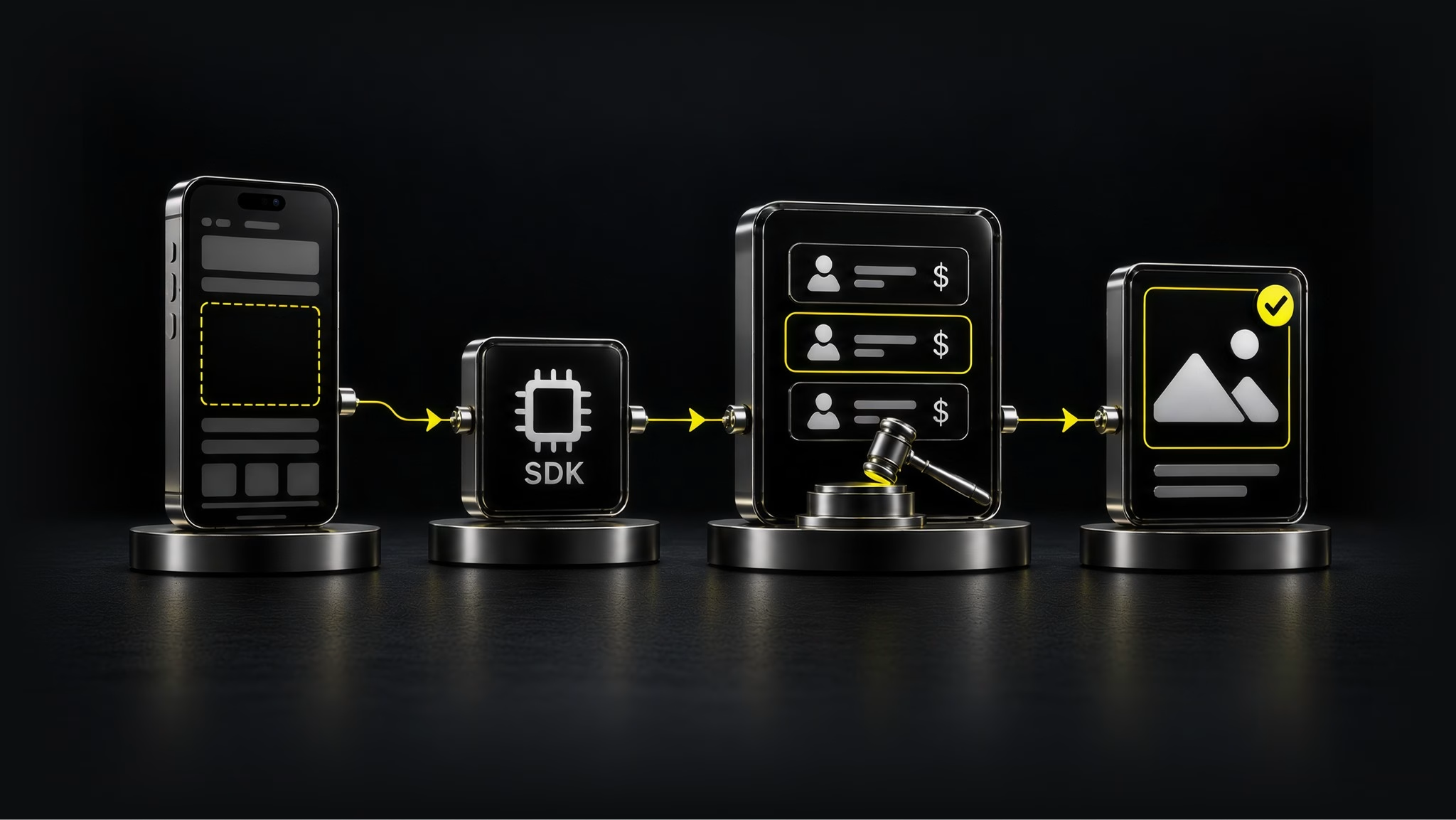
The flow is the same on every impression, and it happens before the ad ever renders:
- A user opens the app and reaches an ad placement.
- The mediation SDK fires an ad request.
- The request goes out to every connected network and DSP at once.
- Each bidder returns a price in real time – the auction runs in milliseconds.
- The highest bid wins.
- The winning ad renders, and the impression and revenue are logged.
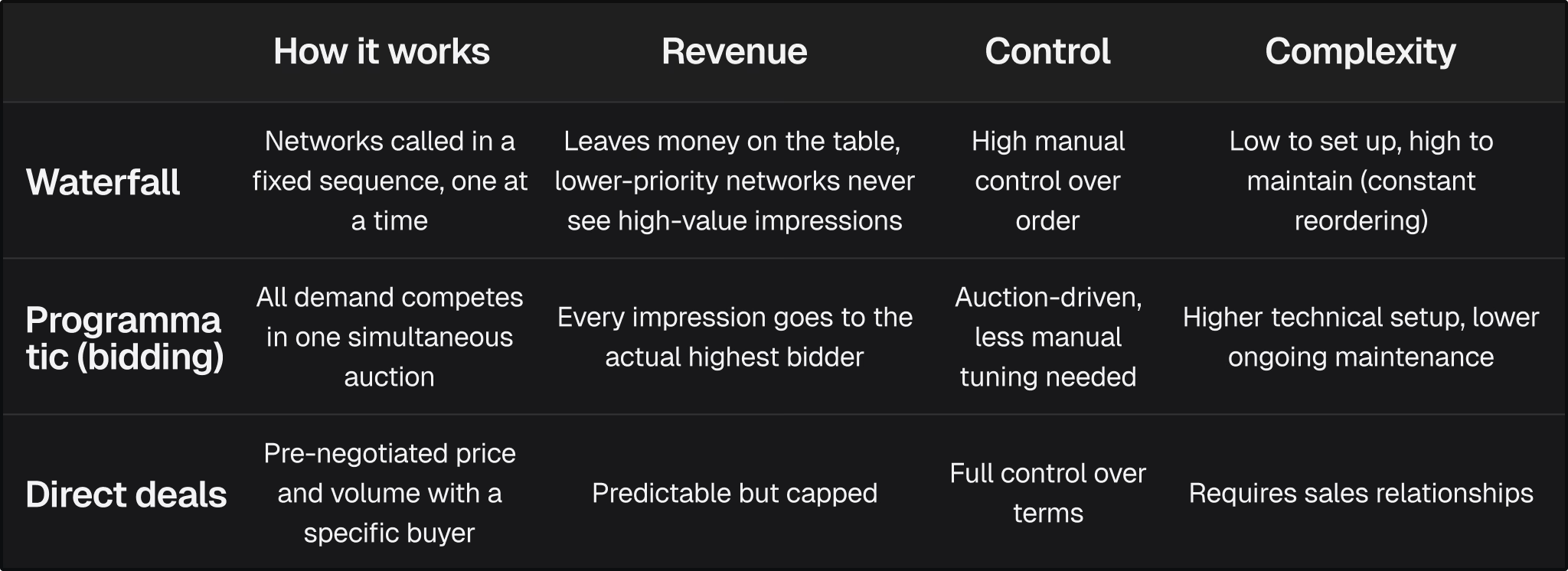
No single network gets the first look. Every bidder competes on the same impression, at the same time, which is the core difference from the older waterfall model (more on that below).
In-App Bidding vs. Web Header Bidding
The mechanics are the same auction logic as header bidding on the web – simultaneous bids instead of sequential network calls – but the execution is different. In apps, the auction runs inside the mediation SDK itself, not in a browser-side script. For the full breakdown of how header bidding works and where it originated, see our complete header bidding guide.
Mobile also imposes constraints that the web doesn’t. The SDK has to work within device and ad ID limitations and account for SKAdNetwork and Privacy Sandbox rules governing what data can flow between the app, the bidder, and the attribution layer. That’s part of what makes in-app bidding a distinct engineering problem, not just a mobile port of web programmatic.
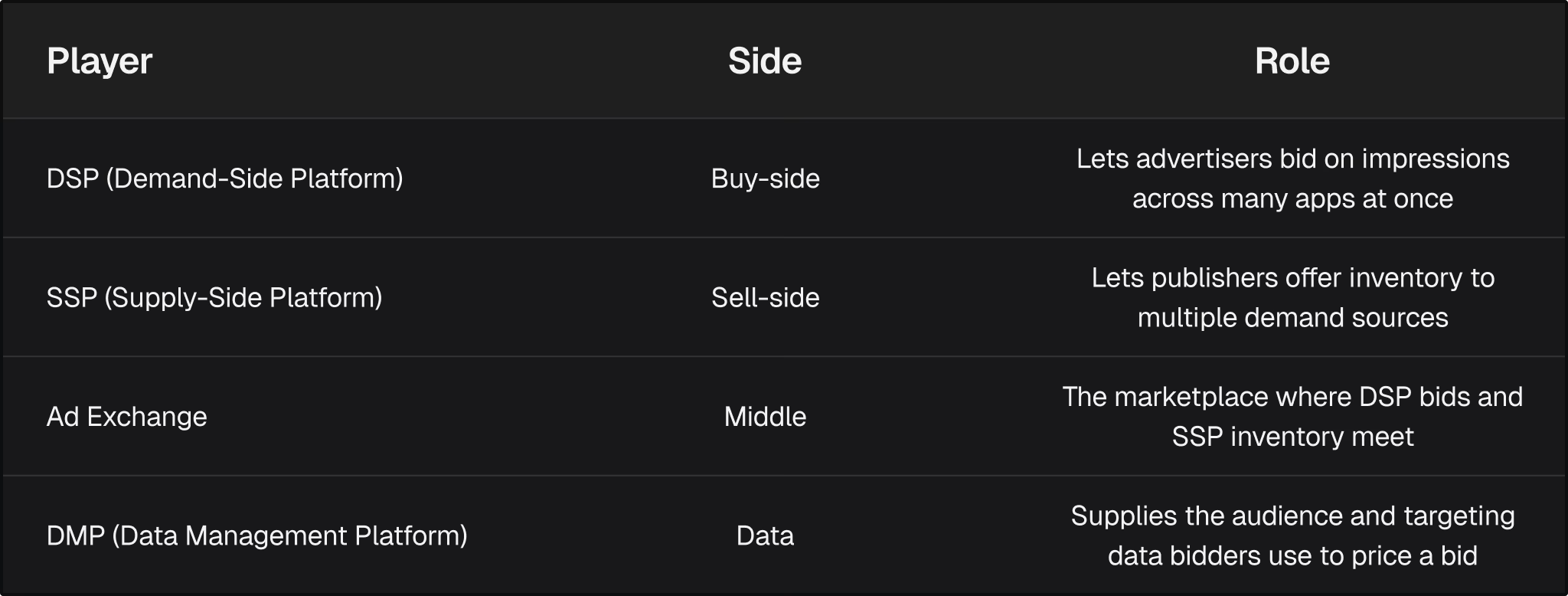
Key Players: DSP, SSP, Ad Exchange, DMP
Programmatic vs. Waterfall vs. Direct Deals
How it works: Revenue Control Complexity
Programmatic Advertising and Ad Mediation
Programmatic advertising isn’t something a publisher builds from scratch – it’s accessed through mediation. Mediation aggregates networks and DSPs into a single SDK integration and runs a single real-time auction across them. That’s the practical way a publisher turns on programmatic demand.
CAS.AI connects 20+ ad networks and 150+ DSPs through independent mediation – the auction isn’t tilted toward any single demand source, including our own.
See how CAS runs your real-time auction
Benefits and Risks
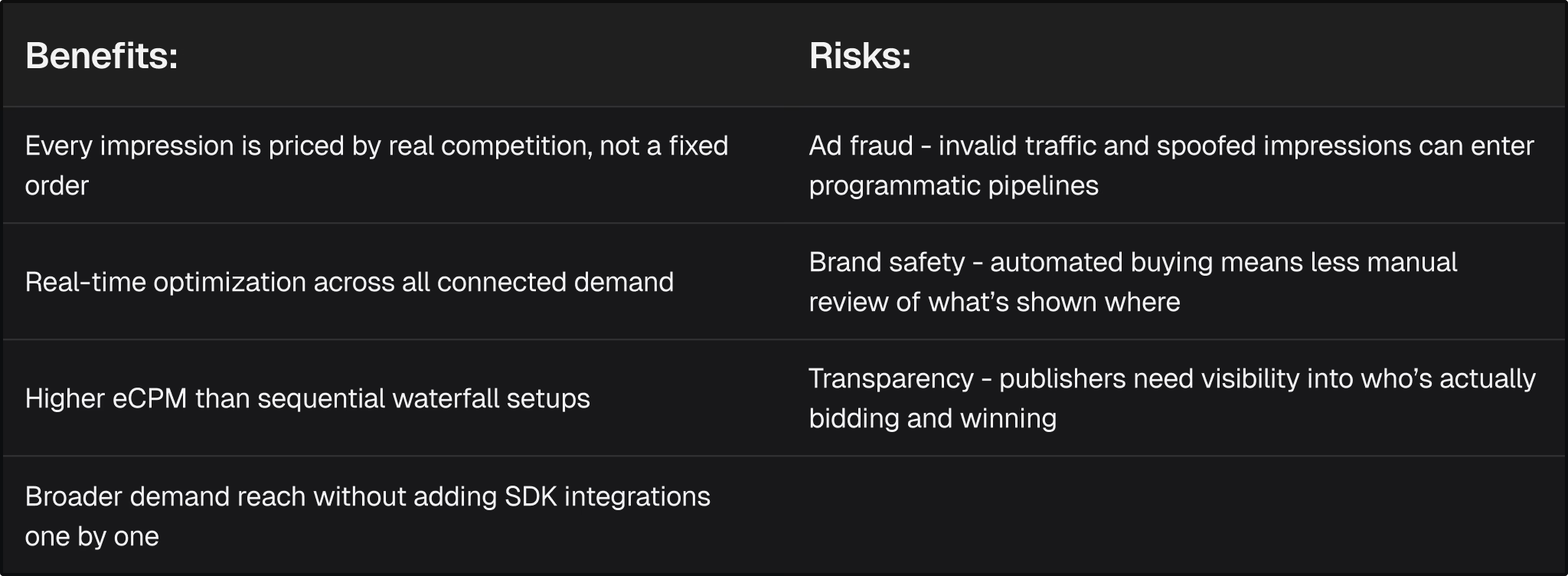
Mitigation is standard practice, not optional: publishing an app-ads.txt file to authorize legitimate sellers, and working with mediation partners who verify demand sources rather than accepting any bidder.
Getting Started with Programmatic on Mobile
- Choose a mediation platform that supports in-app bidding.
- Integrate the SDK.
- Connect your networks and DSPs.
- Turn on bidding across placements.
- Monitor eCPM and fill rate, and adjust which demand sources stay connected.
SDK integration guides for each platform are available at /mediation/[platform]/.
FAQ
What is programmatic advertising in simple terms?
Automated, auction-based buying of ad impressions in real time.
How is programmatic different in mobile apps?
It runs as in-app bidding inside the mediation SDK, rather than a browser-side script.
Programmatic vs. RTB vs. header bidding – what’s the difference?
RTB is the auction mechanism itself. In-app bidding and header bidding are two implementations of that mechanism, on mobile and web, respectively.
Is programmatic better than a waterfall?
Usually, yes. Simultaneous competition across demand sources lifts eCPM compared to a fixed sequential order.
How do I start with programmatic on mobile?
Through an ad mediation platform that supports in-app bidding — see mediation.