January, as strong as Black Friday: record UA efficiency at CAS.ai
In mobile games, January has long had a reputation as a “dead” month. Once the holidays are over,…
In mobile games, January has long had a reputation as a “dead” month. Once the holidays are over,…
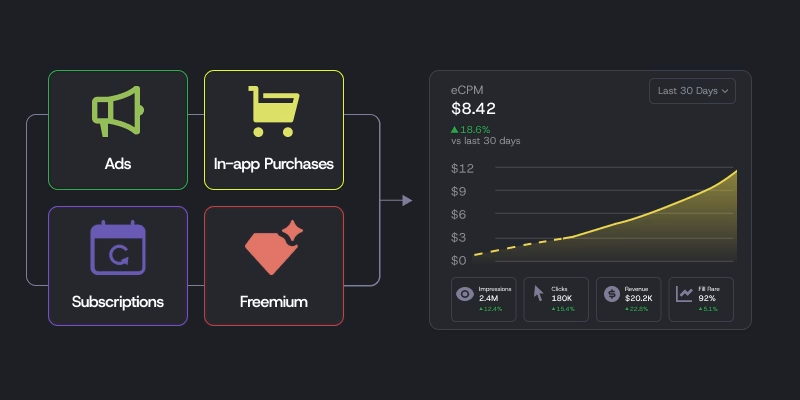
Making money from an app is not as simple as flipping a switch. You need a whole toolkit. Ads, in-app purchases, subscriptions, and mixing them together all come with their own twists. What actually works depends on your app and the people using it. This guide walks you through every model that is actually worth your time. I will show you how in-app ads and mediation work in practice, where in-app purchases and subscriptions fit in, and why hybrid monetization is taking over in 2026. You will see how to choose a strategy based on your app, your platform, and your region. I will also break down the five metrics that really matter and the common mistakes that quietly put a lid on revenue for most teams. Let us look at some real numbers. One CAS.AI publisher, Fail Games, saw their revenue jump by about 80 times after it switched to a hybrid setup with both ads and in-app purchases, using mediation to manage the ads. Another publisher went from making just four dollars a day to eighteen thousand euros a month, simply by adding mediation. Here is how they did it.
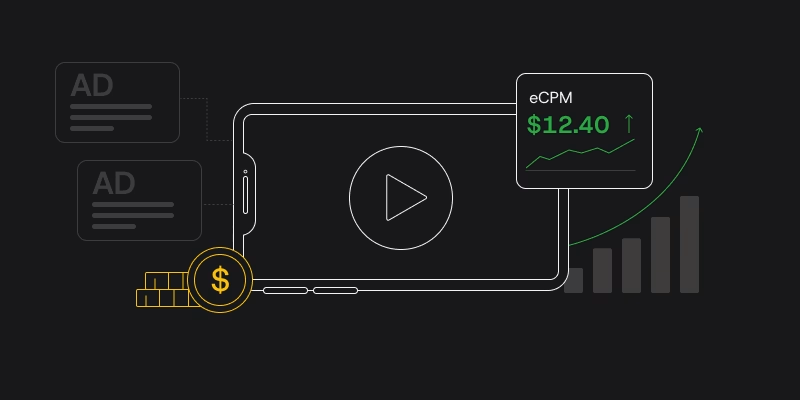
If you're a publisher, eCPM (effective cost per mille) is the revenue you earn for every 1,000 ad impressions. It's calculated with a simple formula: divide total ad revenue by total impressions, then multiply by 1,000. Unlike CPM, a fixed price that advertisers agree to upfront, eCPM reflects what you actually earned after accounting for fill rate, bids, and everything else. But the number alone means little without context. A $1.50 eCPM for a banner in Latin America is not the same as a $1.50 eCPM for rewarded video in the US. Format, geography, platform, and seasonality all move the needle. For publishers, the most reliable way to push eCPM higher? Competition. The more networks bidding on each impression in real time, the better your realized revenue. Publishers who switch to independent mediation typically see revenue per user jump 1.5–2x. That's not theory; that's what the data shows.
Mobile game publishing at CAS.AI is built for scaling mobile games with a data-driven system: CPI→ROAS UA, hybrid monetization (bidding + waterfall), ASO A/B tests, and creative iteration. Learn the baseline metrics we require and the workflow we use to scale profitably into Tier-1 geos.
ASO isn’t a launch-day checkbox. It’s a feedback loop. If you skip the update cycle, your rankings slip and competitors pass you. This checklist cuts through the noise and shows what actually drives organic installs in 2026: build separate keyword structures for iOS and Android (copy-pasting is lazy and costs you installs), rebuild your semantic core every 2-4 weeks, and run visual tests that isolate a single variable so your data is actionable. You’ll get the real rules: why the first three screenshots on iOS make or break your conversion, how literal translation kills your numbers in new markets, and the only four A/B tests that matter when you start: icon style, hero screenshot message, color themes, and video vs. static. The 2026 AI stack is here: keyword tracking, competitor moves, creative testing, and review monitoring so you’re not stuck in spreadsheets. Five mistakes still tank rankings, even if your keywords look perfect.
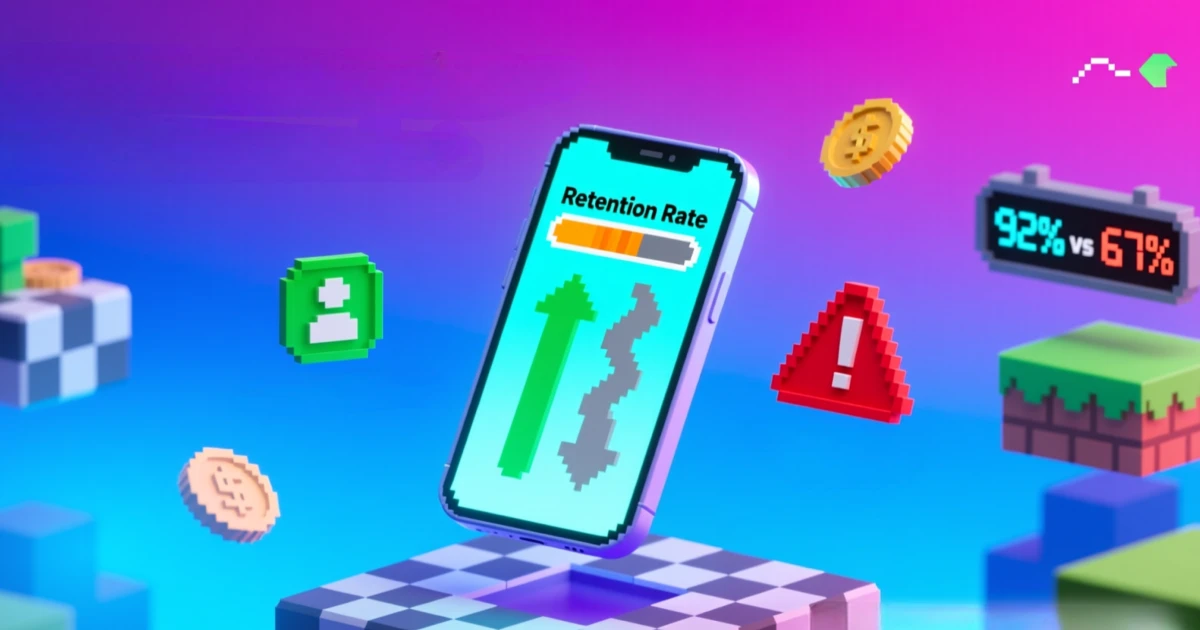
Staged rollouts can distort retention and produce misleading cohort data. Here’s how version mixing happens and how to protect your metrics from false signals.
A behind-the-scenes look at mobile game publishing and the real levers of growth. Four case studies show how CAS.AI scales indie games with data-driven strategies.
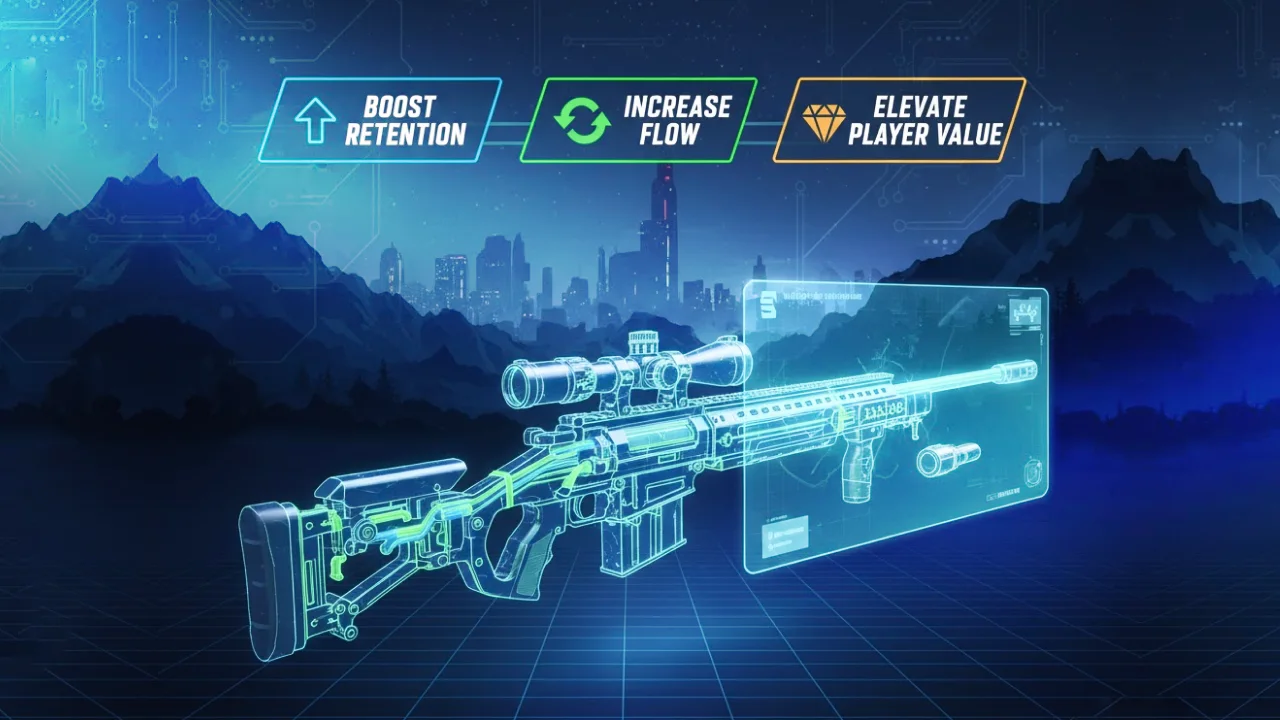
Learn how FTUE improvements, better weapon balance, and smoother onboarding can raise mobile sniper shooter retention, boost D1/D7 results, and increase player value without a full rebuild.
Practical guide to kids mobile games design and monetization — how variety, simple UX, and short sessions help boost engagement and build sustainable revenue for children’s titles.
CAS.AI’s method for mobile publishing and scaling apps: clear KPIs, small UA tests, ILD-driven monetization, and Tenjin analytics. Learn how we validate D0/D7, tune ad mix, and scale reliably across geos and channels.
Kids Mobile Games in 2025 face opaque discovery and Similar Apps swings—this playbook shows how to grow a kids app with engagement-first design, kid-safe ad cadence, parent-clear ASO, and intent-led cross-promo.
Hybrid monetization in mobile games done right: formats, safe ad frequency, and Ads/IAP balance that lift ARPDAU without hurting retention.
Please check your email (including spam folders).
If you have received a copy of this message to the e-mail address you provided, your registration is successful.
Your application is being processed.
Our manager will contact you within 48 hours to help you activate your account. Otherwise, please use the help of our support team.
We share useful resources while your application is being processed

Discuss strategies to increase your project's revenue in chats
Thank you for your submission, we got it!
Our manager will contact you in the next 24 hours at the email address you provided. We appreciate your interest in publishing with us!
We share useful resources while your application is being processed
Discuss strategies to increase your project's revenue in chats
Thank you for your submission, we got it!
Our manager will contact you in the next 24 hours at the email address you provided. We appreciate your interest in publishing with us!
We share useful resources while your application is being processed
Discuss strategies to increase your project's revenue in chats

Something went wrong on our end — your form was not submitted. Please try again in a few minutes.
Try submitting the form again in a few minutes — most issues resolve on their own.
If the problem persists, reach out to our support team: [email protected]