App Store Optimization (ASO) in 2026: How to Make Sure Users Can Actually Find Your App Page
Last updated: July 2026
App store optimization in 2026 is not some trick you pull out when downloads dry up. It is the backbone for anyone who wants their app to actually grow. The teams that come out on top are the ones who make ASO part of their routine, not just a box to tick and move on. In this guide, I will walk you through what has changed, how the stores decide what gets seen, and what really helps people land on your app page.
If you want to dig deeper into analytics or monetization, check out CAS.AI. And if you’re weighing organic ASO against paid user acquisition, see our breakdown in Mobile App Monetization Under Siege. This article stays focused on organic discovery.
What Is ASO (App Store Optimization)?
Last updated: July 2026
App Store Optimization (ASO) is the process of improving an app’s visibility and conversion rate in the App Store and Google Play. It combines keyword research, creative testing, and localization so both algorithms and real users can find, understand, and download your app.
Launching your app used to feel like crossing the finish line. Now, it is just the starting gun. With so many apps crowding the App Store and Google Play, even the best ideas can vanish unless you have a real plan for app store optimization.
ASO is not just about picking a few keywords and crossing your fingers. It is about rolling up your sleeves, looking at the numbers, getting creative, and tweaking your message until something clicks. In the end, you are convincing both the algorithms and real people that your app belongs on their phones.
Now, algorithms are less interested in you ticking boxes and more focused on what actually helps users. The teams that keep at their app store optimization, instead of treating it like a checklist, pull ahead. The right ASO tools show you which keywords are doing the heavy lifting, which pages bring in real traffic, and where you might want to shake things up.
How Stores Understand Your App
The App Store and Google Play are not twins anymore. Each one has its own way of ranking apps and its own quirks. That is why the smart teams build separate app pages for each platform instead of trying to make one page fit all.
In the App Store, only specific fields are indexed: Title, Subtitle, Keywords Field, and additional elements such as Custom Product Pages (CPP) and In-App Purchases. This is where search visibility is formed. The description doesn’t affect ranking, but it still plays a key role in conversion by communicating value and keeping users’ attention.
Google Play has its own playbook. Its algorithm checks out almost everything on your page, from the title right down to the last line of your description. You cannot just toss in keywords and hope for the best. They have to fit naturally into your story. If you try to cram in too many, you will not just get ignored, you might actually drop in the rankings.
ASO pros now see text as more than just a place to stash keywords. They use it to tell a real story about the app, one that lines up with what people are actually searching for.
Visual Optimization: First Impressions Decide Everything
Text might help the algorithms notice you, but visuals are what grab people. Icons, screenshots, videos, ratings, and reviews all work together to make that crucial first impression.
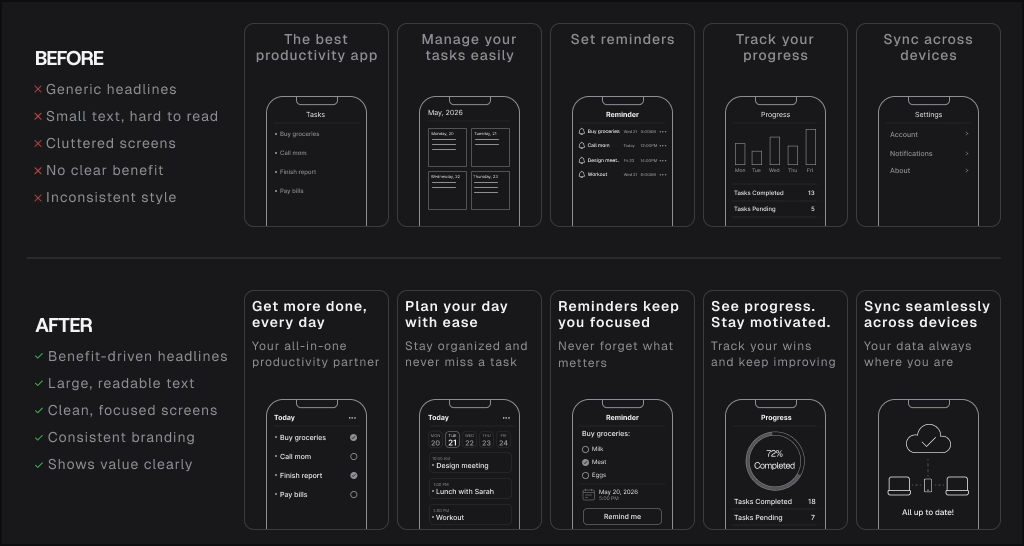
On iOS, the first three screenshots show up right in the search results. These are what make people tap or keep scrolling. That is why those first images need to show off what matters most, with a clean look and just enough text. On Android, people only see your visuals after they land on your app page, so you have to get your message across fast.
The smartest developers do not just trust their gut anymore. They run A/B tests all the time. The App Store lets you try out different product pages, and Google Play has its own experiments. These tests show you which icon gets more clicks, which images help, and which ones actually turn people off.
At the end of the day, visual ASO is not about making things look pretty. It is about what people actually do and what the numbers tell you.
Keywords: The Foundation of Organic Growth
Your semantic core is the language your app uses to talk to the search algorithm. Pick the right keywords, and people will find you. Miss the mark, and your app will get lost in the crowd.
Building a strong semantic core now means rolling up your sleeves and digging into the numbers, search volume, competition, difficulty, intent, and even seasonality. The right keyword tools do more than just hand you a list. They show you which searches actually bring in installs. You can sort and group keywords by traffic and competition, and keep your list fresh so you do not fall behind when trends shift.
A smart keyword plan mixes hard data with a bit of gut instinct. Algorithms like things to stay steady, but the market never sits still. That is why ASO pros rebuild their keyword lists every few weeks to keep up with what users are searching for.
ASO and user acquisition (UA) overlap more than most teams realize , stronger organic visibility lowers your blended CPI and takes pressure off paid spend. We cover that relationship in detail in Mobile App Monetization Under Siege, so we won’t duplicate it here.
Localization: Speaking the User’s Language
Localization is not just swapping words from one language to another. It means changing your message, visuals, and even your app’s details to fit what people in each country expect. People are much more likely to trust an app that feels like it was made just for them.
The App Store and Google Play handle locales differently. In iOS, cross-localization allows a single country to index keywords in multiple languages, a powerful way to expand reach without adding text. In Google Play, things are simpler: only one selected locale is indexed, but the entire text, including the description, counts.
Good localization means more clicks, more installs, and users who actually stick around. It also tells the algorithms your app matters in that country, which helps your rankings.
A/B Testing: The Most Important Tool for Conversion Growth
Trying to do app store optimization without testing is like flying blind. Even the best app page will stop working after a while. Trends shift, designs change, and users start looking for something new. That is why you need to keep experimenting.
You can test everything, icons, screenshots, videos, and text. The real trick is to watch what real users actually do. Even a tiny bump in conversion, just two or three percent, can mean hundreds of extra installs without spending a cent on ads.
Testing is not a one-time thing. It is a loop: you come up with an idea, test it, see what happens, and then try something else. That is how you build real, lasting growth.
App Store Optimization Tools (Including AI-Powered ASO)
You cannot just wing app store optimization in 2026. The right tools turn guesswork into a process you can actually repeat. Here is a quick look at the types of tools you should know about. This is not just a pitch for one company.
- Keyword research & tracking tools: surface search volume, difficulty, and rank movement over time so you know which terms are actually worth chasing.
- Competitor & market intelligence tools show what’s working for apps in your category: keyword overlap, visual trends, and where competitors are gaining or losing ground.
- Creative testing platforms run structured A/B tests on icons, screenshots, and videos, using the App Store’s and Google Play’s native experiment tools or third-party layers on top of them.
- Review & ratings management tools track sentiment, flag issues early, and help you respond before a rating dip turns into a ranking problem.
AI-Powered ASO
AI is not just a shiny extra in the ASO toolkit anymore. Teams now use it to build and score keyword clusters, draft first versions of screenshot copy and localization, and even predict which creative changes might boost conversion before you run a test. None of this replaces real judgment. It just clears out the grunt work so ASO managers can spend more time making decisions and less time buried in spreadsheets.
No matter which tools you pick, the goal stays the same. You want to turn raw data into smart decisions faster than your competitors.
Get Your Free ASO Launch Checklist
Want a shortcut through everything above? Download the ASO Launch Checklist, a step-by-step rundown covering store listing setup, keyword research, visual assets, localization, and your first 30 days of A/B testing. It’s built for teams launching a new app page or auditing an existing one.
- Store listing audit: title, subtitle, keyword field (or description, on Android)
- Keyword research: seed list, competitor gaps, seasonality check
- Visual assets: icon, first three screenshots, video (if applicable)
- Localization: priority markets and locale-specific keyword mapping
- Testing plan: first four experiments and how to read the results
Download the Checklist App store optimization (ASO) is the practice of improving how an app ranks and converts in the App Store and Google Play, using keywords, visuals, localization, and ongoing testing. Both are about organic visibility, but ASO works within store-specific ranking systems (Title, Subtitle, Keywords Field on iOS; full-text analysis on Google Play) rather than the open web, and it includes visual conversion elements like icons and screenshots that traditional SEO doesn’t touch. Keyword and metadata changes can shift rankings within days to a few weeks, depending on the platform and competition. Visual and localization changes usually need a few A/B test cycles, typically 4-8 weeks, before you can trust the data. Yes, but stuffing them no longer works. Both stores reward keywords that read naturally and match real search intent, not repetition. ASO drives organic installs by improving discoverability and conversion; UA drives installs through paid campaigns. They work together — better ASO lowers your blended cost per install from UA spend. See Mobile App Monetization Under Siege for a full breakdown of that relationship. Review keywords every few weeks and refresh visuals at least quarterly, or sooner if conversion rates start slipping or a competitor changes their page.
Frequently Asked Questions
Common Mistakes That Still Happen
- Running optimization without data or proper tools
- Ignoring differences between iOS and Android
- Keyword stuffing
- No localization
- Infrequent updates of visuals and text
Any of these mistakes can cost you a ton of organic traffic. In 2026, algorithms are watching everything, from how users behave to how often your app crashes and how quickly it loads.
Key Takeaways
App store optimization in 2026 is not just a list you check off. It is a mindset. You need data, experiments, and a sharp eye for detail. Algorithms will keep changing, and so will the market, but one thing is clear. The apps that use analytics and smart planning are the ones people actually find and download.
With the right ASO tools and process, you can handle the whole workflow, from keyword research to visual testing. Start by digging into keyword research and checking out the competition, then work on making your app page better and boosting conversions. This saves you time, lowers your risks, and turns organic growth into something you can actually plan for.