Beyond Gaming: How Non-Gaming Apps Are Rewriting the Mobile Monetization Playbook
For most of mobile’s history, games ran the monetization show. Hypercasual titles, puzzle games, strategy RPGs, they figured out how to squeeze revenue from audiences before most app developers had even thought seriously about the problem. Non-gaming apps , utilities, health trackers, news readers, and finance tools mostly just copied whatever games did and hoped for similar results.
That dynamic has finally flipped, and the reversal is more significant than most people realize.
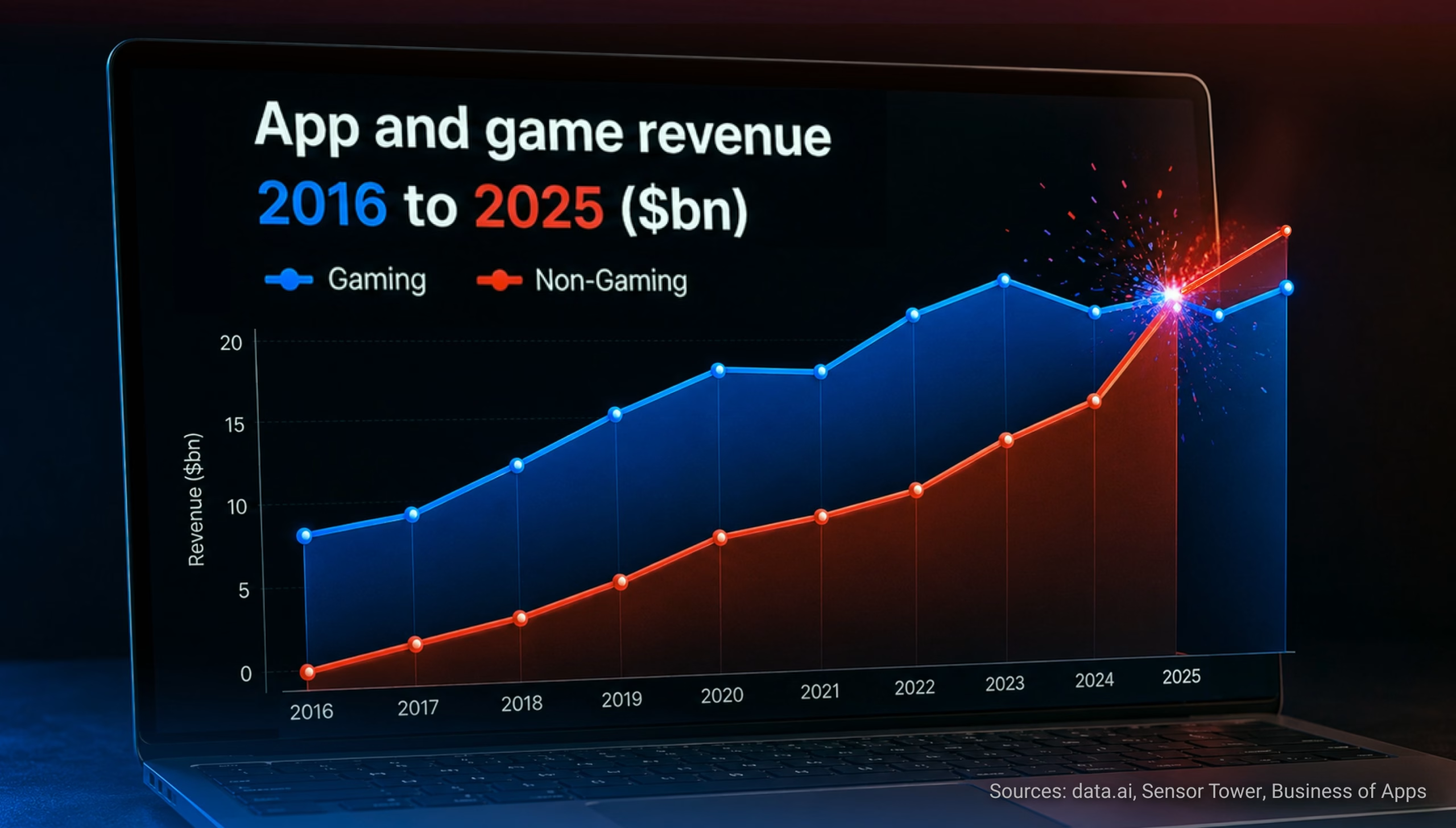
In 2025, non-gaming apps generated $85.6 billion in revenue, outpacing gaming’s $81.8 billion for the first time. Over the previous five years, non-gaming in-app purchase revenue nearly tripled while gaming spend remained largely flat. This wasn’t an accident or a blip; it was the result of years of shifting user behavior finally reaching critical mass.
But here’s the thing: winning a revenue comparison with gaming is only meaningful if the underlying monetization systems are actually mature. And for most non-gaming apps, they still aren’t. The gap between what these apps earn and what they could earn, with the proper method, is still enormous.
What Actually Drove the Non-Gaming Surge
Before talking strategy, it’s worth understanding why non-gaming revenue exploded, because the drivers directly shape which monetization approaches make sense.
- Generative AI was the single biggest catalyst. AI-powered apps added roughly $3.5 billion in year-over-year revenue in 2025, building on the $1 billion-plus milestone the category had crossed the year before. ChatGPT alone became the second-highest-grossing app globally by in-app purchase revenue, capturing more than two-thirds of total GenAI spending. Total AI app downloads nearly doubled to 3.8 billion. When a single category adds that much revenue in a single year, it reshapes the entire landscape around it.
- Streaming and social followed closely. Movie and TV apps added $2.2 billion year-over-year. Social platforms contributed another $2.1 billion, finishing 2025 at $12.9 billion in IAP spending, a 17% jump from 2024. Sports apps grew 31%, food apps 24%, books 17%, and entertainment 13%.
What these numbers reflect isn’t just more downloads. They reflect a fundamental change in what people are willing to pay for on their phones. Categories that once struggled to convert free users into paying ones have figured out how to package value in ways that clearly resonate. That expanded both the total addressable audience and the monetization ceiling for apps that know how to reach them.
Why Most Non-Gaming Apps Are Still Leaving Money Behind
Gaming didn’t just grow revenue by accident. Companies like Supercell and King spent years building layered monetization systems, interstitials, rewarded video, in-app purchases, seasonal content, battle passes, and testing obsessively until they found what worked. The result wasn’t just high revenue; it was loyal, high-engagement user bases that have stuck around for years.
Non-gaming apps, by contrast, tend to fall into a few predictable traps.
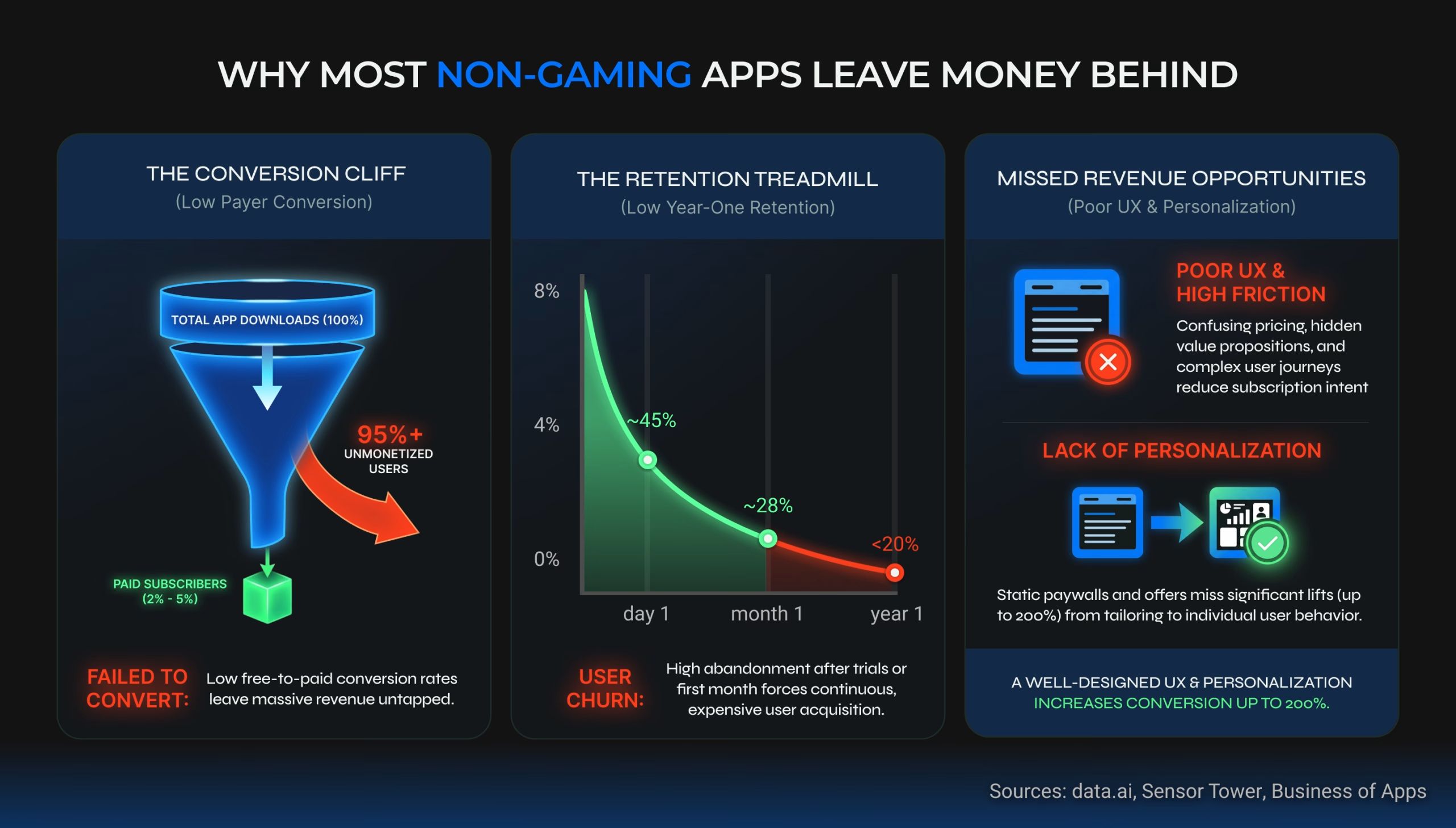
- The subscription tunnel vision problem. Most non-gaming apps chase subscriptions as their primary revenue model. The problem is that subscription conversion rates are brutal. Even successful apps typically convert only 2-5% of their user base into paying subscribers. That means 95%+ of users generate no revenue at all, a massive untapped pool sitting idle.
- The single-format ad stack. When non-gaming apps do run ads, they usually run banners. Sometimes just banners. They might have one or two network integrations, no real auction pressure, and no strategy for matching ad formats to specific user moments. This approach puts a hard ceiling on ad revenue regardless of how good the underlying audience is.
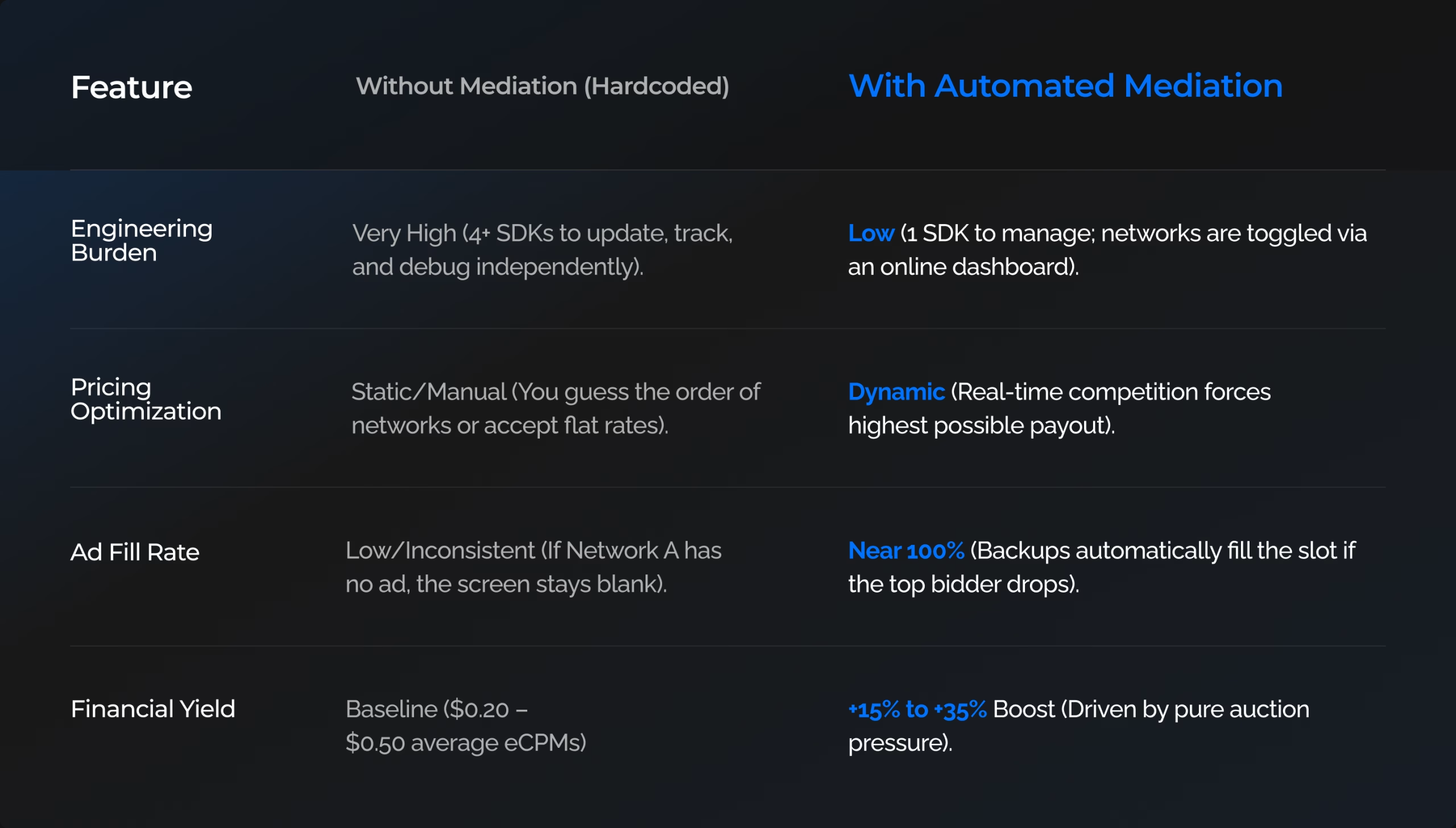
- The ad mediation gap. Managing multiple ad networks independently is a major technical burden, with separate SDK integrations, different account requirements, conflicting documentation, and manual version tracking. Many non-gaming teams simply don’t have the bandwidth for it, so they settle for a minimal setup that underperforms.
This is the specific problem that ad mediation services like CAS.AI were designed to solve. A single SDK integration connects apps to more than 10 major ad networks, including AdMob, AppLovin, ironSource, Unity, Mintegral, Pangle, and others, without requiring separate accounts or threshold management for each. The SDK handles automatic network updates, so developers don’t need to monitor upstream changes manually. It works across Android, iOS, Unity, Flutter, Unreal Engine, React Native, Godot, Cordova, and Construct. Integration is measured in hours, not weeks.
For non-gaming teams trying to close the monetization gap without adding engineering overhead, that kind of tooling matters a lot.
Four Myths That Keep Non-Gaming Monetization Stuck
Before getting into particular formats and strategies, it’s worth clearing out some of the conventional wisdom that holds non-gaming teams back.
Myth 1: Non-gaming audiences aren’t worth as much to advertisers.
The assumption here is that gamers engage more readily with ads because ads fit the game context. Reality is more complicated. A user tracking their personal budget in a finance app, or monitoring their health metrics in a wellness app, represents exactly the kind of intent that performance advertisers are willing to pay a premium for. Finance and health apps regularly outperform casual games on eCPM, not because they show more ads, but because each impression carries higher commercial value. The revenue ceiling isn’t lower in non-gaming; it’s just less frequently tested.
Myth 2: One ad format is enough.
Banners are easy to implement and easy to ignore. Relying on a single format is the app monetization equivalent of a restaurant with a single menu item. Different ad formats serve different user moments: rewarded video works when users are actively engaged and willing to opt in, App Open monetizes the launch moment without interrupting anything, interstitials fit natural session transitions, and banners provide low-friction passive revenue across long sessions. Used in combination, these formats multiply revenue without meaningfully adding friction.
Myth 3: Gaming advertisement creatives don’t work in non-gaming apps.
A meditation app user won’t respond to a gaming ad; this is the intuition. But placement quality consistently matters more than ad category. A well-timed rewarded video from a gaming advertiser, shown at a natural break in a fitness app, will convert. The same ad forced mid-workout will tank both effectiveness and user satisfaction. Context of placement is the variable that drives performance, not the content category of the ad itself.
Myth 4: Better monetization means worse user experience.
This one is probably the most damaging myth in the space. Apps that combine ads with subscriptions or IAP see lifetime value jump by more than 50% compared to single-stream approaches. Users who engage with rewarded video ads by choice are 4.5 times more likely to make a purchase. The data consistently shows that opt-in ad formats don’t just add revenue; they increase total user investment in the product. The distinction is design. Intrusive, mid-session interstitials hurt UX. Value-exchange formats that give users something in return don’t.
Ad Formats That Actually Work Outside of Gaming
Not all formats are appropriate for every app, and not all formats perform equally across several session types. Here’s how to think about the options.
Banners and MRECs
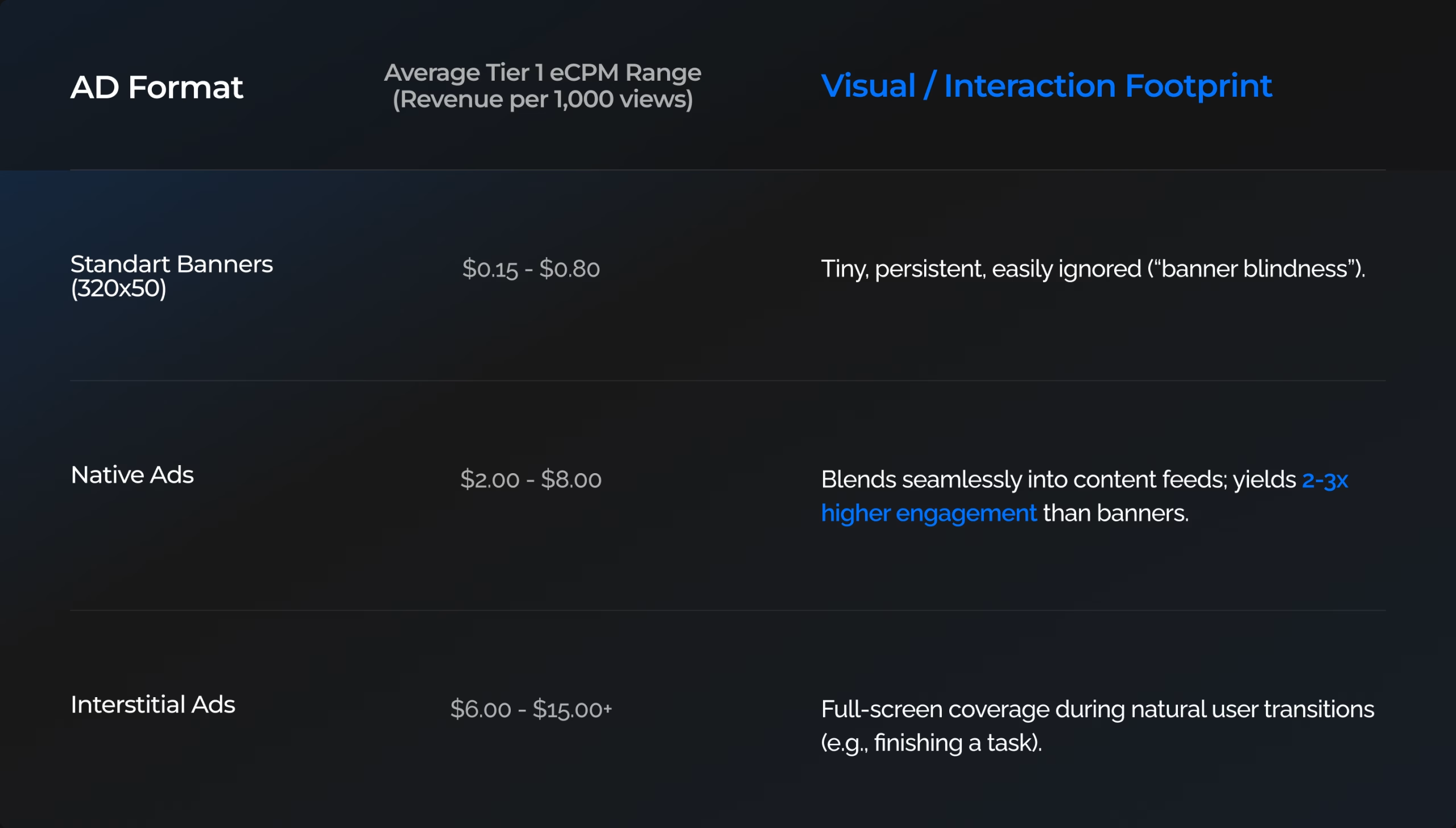
Standard banners are the lowest common denominator of mobile advertising, easy to deploy, easy to ignore. They work best in apps with long or repeated sessions where even low CTRs add up over time: weather, navigation, news, productivity tools.
Medium rectangles (MRECs) outperform standard banners in both engagement and eCPM. If you’re running any kind of banner unit, MRECs are the more defensible choice over leaderboards. That said, banners of any kind are a floor, not a ceiling. Build on top of them, don’t stop there.
Interstitials
Interstitials pay well, US eCPMs around $14, but they require care. The rule is simple: show them only at genuine natural breaks, never during active engagement. After completing an article, finishing a workout, or wrapping up a lesson, these are moments when users are transitioning anyway. Forcing an interstitial mid-flow isn’t just bad UX; it actively degrades ad performance because users who feel interrupted are less likely to engage with what’s shown.
Rewarded Video
This is the format non-gaming apps have been slowest to adopt and the one with the most upside. Completion rates hit 91%. CTRs run 43% higher than banners. US eCPMs range from $16 to $20. And users who opt into rewarded video are 4.5 times more likely to convert to paid.
The mechanics translate naturally across app categories. Watch an ad, unlock a premium article. Watch an ad, access a workout without subscribing. Watch an ad, get a discount on an IAP. The value exchange is clear, the user maintains control, and the format generates higher revenue per impression than almost anything else in the stack.
For non-gaming apps, rewarded video deserves far more attention than it typically gets.
App Open Ads
App Open ads show at launch, filling the splash screen moment before users enter the main experience. They don’t interrupt sessions. They don’t compete with in-session formats. US eCPMs exceed $10. And they monetize every single launch without adding friction anywhere in the user journey.
This is probably the most underutilized format in non-gaming. It’s pure incremental revenue with minimal UX cost. If you’re not running App Open, you’re leaving money behind on every app launch.
Native Ads
For content-heavy apps, news, podcasts, recipe platforms, travel guides, native advertising is worth the embedding effort. When ads match the visual language and editorial flow of the surrounding content, engagement improves substantially. Native ads require more work upfront to implement well, but in content-driven contexts, they can provide top-tier eCPMs without damaging the experience, which keeps users coming back.
Choosing Your Format Mix
There’s no universal answer, but there is a useful framework. Short, high-frequency sessions, think news apps, weather, quick tools, should lean on App Open and rewarded video. Long, immersive sessions, meditation, fitness, and language learning can support banners and MRECs in the background with interstitials at natural transition points. Content apps benefit most from native ad integration. The right mix arises from understanding your session data, not from copying what another app category does.
Hybrid Monetization: The Model That Outperforms Everything Else
Pure subscription schemes are appealing because they feel clean and predictable. But as a standalone strategy, they leave most of your user base unmonetized.
Subscription systems multiply ARPU significantly, roughly 4.6 times compared to ad-only approaches when they convert. The catch is conversion rates. Most users never subscribe, which means a pure subscription model properly ignores the majority of the people using your app.
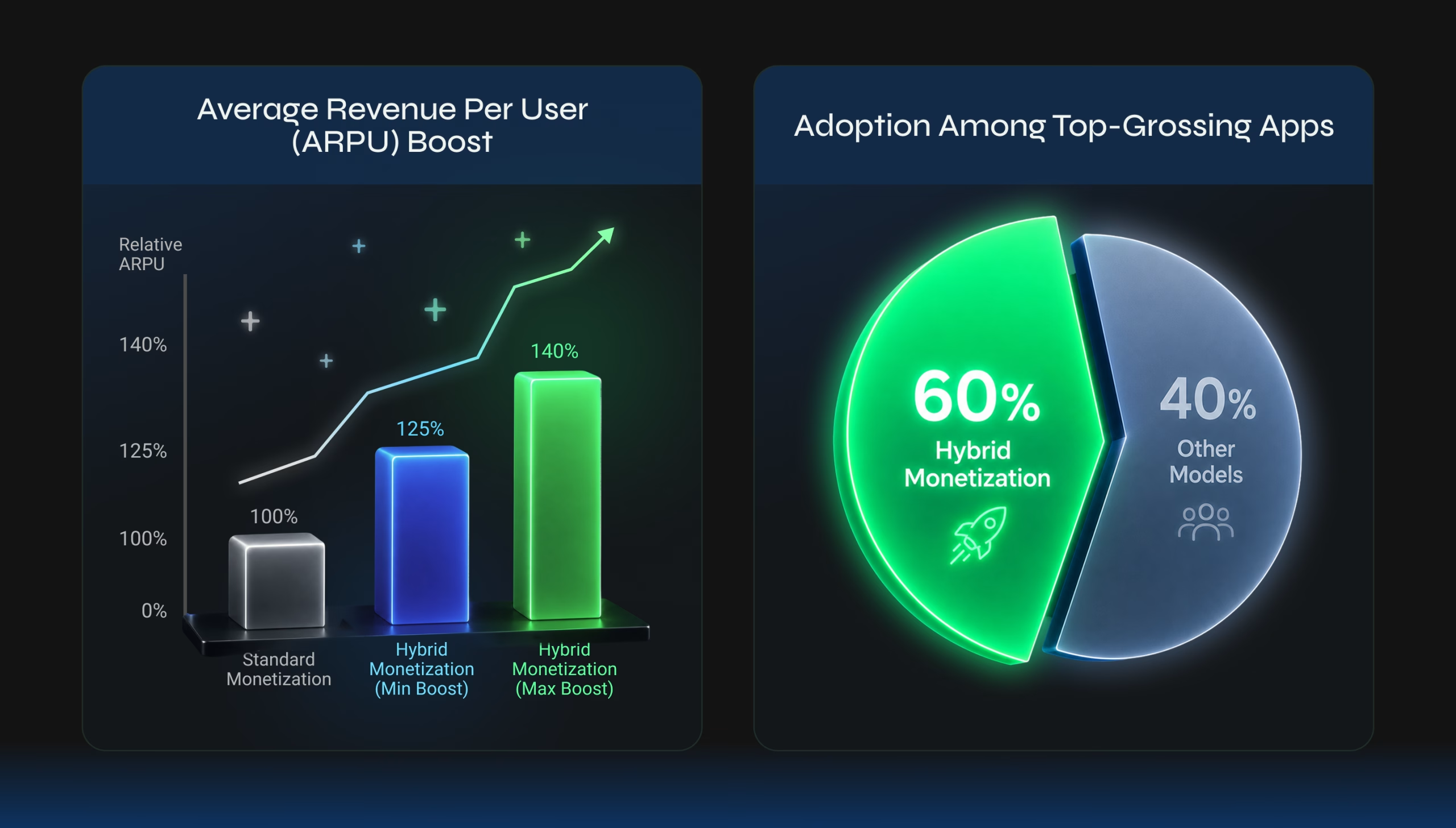
Hybrid models, combining ad monetization with subscriptions and/or IAP, solve this. More than 60% of top-grossing apps now use some form of blended approach, and they outperform single-channel apps by 25-40% in ARPU. Gaming figured this out early: 72% of game developers currently use combined in-app advertising and in-app purchase strategies. Non-gaming is catching up, but slowly.
The right hybrid structure depends on your app category:
- Content apps (news, podcasts, long-form reading): A metered paywall works well here, with rewarded video as the access mechanism for non-subscribers. Users who don’t want to subscribe can still access content by watching an ad, generating real revenue from a segment that would otherwise produce no revenue. Subscribers get a commercial-free experience as part of their value proposition, which makes the subscription itself more compelling.
- Utility apps (health, productivity, finance): A freemium structure fits best. Free users are monetized through App Open ads and rewarded video. Paid subscriptions access the full feature set. One-time IAP purchases for specific capabilities, an advanced analytics module, and a premium workout plan add a third revenue layer that captures users willing to pay for features but not recurring subscriptions.
- Entertainment and sports apps: This category sits closest to gaming in terms of monetization potential. A full ad stack, banners, rewarded video, App Open, combined with a subscription tier that removes ads, creates a natural user journey. Free users experience the product, see its value, and upgrade when the cost-benefit calculation tips in favor of subscribing.
The underlying logic is consistent: more demand sources competing for your ad inventory drives eCPMs higher. Higher eCPMs improve ad revenue without requiring more ad slots. Better ad revenue funds user acquisition. A subscription tier that rewards your most engaged users creates a retention loop that ad revenue alone can’t replicate.
User Acquisition for Non-Gaming Apps: Optimizing for Quality, Not Volume
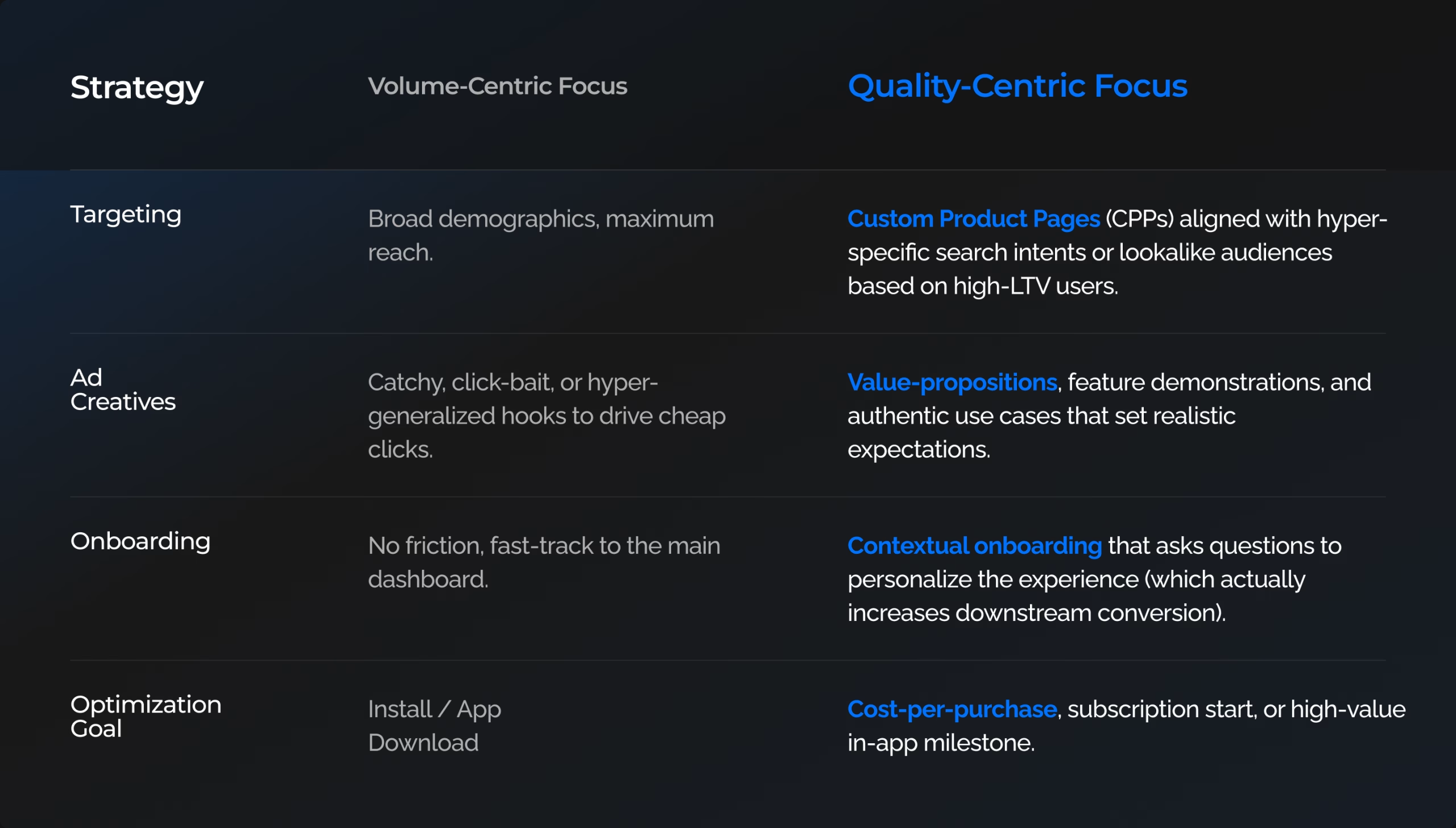
Non-gaming UA operates under different assumptions than gaming. User intent matters more than raw volume. A user who downloads a personal finance app is worth substantially more to performance advertisers and generates substantially more ad revenue than a casual game install.
That changes how you think about acquiring users and what metrics you optimize for.
- The shift from CPI to ROAS. Cost-per-install is a vanity metric for non-gaming apps. Installs are the beginning of the funnel, not the outcome. Return on ad spend ties acquisition cost to real revenue and directs budget toward users who actually convert , not just users who show up. For subscription apps, Day 7 ROAS is a common optimization target. Apps with longer monetization curves optimize for Day 30 or Day 90. The infrastructure requirements are higher, but the cohort quality regularly outperforms CPI-optimized campaigns. Non-gaming marketers have recognized this: 25% cite CPA as their top KPI, compared to just 6% in gaming.
- Retargeting as a core channel. For subscription apps especially, retargeting isn’t optional infrastructure; it’s essential. Roughly 74% of users drop off after day one. By day 30, retention is in the single digits. Retargeting campaigns that bring lapsed users back to specific conversion points protect revenue more efficiently than chasing new installs. Calm ran AI-powered retargeting campaigns that boosted six-month retention by 35% and reduced CPA by 20%. That kind of result is available to any app willing to build the infrastructure.
- Privacy-first targeting on iOS. Post-IDFA, cross-app tracking on iOS is mostly gone. With around 70% of users declining ATT prompts, targeting has shifted to contextual signals: device behavior, app category, session patterns, and content consumption. Probabilistic attribution and SKAdNetwork are now the baseline for iOS UA. For non-gaming apps with strong engagement metrics, this shift is actually an advantage. An app that knows its users open every morning and complete their sessions for 90 days has first-party behavioral data that outperforms any third-party ID. Building systems to activate that data is now a meaningful competitive edge.
What’s Coming in 2025-2026
Three trends will define non-gaming monetization over the next 18 months. Each represents either a significant opportunity or a significant risk, depending on how quickly you move.
GenAI monetization acceleration.
AI app revenue is still in the early stages despite the numbers. GenAI IAP hit $1.3 billion in 2024, jumped to $1.87 billion in just the first half of 2025, and total AI app revenue for the year reached $18.5 billion , a 180% increase. AI features are becoming standard across health, productivity, education, and entertainment. The monetization question is shifting from “should we add AI” to “how do we price it.” Premium tiers, personalization layers, AI-powered ad targeting, and usage-based pricing are all actively being tested.
Web billing and alternative payment systems.
Legal pressure from cases like Epic v. Apple and regulatory structures like the EU’s Digital Markets Act have created real alternatives to App Store billing. Routing purchases through web checkout instead of in-app payment systems eliminates 25%+ in commission costs. For subscription-heavy apps, the margin improvement is substantial. Implementation is genuinely complex, but the economics are too important to ignore as the tooling matures.
SDK-based passive monetization.
This remains the least-discussed monetization layer in non-gaming. Through integrating SDKs that compensate users for opting in to share unused device resources , bandwidth, and compute , developers have grown this revenue stream from roughly 5% of total mobile revenue in 2022 to 20% by 2025. It won’t replace ads or subscriptions. But as an always-on incremental layer that requires no changes to core UX, it diversifies the revenue stack without adding user friction.
Closing the Gap
Gaming spent a decade figuring out mobile monetization by trial, error, and iteration. The formats that work, the hybrid structures that outperform single-channel approaches, the UA strategies that optimize for long-term value, none of this is secret. It was figured out through expensive experimentation that non-gaming apps can now skip.
The $85.6 billion in non-gaming spend proves the audience is there. The intent is there. The willingness to pay is there. What’s still missing for most apps is the system that captures that value efficiently, a real ad stack with proper mediation and format diversity, a hybrid model that monetizes more than just the top 2-5% of users, and UA infrastructure that optimizes for LTV rather than installs.
The tools exist. The playbooks are written. Non-gaming apps that treat monetization as a system, not an afterthought, will keep pulling ahead of those that don’t.
Looking to close the monetization gap in your app? CAS.AI connects non-gaming apps to 10+ major ad networks through a single SDK integration, available for Android, iOS, Unity, Flutter, Unreal Engine, React Native, Godot, and more.