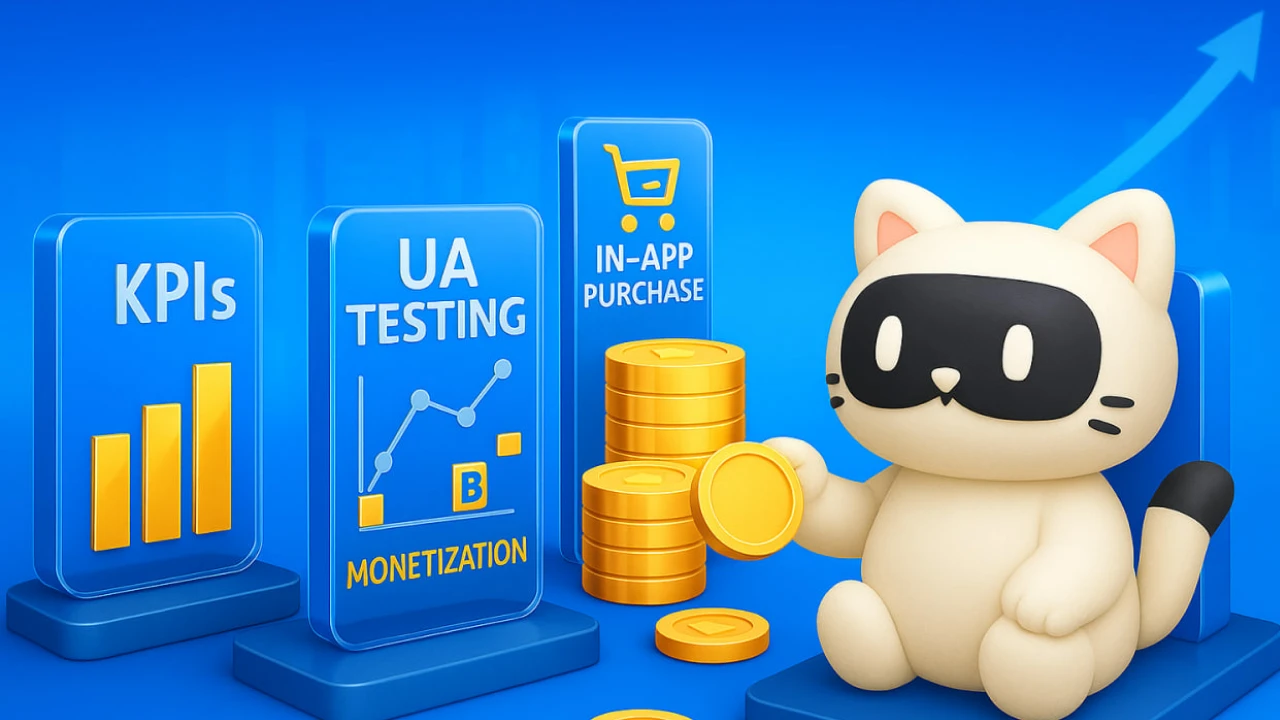

Smiling developer testing a kids app on a tablet with a “Level Complete” screen—symbolizing growth in Kids Mobile Games

Kids Mobile Games 2026: How to Win Tough Developer Challenges

October 15, 2025 5 min read

Kids Mobile Games in 2026 operate in a tougher, more opaque market than a few years ago. For years, many kids developers lived on organic installs, but since late-COVID and through 2022–2024 the rules changed: discovery became volatile, “Similar Apps” exposure turned opaque, and cross-promotion lost reliability. Teams building a kids app want to know what still moves the needle—and how to measure it. Key thesis: In kids’ mobile games, engagement quality (not just retention snapshots) is the clearest leading indicator for long-term organic—especially on iOS. On Google Play, “Similar Apps” can make or break a title’s trajectory, but access to it has become inconsistent.

A Short History of the Kids Mobile Games Market

  • 2008–2011: The Wild West. Few devices, almost no kids content. Anything shipped could get traction because supply lagged demand.
  • 2012–2016: Android Gold Rush. Device growth outpaced the app market. Even simple kids apps received organic + ad revenue.
  • 2017–2018: Rules & Quality Era (Android). Clearer platform expectations: stability (no ANRs), engagement, and content depth.
  • 2020–2021: COVID Spike. Many Kids Mobile Games hit huge organic peaks (20k–200k/day).
  • 2022–2024: Post-COVID Uncertainty. Organic visibility—especially via Similar Apps—became erratic; Android felt algorithmic and opaque.

Takeaway: Expect less determinism from Android organic than in 2017–2018, and anchor strategy on fundamentals you control: engagement, UX, and honest ad flows.

1) The “Similar Apps” Problem (Google Play) for Kids Apps

“Similar Apps” historically drives a majority of organic for many kids mobile games. Landing there can push installs to 10k+/day (sometimes 20–60k+); missing it can leave you at ≤1–2k/day.

What changed

  • Since ~2021, inclusion is less predictable; cross-promo “seeding” is weaker.
  • Publisher support replies often cite generic issues that don’t map to reality.
  • Play Console blurs “Search” vs “Explore”: non-brand discovery is harder to attribute.

Working assumptions

  • Recommendation rails lean on ML signals: engagement quality, user satisfaction, and “fit.”
  • Low-intent cross-promo can depress perceived quality.

Actionable steps

  • Treat Similar Apps as a bonus, not the plan; make a model that works without it.
  • Filter cross-promo for higher intent (see §4); avoid indiscriminate pushes.

2) iOS vs Android: Different Levers for Kids Mobile Games

iOS: Closer to Android’s 2017–2018 “quality bar.” Monthly engagement strongly correlates with downloads.

Android (Google Play): Discovery is opaque; engagement matters, but exposure depends on recommendation rails.

Practical metric (kids)

  • Track Monthly Engagement per User (28-day playtime/user). Titles with 1–10+ hours/month sustain visibility on iOS.
  • Don’t over-weight D1/D7 snapshots; kids usage is bursty and family-mediated.

3) Engagement Is the Leading Indicator in Kids Mobile Games

Top iOS titles by monthly engagement are also top downloaders. On Android, engagement won’t guarantee Similar Apps—but it protects KPIs and monetization when discovery fluctuates.

  • Instrument ASL, sessions/MAU, 28-day playtime/user, re-engagement triggers.
  • Optimize first-session clarity (parents + kids), stable difficulty, and kid-safe ad cadence (cached rewarded, no surprises).

4) Cross-Promotion Isn’t Dead—It Needs Intent for Kids Apps

Blunt “Click the big red button → Store page” flows yield low CVR and weak post-install engagement. Build intent before the store:

  • Playable ads / mini-demos (10–15s of true core loop).
  • Ethical “mock store page” gates (A/B) to pre-qualify motivated users.
  • Content matching (coloring → drawing; puzzles → logic; racer → runner).
  • Geo/device filters to avoid diluting engagement signals.

Outcome: With high intent, install CVR rises and post-install engagement can outperform organic by +5–10%, but there’s no guaranteed organic lift on Google Play.

5) Creative & Store Research: What Parents Do Before Installing a Kids App

  • Parents scroll more screenshots than expected; watch videos; skim descriptions; read reviews.
  • ASO tips: First two screenshots = safety + fun + learning; readable captions; 15–30s video of core loop; localize for top geos and parental norms.

6) Known Shocks & Platform Oddities in Kids Mobile Games

  • 2018–2019 “Siberian Apocalypse” (year-long Similar Apps disappearance/return for some teams).
  • COVID surges followed by drops.
  • Policy/Data Safety rounds not always correlate with organic outcomes.

Lesson: Don’t overfit to temporary behavior. Build resilience: engagement-first design, diversified UA, sustainable monetization.

7) What to Measure in the Kids Category (Kids Apps)

  • Engagement: 28-day playtime/user, ASL, sessions/MAU.
  • Retention: D1/D7/D30 (interpret with care).
  • Store funnel: CTR to store, install CVR, video play rate, screenshot dwell time.
  • Quality signals: crash rate, ANR, cold start, ad error rate, % cached rewarded.
  • UA economics: CPI, ROAS (D0/D7), eCPM, fill rate, revenue/1000 sessions.

8) Playbook: What to Do Now for Kids Mobile Games

  • Design for monthly engagement (1–10+ hours/user/month with episodic content, gentle progression, parent-approved rewards).
  • Kid-safe ad strategy: rewarded > interstitial; show at clean pauses; cache before prompt; no banner UI overlap.
  • Rebuild cross-promo as an intent engine (playables, content matching, geo/device filters).
  • ASO for parents: lead with age, safety, what the kid learns/does, and an instantly legible core loop.
  • Don’t plan around Similar Apps; model growth without it and scale gracefully if it hits.
  • Instrument & iterate weekly across geo × device × source; kill tactics that depress engagement.
  • Use iOS as a baseline for product/ASO truths if Android organic is unstable.

Closing Thought

Kids games moved from predictable organic to opaque, ML-driven discovery. You can’t control the algorithms; you can control engagement, intent, and clean ad/store flows. Build for monthly playtime, prove value before the store, measure hard—and your portfolio will ride out turbulence and grow when the algorithms line up. Got data but no next step? Ping the CAS team—we’ll map the plan.

Helpful resources

See also our home, mediation, and docs.

Zoriana Omelchuk
Zoriana Omelchuk Head of Marketing, CAS.AI

12 years in mobile marketing, UA, and ASO.

Last updated: View all articles →

Explore More

Graphic illustrating a conceptual framework for Beyond Gaming Marketing and Ad Monetization, featuring 3D icons that represent the interplay between user acquisition and revenue generation.
AdTech & Monetization

Beyond Gaming: How Non-Gaming Apps Are Rewriting the Mobile Monetization Playbook

Non-gaming apps are set to out-earn games in 2025: $85.6 billion versus $81.8 billion. But if you’re leaving most users unmonetized, the headline is irrelevant. Most non-gaming apps blow it in three main ways: They obsess over subscriptions, which only convert 2-5% of users; run lazy, single-format ad stacks; and cling to the myth that better monetization ruins the user experience. It doesn’t. Combine ads and subscriptions. Watch lifetime value jump over 50%. Users who hit rewarded video are 4.5 times more likely to pay. Clearly, the formats work. Hybrid models work. The blueprint is already out there. Gaming has already paid the price to figure this out. Skip the mistakes: start adopting hybrid monetization strategies now to close the gap.

June 15, 2026 15 min read
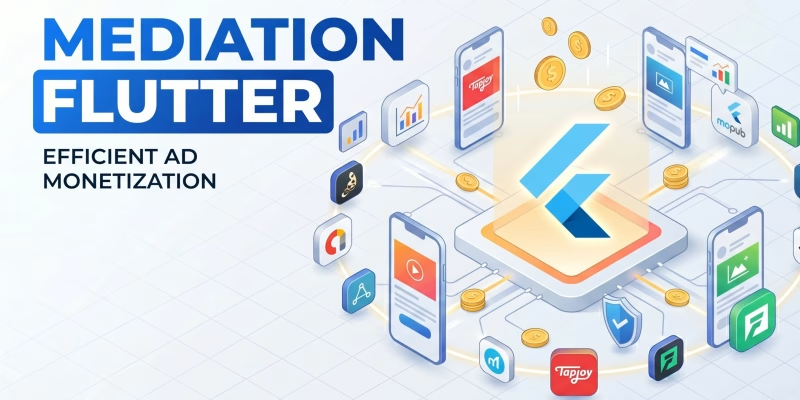
Technical isometric diagram for Flutter mobile ad mediation, illustrating efficient ad monetization infrastructure for cross-platform app developers.
AdTech & Monetization

Ad Mediation for Flutter

Maximizing revenue in the competitive mobile landscape requires more than just standard ad placements; it demands a strategic approach to monetization. For Flutter developers, ad mediation serves as the ultimate engine for growth. By implementing a robust mediation platform, you can force top-tier ad networks to compete for your inventory in real-time, significantly driving up your average eCPM. This guide explores the technical and strategic advantages of moving beyond single-network setups. You will learn the nuances of integrating industry-leading networks and the transformative power of programmatic bidding. Unlike traditional waterfalls, programmatic bidding ensures that every impression is sold to the highest bidder at the exact moment of the request, eliminating manual overhead and maximizing fill rates. Whether you are launching a new utility app or scaling a global gaming title, mastering these mediation techniques is the key to unlocking sustainable, scalable earnings and ensuring your Flutter project achieves its full financial potential.

July 8, 2025 5 min read
Technical isometric diagram for React Native mobile ad mediation, illustrating smart ad integration infrastructure to optimize cross-platform app revenue.
AdTech & Monetization

Ad Mediation in React Native

Ad mediation is the essential "go-between" for React Native developers looking to maximize app revenue. Rather than relying on a single ad network, mediation creates a real-time auction where multiple networks compete for your ad slots. This ecosystem ensures that every impression—whether it’s a banner, interstitial, or high-value rewarded video—is sold to the highest bidder. The transition from traditional "waterfall" models to programmatic bidding has revolutionized monetization, often increasing earnings by 10% to 30%. By integrating a single mediation SDK, developers can access premium demand from giants like AdMob, AppLovin, and CAS.ai without the engineering overhead of managing dozens of individual plugins. Beyond higher eCPMs, mediation offers unified analytics, improved fill rates in secondary markets, and built-in A/B testing. For any React Native developer aiming for professional-scale growth, a robust mediation strategy is no longer optional. It is the foundation of a profitable mobile business.

May 8, 2025 8 min read
Two mobile phones displaying revenue growth charts and data analytics with promotional text Grow Together, Earn Together for CAS.AI mobile game ad mediation program.
AdTech & Monetization

CAS.AI Launches Referral Program

Grow Together: Introducing the CAS.AI Referral Program Scale your revenue beyond your own games with the new CAS.AI Referral Program. We’re turning community trust into a powerful third growth engine for mobile developers. How it works: • Earn Passive Income: Receive 1% of your referred partner’s ad revenue every month for a full year. • Performance Boost: Refer five or more active partners in a single month to jump your rate to 1.5%. • Guaranteed Start: Your first month’s bonus is guaranteed, with no revenue thresholds applied. • Simple Setup: Partners just enter your account name when signing up at cas.ai/company. Whether you are a studio founder, a mediation partner, or a publishing expert, you can now turn your professional network into recurring yield. [Read the Full Article] Ready to start earning? Log in to your dashboard to find your account name and start referring today.

April 16, 2026 6 min read
App Store Optimization (ASO) strategy guide for mobile apps
AdTech & Monetization Case Study

ASO in 2026: How to Make Sure Users Can Actually Find Your App Page

ASO isn’t a launch-day checkbox. It’s a feedback loop. If you skip the update cycle, your rankings slip and competitors pass you. This checklist cuts through the noise and shows what actually drives organic installs in 2026: build separate keyword structures for iOS and Android (copy-pasting is lazy and costs you installs), rebuild your semantic core every 2-4 weeks, and run visual tests that isolate a single variable so your data is actionable. You’ll get the real rules: why the first three screenshots on iOS make or break your conversion, how literal translation kills your numbers in new markets, and the only four A/B tests that matter when you start: icon style, hero screenshot message, color themes, and video vs. static. The 2026 AI stack is here: keyword tracking, competitor moves, creative testing, and review monitoring so you’re not stuck in spreadsheets. Five mistakes still tank rankings, even if your keywords look perfect.

December 12, 2025 11 min read
Mobile game publishing workflow banner showing user acquisition, creatives, monetization, analytics, and ROAS around a mobile game dashboard in a futuristic UI.
Publishing

Mobile Game Publishing: The Growth Workflow We Use at CAS.AI

Mobile game publishing at CAS.AI is built for scaling mobile games with a data-driven system: CPI→ROAS UA, hybrid monetization (bidding + waterfall), ASO A/B tests, and creative iteration. Learn the baseline metrics we require and the workflow we use to scale profitably into Tier-1 geos.

December 19, 2025 5 min read
Abstract 3D digital technology platform block representing ILRD Impression Level Revenue Data for mobile game monetization.
AdTech & Monetization

ILRD Is Not a Setting. It’s the Foundation of Your Monetization Stack.

ILRD isn’t just a setting. It’s the base of your monetization stack. If you’re still looking at yesterday’s aggregate revenue and calling it “performance,” you’re flying blind. In modern user acquisition (UA), seeing $27,000 in daily revenue doesn’t tell you whether your campaigns are profitable, whether your ad frequency test is working, or whether your cheapest advertising channel is quietly hurting lifetime value (LTV). Impression-Level Revenue Data (ILRD), which measures revenue earned per individual ad impression, changes that. It connects every ad impression to a real user, specific device, and the original traffic source, turning return on ad spend (ROAS) optimization, analyzing groups of users over time (cohort analysis), and combining ads with in-app purchases (hybrid monetization) into measurable systems instead of relying on educated guesses. But IRLD isn’t just about turning it on. Waterfall floor math, bidding mechanics, alternative stores like RuStore, and Meta's platform restrictions can introduce discrepancies that quietly corrupt your signal and your UA decisions. In the full article, we break down what’s normal, what’s fixable, and what’s catastrophic. We also show you how to verify your IRLD before every build. If you’re using target Return on Ad Spend (tROAS) in 2026, this isn’t optional reading.

March 6, 2026 11 min read

Maximize your ad revenue with CAS.AI

Smart mediation platform for mobile publishers and game developers.


Already registered? Your current password may predate these requirements — reset it instead of signing up again. Reset password

 
Telegram
WhatsApp
Slack
Phone