AdTech & Monetization

A side-by-side comparison banner featuring the logos of Google AdMob and InMobi mobile ad networks.
AdTech & Monetization

AdMob vs InMobi

AdMob and InMobi solve different problems. AdMob leans on Google Ads demand to deliver strong eCPMs across the US, UK, Germany, and Australia, with easy Firebase integration and broad format support. InMobi runs independently, connecting to 150+ DSPs through its own RTB exchange, and it wins in India, Indonesia, Vietnam, and Japan — often reversing AdMob's Tier-1 advantage in those markets. Payout timing differs too: AdMob runs net-21, while InMobi ranges from net-30 to net-60 depending on account tier. Neither network discloses exact revenue share, though third-party estimates put both around 30–40%. The takeaway: geography decides the winner, not brand reputation. Apps with mixed APAC and Western traffic get the most value from running both networks through independent mediation, where every impression is auctioned to the highest bidder rather than routed down a fixed waterfall.

January 16, 2026 9 min read
Google AdMob vs Appodeal comparison chart.
AdTech & Monetization

AdMob vs Appodeal

AdMob or Appodeal? Wrong question. AdMob gives you Google's massive advertiser pool and dead-simple setup, the safe default for most Android developers. Appodeal skips the single-network trap entirely, running 70+ demand sources through BidMachine's in-app bidding auction. Neither wins outright: AdMob's auction favors its own demand, and Appodeal's real fee rate stays undisclosed. Format matters too; AdMob's banners and App Open ads pull strong Tier-1 CPMs, while Appodeal's rewarded video and interstitials often edge ahead. Payout speed splits them further: AdMob pays Net 21, Appodeal Net 30-60. The real fix isn't picking a side. Drop both into an independent mediation layer and let Google demand and Appodeal's network compete for every single impression. Apps that switch to neutral mediation typically see ARPU jump by 1.5-2x compared to any single network. Test it risk-free: if revenue dips, the platform covers the gap.

January 15, 2026 8 min read
A brand comparison graphic showing the Google AdMob logo on the left and the Unity Ads logo on the right.
AdTech & Monetization

AdMob vs Unity Ads

AdMob vs Unity Ads comes down to your app's format mix, not brand loyalty. Unity Ads wins on rewarded video and playables, especially for Unity-built games in Tier-1 markets, think $15–30 eCPMs in the US, UK, and Japan. AdMob pulls ahead on banners, app opens, and native, with broader fill across Tier-2 and Tier-3 geos where Google's advertiser pool runs deeper. Neither network should stand alone: running both through independent mediation lets each format go to whoever bids highest, closing the revenue gap a single network leaves on the table. Payout speed differs: AdMob pays Net 21; Unity Ads, Net 30–45. Apps that move from single-network to independent mediation typically see ARPU jump 1.5–2x, since every impression finally has real competition setting the floor. CAS.AI plugs into both networks and 150+ DSPs through a single SDK, with a no-loss guarantee and payouts starting on Day 5.

January 14, 2026 9 min read
Google AdMob vs AppLovin MAX comparison banner showing ad network logos.
AdTech & Monetization

AdMob vs AppLovin MAX

AdMob and AppLovin MAX dominate mobile ad monetization for a reason. AdMob is Google's own network, fast to set up, backed by the world's largest pool of advertisers, and the default starting point for most apps. AppLovin MAX is the leading independent mediation platform, built for teams who want first-price auctions, granular floor controls, and maximum eCPM on full-screen formats. Both networks have muscle. Both have gaps. AdMob wins on simplicity and Google demand; AppLovin MAX wins on live bidding and full-screen eCPM, especially for rewarded video and interstitials in Tier-1 markets. But neither wins everywhere. If you want max revenue, don't pick sides; make them compete for every impression. Run both in a neutral mediation layer, and the highest bidder wins each auction, every time. Here's where each network wins, where they fall short, and what real data shows head-to-head.

January 10, 2026 7 min read
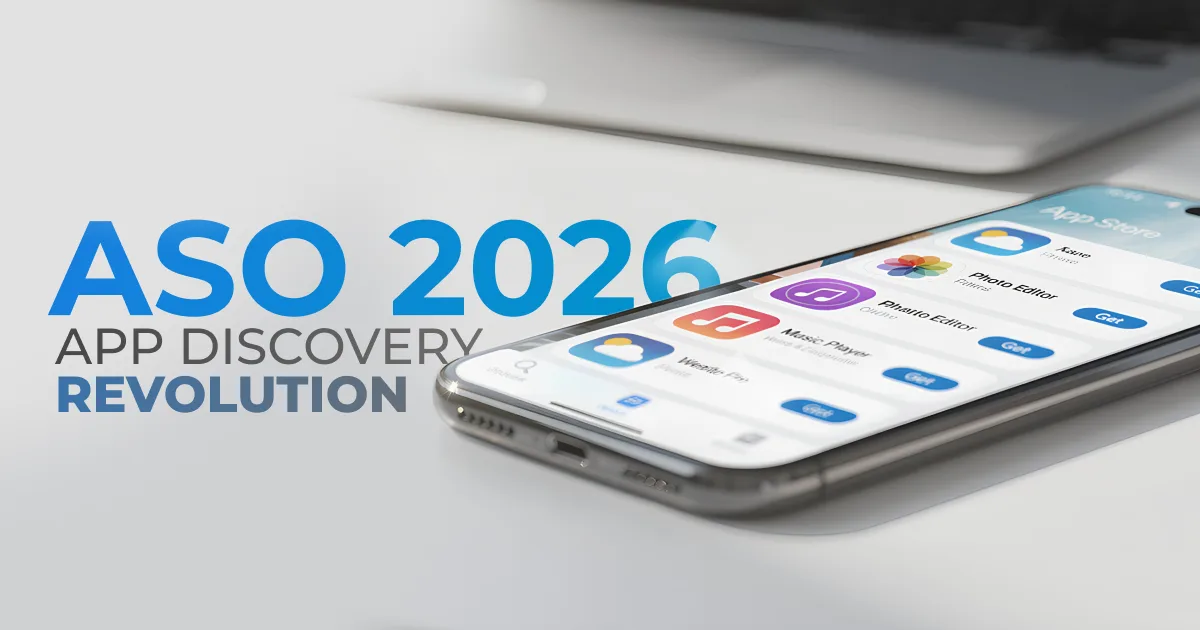
App Store Optimization (ASO) strategy guide for mobile apps
AdTech & Monetization Case Study

ASO in 2026: How to Make Sure Users Can Actually Find Your App Page

ASO isn’t a launch-day checkbox. It’s a feedback loop. If you skip the update cycle, your rankings slip and competitors pass you. This checklist cuts through the noise and shows what actually drives organic installs in 2026: build separate keyword structures for iOS and Android (copy-pasting is lazy and costs you installs), rebuild your semantic core every 2-4 weeks, and run visual tests that isolate a single variable so your data is actionable. You’ll get the real rules: why the first three screenshots on iOS make or break your conversion, how literal translation kills your numbers in new markets, and the only four A/B tests that matter when you start: icon style, hero screenshot message, color themes, and video vs. static. The 2026 AI stack is here: keyword tracking, competitor moves, creative testing, and review monitoring so you’re not stuck in spreadsheets. Five mistakes still tank rankings, even if your keywords look perfect.

December 12, 2025 11 min read
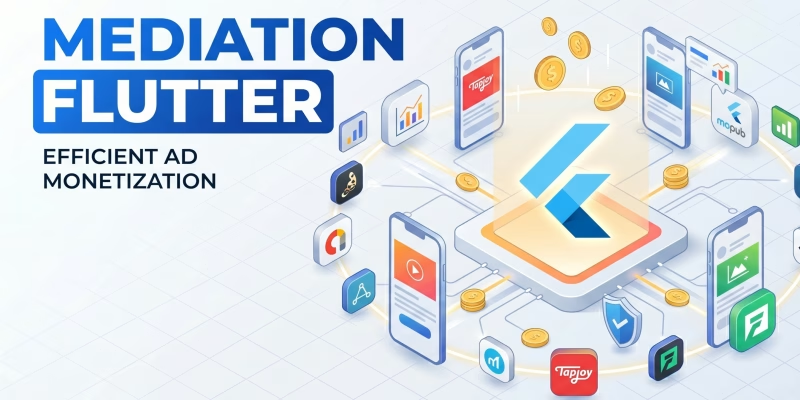
Technical isometric diagram for Flutter mobile ad mediation, illustrating efficient ad monetization infrastructure for cross-platform app developers.
AdTech & Monetization

Ad Mediation for Flutter

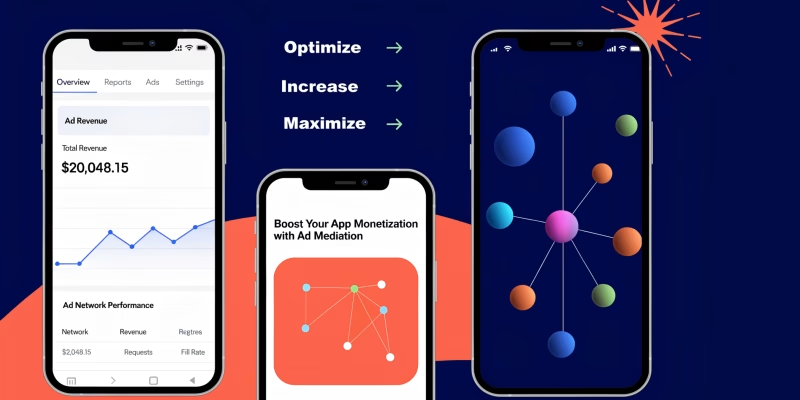
Maximizing revenue in the competitive mobile landscape requires more than just standard ad placements; it demands a strategic approach to monetization. For Flutter developers, ad mediation serves as the ultimate engine for growth. By implementing a robust mediation platform, you can force top-tier ad networks to compete for your inventory in real-time, significantly driving up your average eCPM. This guide explores the technical and strategic advantages of moving beyond single-network setups. You will learn the nuances of integrating industry-leading networks and the transformative power of programmatic bidding. Unlike traditional waterfalls, programmatic bidding ensures that every impression is sold to the highest bidder at the exact moment of the request, eliminating manual overhead and maximizing fill rates. Whether you are launching a new utility app or scaling a global gaming title, mastering these mediation techniques is the key to unlocking sustainable, scalable earnings and ensuring your Flutter project achieves its full financial potential.

July 8, 2025 5 min read
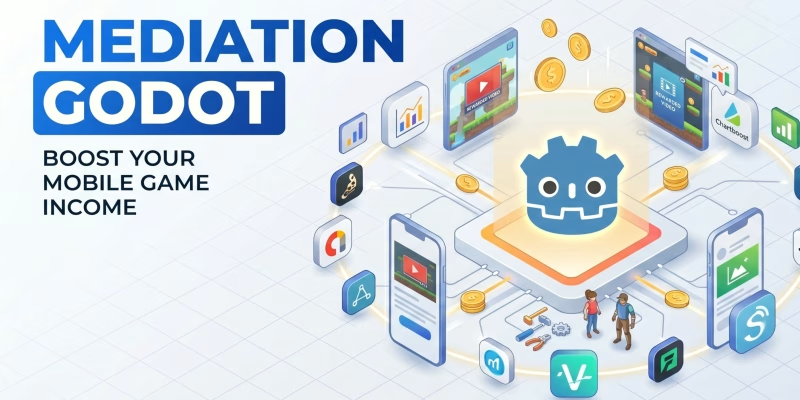
Technical isometric diagram for Godot Engine mobile ad mediation, illustrating the network infrastructure to optimize and boost mobile game income.
AdTech & Monetization

Ad Mediation for Godot

Ad mediation is the essential middleman between your mobile game and multiple ad networks, ensuring you never leave money on the table. Instead of relying on a single provider like AdMob, mediation triggers a real-time auction for every ad slot, allowing the highest bidder to win the impression. For Godot developers, this technology is a game-changer. By implementing a mediation layer, you can navigate the engine's unique SDK landscape while accessing high-paying formats like rewarded videos and interstitials. Platforms like CAS.ai streamline this process by connecting your project to over 20 networks and 150 DSPs through a single integration. This setup eliminates the "empty slot" problem, stabilizes revenue during seasonal shifts, and provides unified analytics. Whether you are building hyper-casual titles or complex midcore games, ad mediation can boost your total revenue by 30% to 60%, making it a non-negotiable tool for any serious mobile developer.

June 8, 2025 6 min read